Detailed Explanation of Key Points of Luffa Cultivation and Management Techniques
Sow and raise seedlings in early to mid-March. Local varieties such as Hangzhou iron-skin luffa and Linhai white luffa can be selected, with a seeding rate of 20O-300 grams per mu. April (1) Planting: Luffa prefers fertile soil rich in humus. Deeply plow and level the soil to make beds. Bed width (including ditch) 2.6-3.3 m, one row per bed, hole spacing 50 cm,...
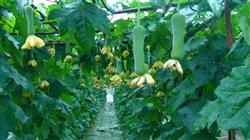
March
Sow and raise seedlings in early to mid-month. Local varieties such as Hangzhou iron-skin luffa and Linhai white luffa can be selected, with a seeding rate of 20O-300 grams per mu.
April
(1) Planting: Luffa prefers fertile soil rich in humus. Deeply plow and level the soil to make beds. Bed width (including ditch) 2.6-3.3 m, one row per bed, hole spacing 50 cm, 2 plants per hole, 1000 plants per mu. Apply 2000-2500 kg of decomposed barnyard manure per mu. (2) Management after planting: Water with root-setting water at planting, then water with dilute human manure water once every 1-2 days after planting; after the seedlings survive, water with 10%-15% human manure water once every 5-7 days, 250-300 kg per mu; keep the soil moist at all times.
May
(1) Fertilizer and water management: Apply fertilizer and water frequently. When the vines begin to grow rapidly, apply a vine-promoting fertilizer once, with 1500-2000 kg of 50% human manure water per mu. In the early flowering and fruiting stage, water with 20%-30% human manure water once every 5-7 days or apply 5 kg of quick-acting chemical fertilizer per mu.
(2) Intertillage and earthing up: Carry out intertillage and earthing up 2-3 times before trellising, turning flat beds into tile-ridge beds to promote the development of adventitious roots and drainage. (3) Trellising, vine guiding and vine tying: Set up the trellis in time after the second deep intertillage. Generally, varieties with long vines, vigorous growth and strong branching ability are better with a shed trellis; early-maturing varieties with shorter vines and weaker growth vigor are suitable for a "herringbone" trellis or fence trellis. Before the luffa stems and vines climb the trellis, pay attention to removing side buds at any time, carry out manual vine guiding in a "zigzag" shape, and tie the vines at the same time so that the stems and leaves are evenly distributed. (4) Pruning and removing branches: Remove excessive or ineffective side vines, and at the same time remove excess male inflorescences to reduce nutrient consumption.
June
(1) Fertilizer and water management: Harvesting begins in the first ten days of the month. After every 1-2 harvests of gourds, fertilizer must be applied once, and the number of topdressings is more than for other gourds. Generally, apply 15 kg of ammonium sulfate or 8 kg of urea per mu each time. During the fruiting period, water once every 5-7 days together with topdressing. (2) Plant management: Prune, remove ineffective side branches and old, yellow and diseased leaves. Select and retain fruits with thick ovaries, and remove deformed fruits and stiff fruits with poor pollination, yellowing ovaries and slow growth.
July to August
(1) Harvesting: July-August is the peak harvest period. Harvest once every 1-2 days; harvesting should be timely, preferably early rather than late, so as not to affect eating quality. (2) Field management: Luffa prefers moisture, so after entering the high-temperature summer drought period, it must be watered in time. Generally, after 1-2 harvests, water once together with topdressing. Continue plant adjustment, remove overly dense old leaves and yellow leaves, and remove excess male flowers.