Five key points for winter management of chestnut orchards: clean the orchard, deep plough, fertilize, prune, and control pests
Winter has now arrived. To ensure a good chestnut harvest next year, full advantage should be taken of fine days to carry out winter management of the chestnut orchard.
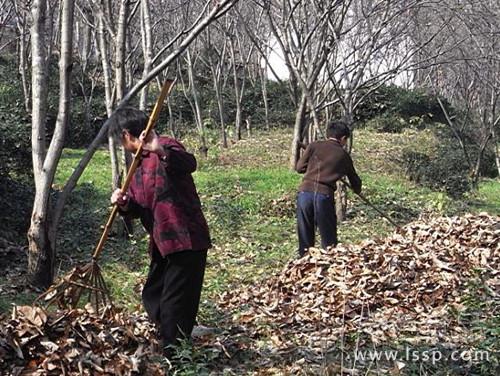
Winter management of chestnuts
Orchard cleanup:Knock down the empty burrs and pest-damaged burrs remaining on the trees, clear them away together with the fallen leaves, and burn them in a centralized manner to reduce overwintering sites for chestnut pests. Along with fertilizing, remove weeds and broadcast lime over the whole orchard once.
Deep ploughing to improve the soil:After the chestnut leaves have all fallen, combine deep ploughing of the whole orchard with the application of base fertilizer, to a depth of 20-30cm; it should be deeper outside the canopy and shallower around the trunk. When turning the soil, deliberately damaging a small portion of the roots can stimulate new root growth and enhance the chestnut root system's ability to absorb fertilizer and water. Ploughing the orchard loosens the soil and reduces overwintering sites for pests.
Apply sufficient base fertilizer:The fertilizer should be mainly dry manure plus phosphorus and potassium fertilizer. Usually, for every 100 kg of chestnuts produced per mu, apply 50 kg of dry manure, 0.2 kg of potassium chloride, and 1 kg of superphosphate. After fertilizing, cover with a layer of fine soil, and spread rice straw around the main trunk of the chestnut tree to prevent freezing; in case of drought, water to combat it. After farmyard manure is applied, it must rot and decompose before it can be absorbed by the roots, so base fertilizer must be applied early, after leaf fall in late autumn, for the fertilizer effect to be realized. Dig a ring-shaped trench or 2 symmetrical rectangular trenches 40cm wide and 40cm deep outside the canopy at 20-30cm from the drip line; after sunning for 2-3 days, apply the fertilizer into them.
Pruning and shaping:December to February of the following year is the best pruning period. Cut off diseased and pest-infested branches, weak branches, dead branches, and crossing branches, and burn them in a centralized manner; the natural open-center shape is best for the tree form. After peeling off the old bark, coat the trunk white with Bordeaux mixture, which serves to insulate, sterilize, and kill insects.
Pest and disease control:The main pests and diseases of chestnut include anthracnose, chestnut weevil, and chestnut gall wasp. After harvest, spray the whole orchard once with chlorothalonil and beta-cypermethrin solution. In addition, a 300-fold dilution of 40% phoxim emulsifiable concentrate can be used to treat the soil of the threshing site to kill larvae that have entered the soil.