-

A Complete Guide to Succulent Pest and Disease Prevention and Control Methods and Techniques
Text and images: Internet Although succulents are easy to grow and care for, pests and diseases can still occur under certain conditions. For succulents that follow a refined aesthetic, even a tiny pest or disease problem can leave "a flaw in fine jade," greatly reducing their ornamental value....
-

How to grow fat and plump succulents in autumn? A practical guide to share
The tough summer has passed in a flash, and the bleak autumn has arrived. It is once again a good time to grow succulents. There is no need to feel sad about succulents that died in summer, as you can buy more in autumn. There is no need to feel sad about succulents that grew leggy in summer, as they can grow back in autumn....
-
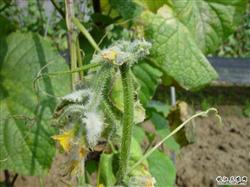
Detailed Guide to Symptom Identification and Control Methods for Cucumber Phytophthora Blight
Cucumber phytophthora blight occurs in all regions. It is one of the important diseases of cucurbit crops. It can harm many kinds of cucurbit crops. 1. Pathogen Cucumber phytophthora blight is a disease caused by fungal infection. 2. Symptom identification 2.1 Leaf lesions appear as light brown, nearly circular large spots. 2.2 Stem base...
-
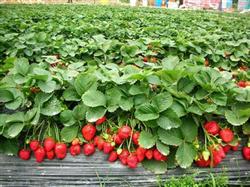
Detailed Guide to Identifying and Controlling Common Strawberry Pests and Diseases
Strawberries are grown under plastic film in greenhouses, where the high temperature and high humidity inside the greenhouse create even more favorable conditions for the occurrence of pests and diseases. The common pests and diseases of strawberry and their control measures are described below: I. Common diseases 1. Leaf spot. It mainly damages leaves, and the typical symptom is gray or grayish-brown round spots centered on the lesion, with purple...
-
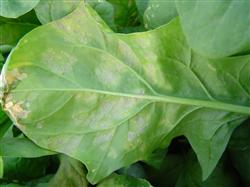
A Detailed Guide to the Prevention and Integrated Treatment of Spinach Downy Mildew
The disease is caused by a fungus called spinach downy mildew (Peronospora farinosa f. sp. spinaciae). It mainly affects the upper surface of the leaves; the lesions are pale yellow, irregular in shape, vary in size, measure 3-17 mm in diameter, and have indistinct edges. After the lesions expand, they join together into patches, and in the later stage turn brown and die, while a grayish-purple mold layer forms on the lesions on the underside of the leaves. The disease spreads from the outer leaves...
-
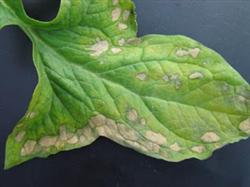
Detailed Guide to Identifying and Controlling Downy Mildew in Spinach
Downy mildew is a common disease of spinach, with severity varying from year to year. The spinach downy mildew pathogen is an obligate parasite that only infects spinach. I. Symptoms Spinach downy mildew can locally infect leaves and can also cause systemic infection. When leaves are locally infected, the affected areas first appear as pale green, water-soaked round spots, which then expand...
-
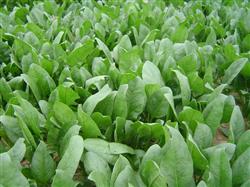
A detailed guide to four-season spinach cultivation techniques: master the key points for growing year-round
1. Sowing time and varieties. Autumn spinach is the main crop in spinach production, generally sown from August to September, but sowing can also be advanced to July or delayed to early October; after sowing, it can be harvested in batches in 30-40 d (days). Variety selection requirements are not strict, but for early-autumn spinach it is best to choose early-maturing varieties that are more heat-tolerant and fast-growing, such as Litou spinach, Huabo...
-
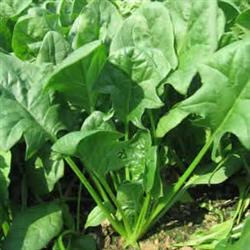
The three-part spinach cultivation guide: master the key growing steps
Sowing: Spinach is mainly broadcast-sown, though it can also be sown in rows. Because germination is slow under high temperatures, seeds sown in early autumn should be soaked and pre-germinated: soak the seeds for 12 hours, then place them in a refrigerator at 4°C for 24 hours, then keep them at 15-25°C to sprout for several days, and once most have germinated, broadcast-sow them. Sowing rate per mu: 10...
-
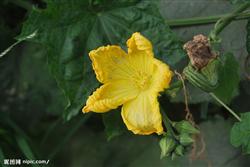
How to Prevent and Control Luffa Flower Rot? A Comprehensive Multi-Measure Prevention and Control Guide
Luffa flower rot is closely related to nutrient deficiency in the plant. Boron deficiency causes the stigma of luffa to turn black, and many vegetable growers mistake it for an infectious disease and treat it as such. Once the floral organs are damaged, there is no way to remedy it, so prevention must be done in advance. Before luffa flowering, spray with a 500-fold dilution of borax or a 1500-fold dilution of "Zhixin" boron fertilizer to prevent blackening of the stigma caused by boron deficiency....
-
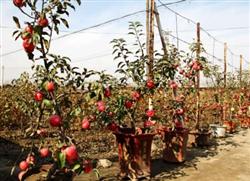
Detailed Guide to Potted Apple Cultivation Techniques: A Step-by-Step Tutorial on Growing Apples Well
Potted apples are a new phenomenon, and their emergence has been welcomed and valued by leisure agriculture, urban agriculture, sightseeing tourism, and landscaping. Their development and popularity are a sign of the improvement of our country's social economy and people's living standards, as well as a close-up of the pursuit of beauty in life and environment. Rural courtyards, in front of and behind houses...
条件筛选