The three-part spinach cultivation guide: master the key growing steps
Sowing: Spinach is mainly broadcast-sown, though it can also be sown in rows. Because germination is slow under high temperatures, seeds sown in early autumn should be soaked and pre-germinated: soak the seeds for 12 hours, then place them in a refrigerator at 4°C for 24 hours, then keep them at 15-25°C to sprout for several days, and once most have germinated, broadcast-sow them. Sowing rate per mu: 10...
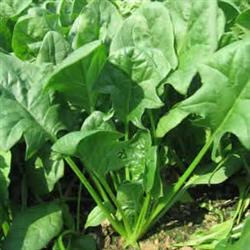
Sowing: Spinach is mainly broadcast-sown, though it can also be sown in rows. Because germination is slow under high temperatures, seeds sown in early autumn should be soaked and pre-germinated: soak the seeds for 12 hours, then place them in a refrigerator at 4°C for 24 hours, then keep them at 15-25°C to sprout for several days, and once most have germinated, broadcast-sow them. The sowing rate is about 10 kg per mu; after sowing, cover with a shallow layer of soil or water with manure liquid and cover with rice straw, melon vines, etc., to lower the soil temperature and keep the soil moist. For sowing after early September, pre-germination is unnecessary, and the sowing rate can be reduced to 5-7.5 kg per mu.
Field management: Focus on fertilizer and water. Apply base fertilizer before sowing, generally by watering on human manure and urine; topdressing can be done together with irrigation, and when the seedlings are small, dilute human manure and urine should be applied. Once the plants are larger and the temperature has dropped, the concentration can be increased appropriately. Spinach is usually harvested by thinning in several rounds, and topdressing must be applied after each harvest. In the early stage, pay attention to timely weeding, and watch for and control aphid damage.
Harvest: For autumn-sown spinach, start thinning and harvesting when the leaves are more than 15 cm long and the plants are fairly crowded, harvesting about once every 20 days.