A detailed guide to four-season spinach cultivation techniques: master the key points for growing year-round
1. Sowing time and varieties. Autumn spinach is the main crop in spinach production, generally sown from August to September, but sowing can also be advanced to July or delayed to early October; after sowing, it can be harvested in batches in 30-40 d (days). Variety selection requirements are not strict, but for early-autumn spinach it is best to choose early-maturing varieties that are more heat-tolerant and fast-growing, such as Litou spinach, Huabo...
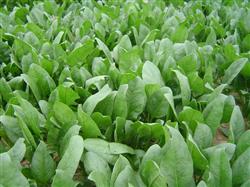
1. Sowing time and varieties
Autumn spinach is the main crop in spinach production, generally sown from August to September, but sowing can also be advanced to July or delayed to early October; after sowing, it can be harvested in batches in 30-40 d (days). Variety selection requirements are not strict, but for early-autumn spinach it is best to choose early-maturing varieties that are more heat-tolerant and fast-growing, such as Litou spinach, Huabo No. 1, Huabo No. 3, Guangdong Round Leaf, Chunqiu Large Leaf, Lianhe No. 1, etc.
Overwintering spinach is sown from mid-to-late October to early November and harvested in batches around the Spring Festival. It is best to choose mid- and late-maturing varieties with strong winter hardiness, late bolting, and strong cold tolerance, such as Round Leaf spinach, Late Round Leaf spinach, Huabo No. 1, Liaoning Round Leaf spinach, etc.
Spring spinach can generally be sown once temperatures rise above 5°C after the beginning of spring. In the Yiyang area of Hunan, it is sown in stages from late February to mid-April, with mid-March being the suitable sowing period; it is harvested 30-50 d (days) after sowing. Varieties should be chosen that bolt late and have thick, broad leaves, such as Late Round Leaf spinach, Chunqiu Large Leaf, Shenyang Round Leaf, Liaoning Round Leaf spinach, etc.
Summer spinach can be sown in stages from May to July and harvested successively from late June to mid-September. It is best to choose Huabo No. 1, Chunqiu Large Leaf, Guangdong Round Leaf, etc., which are highly heat-tolerant, grow quickly, and are not prone to bolting.
2. Land preparation and bed making
Choose loose, fertile, slightly acidic sandy loam or loam that retains water and nutrients well and has good drainage and irrigation conditions. When preparing the land, apply about 4000 jin of decomposed organic fertilizer and 50-100 g of lime per 667 sq m, then level and refine the soil. In winter and spring, make raised beds; in summer and autumn, make flat beds. Bed width is 1.2-1.5 m.
3. Sowing and seedling raising
Direct sowing is generally used, mainly by broadcasting. For summer and autumn sowing, the seeds should be pre-germinated. One week before sowing, soak the seeds in well water for about 12 h (hours), then place them in a well or air-raid shelter to germinate, or place them in a refrigerator or cold storage cabinet at about 4°C for 24 h (hours), then germinate them at 20-25°C; sow after budding in 3-5 d (days). In winter and spring, dry seeds or wet seeds can be sown. Sow 5-10 kg per 667 sq m.
Before sowing, water thoroughly to moisten the bottom soil. After broadcasting the seeds over the bed surface, lightly rake the topsoil several times with a-tooth rake so that some seeds are sown 5-6 cm deep, some in the middle layer at 3-4 cm, and some in the surface layer at 2-3 cm, so that seedlings emerge at different times and can be harvested in batches. After sowing, cover the bed surface with a layer of plant ash, then splash on a layer of decomposed thick manure residue or river mud, or cover with a layer of fine soil.
For summer and autumn spinach, after sowing, cover with rice straw or use a small arch shelter covered with shade netting to prevent high temperatures and heavy rain from washing the soil. When the seed-covering fertilizer soil dries out in the sun, water again. Each watering should soak the soil thoroughly, and the soil should be kept moist frequently; seedlings will emerge evenly after 6-7 d (days). If winter spinach is sown relatively late and the temperature is low, cover the sowing bed with plastic film or shade netting to keep warm and promote emergence, then remove it after the seedlings emerge. For spring spinach, there is no need to water the bottom soil before sowing; choose a sunny morning to sow, then splash another layer of decomposed thick manure residue over the bed surface or cover with about 2 cm of soil.
4. Field management
For autumn spinach, after true leaves appear, promptly splash on 1 application of light manure water. As the plants grow, gradually increase the concentration of topdressing, which should be applied when the soil surface is dry. After 2 true leaves, combine thinning and weeding with attention to topdressing, first light and then concentrated; apply more decomposed manure early on. Stop applying manure water 15 d (days) before harvest. Apply topdressing 2-3 times during the vigorous growth period, applying 5-10 jin of urea each time per 667 sq m.
For winter spinach, if the soil is dry after planting, give 1 light watering to keep it moist. When there are 3-4 true leaves, control water appropriately to help it overwinter. When there are 2-3 true leaves, thin once, with a seedling spacing of 3-4 cm. Apply water and fertilizer according to seedling condition and weather, mainly using decomposed human manure and urine. Pay attention to controlling aphids. In frost and snow-ice weather, cover with plastic film and shade netting to keep warm; floating row covers and small arch shelter covers can also be used. For spinach overwintering as young seedlings, after the beginning of spring, choose a sunny day to promptly apply decomposed dilute manure water to prevent bolting.
For spring spinach, cover with plastic film to keep warm in the early stage; it can be laid directly over the bed surface or covered with a small arch shelter. When covering directly, remove the film immediately after the spinach emerges or switch to small arch shelter covering. Note that the small arch shelter should be uncovered by day and covered at night, uncovered on sunny days and covered on rainy days, so that the seedlings get more light and are hardened more. At the same time, thin promptly. Apply water and fertilizer, using dilute decomposed human and livestock manure frequently in the early stage, and apply quick-acting nitrogen fertilizer in the later stage, especially 15 d (days) before harvest.