-

A Detailed Guide to the Planting and Cultivation Methods of the Four-Season Lilac (Syringa pubescens subsp. microphylla)
The Four-Season Lilac, also known as the small-leaved lilac (Syringa pubescens subsp. microphylla), has slender, delicate branches and a graceful tree form, with vivid flower colors, and it blooms twice a year. It is an excellent flowering shrub for gardens, suitable for planting in courtyards, residential areas, hospitals, schools, kindergartens or other gardens and scenic areas, and can be planted as a single specimen, in groups, or in mass plantings along roadsides, on lawns, at corners, and along forest edges.
-
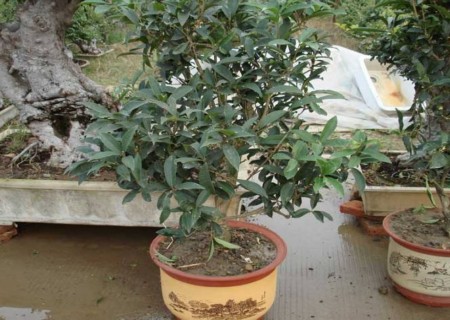
Detailed Guide to Growing Four-Season Osmanthus Trees
The "Four-Season Osmanthus" that has newly emerged in recent years has become a rising star in the osmanthus family. It breaks the norm of ordinary osmanthus varieties, which bloom only once a year, by blooming 4 times each year in February, May, August and November respectively, with each seasonal blooming period usually lasting more than 20 days. The flowers it produces are dense, with yellow-white petals
-

Four Key Points of Rice Seedling Cultivation Technology and Materials Needed for the Seedling Soil Formula
Rice is now our most important food, it is our staple food, so how much do you know about rice cultivation methods? Let's first take a look at the rice seedling cultivation methods below! Seedling cultivation methods 1. Seedbed soil Use one part wood shaving compost (each box weighs about 520 grams, 125 kg per hectare), add one part crushed rice husk (each box weighs about 150 grams, 36 kg per hectare), add one part soil (each box weighs about 800 grams, 192 kg per hectare), that is, a 1:1:1 volume ratio as the seedling cultivation material. The mixing method is carried out with a mixing mixer, or one part wood shaving compost and one part crushed rice husk are evenly spread on the upper layer of the soil pile, then mixed into the soil with a tractor, and finally screened with an electric soil crushing and soil sieving dual-purpose machine to obtain uniform seedbed soil. For covering soil, mix one part crushed rice husk with one part soil (that is, 1:1) for covering. The total soil amount including covering soil, calculated at 300 grams per box, is 264 kg per hectare. Compared with the current 432 kg of seedling soil mixed with rice husk and soil, this saves 168 kg per hectare (38.9%).
-
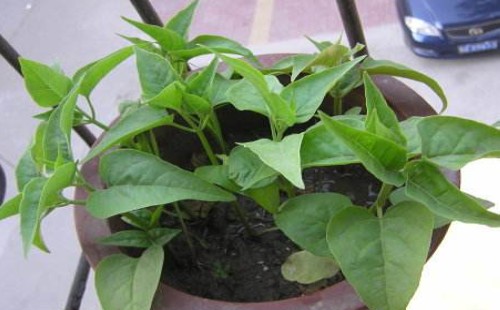
Detailed Guide to Growing Four O'Clock Flowers (Mirabilis jalapa) in Pots
Four o'clock flowers (Mirabilis jalapa) are mostly used for courtyard landscaping, and can also be grown as potted plants. They begin blooming in July and do not finish until November, opening in the evening, with rich colors and a fragrance. As potted plants for enjoyment, they are very simple to manage and do not require deliberate, careful tending; even with rough care
-

Four taboos to remember when making and caring for forest-style bonsai
Among bonsai there is a special form of presentation called the forest style. This form of bonsai cleverly combines mountains, stones and trees to fully reveal the beauty of a forest, like a beautiful landscape painting. But in the process of making and caring for forest bonsai, there are four taboos to observe. First taboo: one-size-fits-all. The materials used for forest-style bonsai are generally small-leaved shrubs
-

An Analysis of the Complexity of Four-Dimensional Space in Penjing Artistic Creation
People know that penjing is a three-dimensional spatial art with length, width, height and depth, and it is praised as a three-dimensional painting. In penjing artistic creation, mastering only the three-dimensional space of "solid" is not enough, because any object (a single tree or a single stone) is a three-dimensional space
-

Are four-step red-and-white koi beautiful? A full analysis of breeding techniques
Introduction to four-step red-and-white koi. The four red patches of the four-step red-and-white koi are generally distributed across three areas: the head, the trunk, and the tail. Generally speaking, compared with two-step and three-step red-and-white koi, the four-step red-and-white places greater emphasis on the question of balance points; the dividing points of the red patches must not only...
-
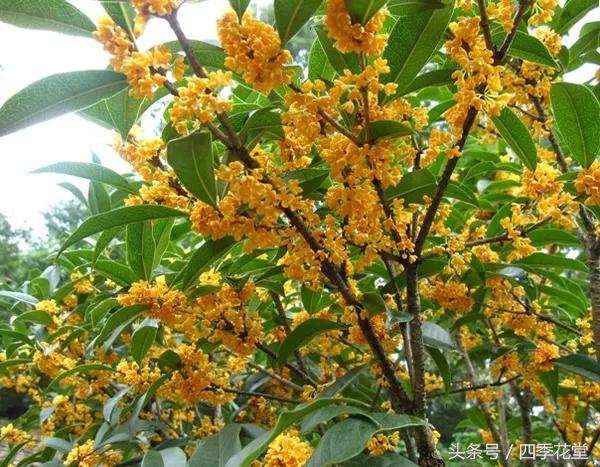
How to grow four-season osmanthus? Detailed growing methods and precautions
Osmanthus can be grown large, letting your osmanthus bloom all year round. Osmanthus cultivation, osmanthus is especially fragrant, osmanthus prefers acidic soil, pH 5.6-PH6 is better, osmanthus is not hot, it cannot be seen in spring, it does not like smoke, so do not put osmanthus in public places, ? When the indoor temperature is higher than 20°C
-
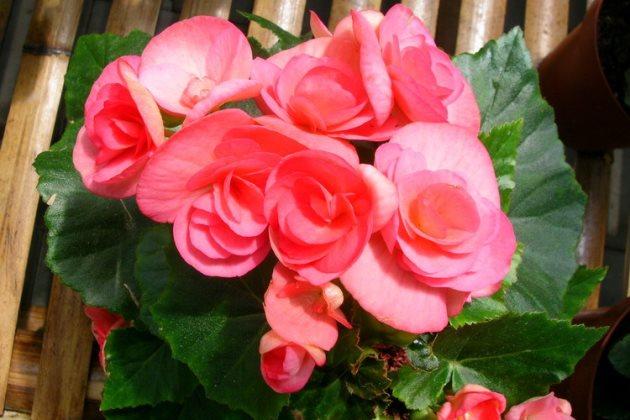
Illustrated guide to four-season begonia propagation methods, beginners can easily learn
The four-season begonia thrives like this: in January the pot bursts open, and within two months it is full of flowers! The four-season begonia is a fleshy herbaceous plant of the genus Begonia, also known as wax begonia, four-season begonia, glass begonia and seed begonia. Its main propagation methods are seed sowing and propagation, division and cuttings. The four-season plant is beautiful
-
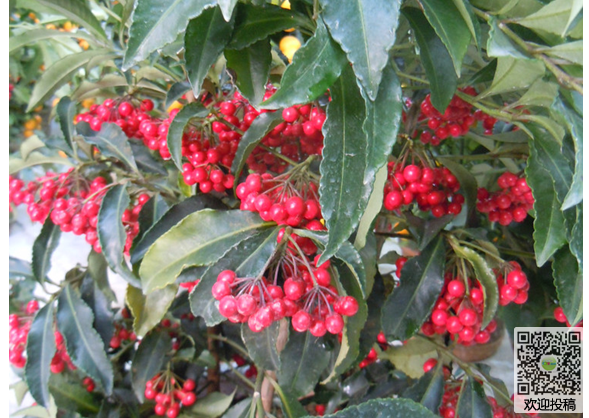
Detailed Guide to Four-Season Care for Ardisia crenata: Key Points for Spring, Summer, Autumn and Winter
Ardisia crenata is one of the commonly used Chinese herbal medicines. Its roots and leaves can be used to remove dampness, eliminate pain and relieve pain. It is used for rheumatism, indigestion, pharyngitis and irregular menstruation. It is edible, oily and ornamental. Below, the editor introduces the four-season care methods for Ardisia crenata. I hope everyone likes it
条件筛选