Detailed Guide to Four-Season Care for Ardisia crenata: Key Points for Spring, Summer, Autumn and Winter
Ardisia crenata is one of the commonly used Chinese herbal medicines. Its roots and leaves can be used to remove dampness, eliminate pain and relieve pain. It is used for rheumatism, indigestion, pharyngitis and irregular menstruation. It is edible, oily and ornamental. Below, the editor introduces the four-season care methods for Ardisia crenata. I hope everyone likes it.
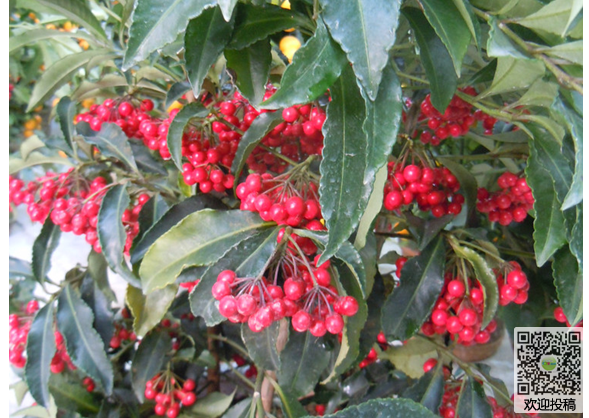
Spring Care Methods for Ardisia crenata
In spring, when breeding Ardisia crenata, the two main tasks are changing the pot and pruning. Generally, pot changes need to be combined with pruning of Ardisia crenata. In spring, between April — — and May, the pot needs to be pruned before the flower pot is replaced.
Summer Care Methods for Ardisia crenata
Summer is a strong season for the growth and flowering of Ardisia crenata. Pay attention to maintaining a sufficient supply of water and fertilizer. When growing indoors, pay attention to spraying mist frequently to maintain relatively high air humidity, and ventilation needs to be strengthened.
It should be noted that Ardisia crenata is more tolerant of high temperatures but does not like glare, so it is better to place it in a bright room in summer.
Autumn Treatment Methods for Ardisia crenata
In autumn, Ardisia crenata must be placed in a semi-shaded outdoor area or a bright room for maintenance. Watering is mainly to keep the soil moist, and frequent watering is needed. Be careful to stop fertilizing in autumn.
As the temperature drops, it is necessary to gradually reduce the water supply. Ardisia crenata cultivated outdoors needs timely maintenance.
Winter Protection Methods for Ardisia crenata
In winter, Ardisia crenata has weak resistance to cold, and the winter temperature should be kept above 5°C. Because winter is the fruiting period of Ardisia crenata, it is better to have enough light, and it can be placed on a windowsill or balcony in the morning and evening. When watering between moist periods, it should be moist, preferably watering at the high temperature at noon. Be careful to maintain ventilation.
Reasons for Drooping Leaves of Ardisia crenata
Drought
Ardisia crenata is not tolerant of drought, so when cultivating Ardisia crenata, if it is not watered sufficiently, it will be too dry for a long time, which will cause dry scorching. Of course, this means not only that it is not watered for a long time, but also that when watering, it is easy to dehydrate the roots of Ardisia crenata and make the leaves droop.
Bacterial Wilt
In addition, the cause of drooping leaves of Ardisia crenata may also be caused by pests and diseases, usually manifested as bacterial wilt.
The main manifestation of bacterial wilt is that the plant above ground shows no abnormality, but suddenly it loses vitality during the day, the aboveground part wilts, and the stems and leaves remain green. This process is relatively fast; first, the root lesions rot and then gradually take effect.
Solving the Problem of Dry Scorching of Ardisia crenata
Reasonable Watering
Because long-term drought of Ardisia crenata may cause leaves to dry and become scorched, watering must be sufficient and reasonable. Pay attention to keeping the soil moist rather than waterlogged, and watering must be done thoroughly.
Prevention and Control of Bacterial Wilt
The drooping of Ardisia crenata requires prevention and treatment of bacterial wilt so as not to further aggravate the damage. Bacterial wilt is prone to occur under conditions of high temperature and high humidity, long periods without changing the soil, and most soil or watering applied with nitrogen fertilizer. Therefore, it is necessary to prepare from the growing environment to avoid these adverse conditions. If bacterial wilt occurs, streptomycin needs to be sprayed in time for prevention and treatment.