-
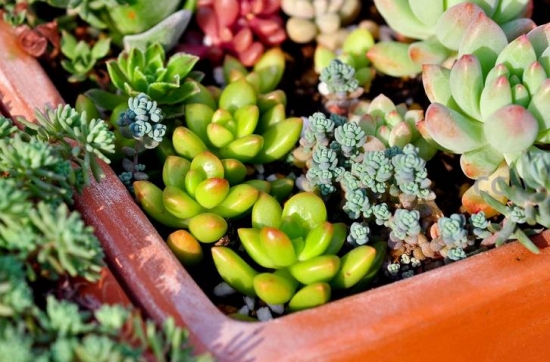
Four Methods of Succulent Propagation and Points to Note
The most commonly used propagation methods for succulents include sowing, cuttings, grafting, and division.
-
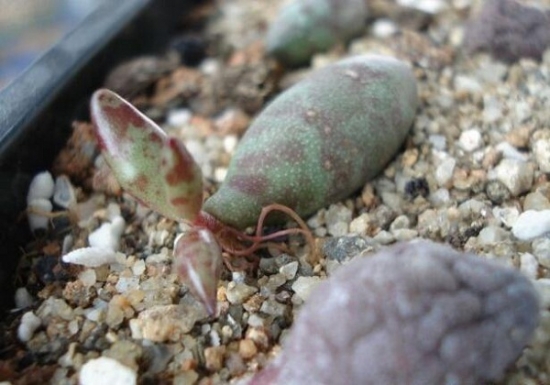
How to propagate succulents? Four common propagation methods
The four most commonly used propagation methods for succulents are sowing, cuttings, grafting and division. Let's take a look at these four common succulent propagation methods below.
-
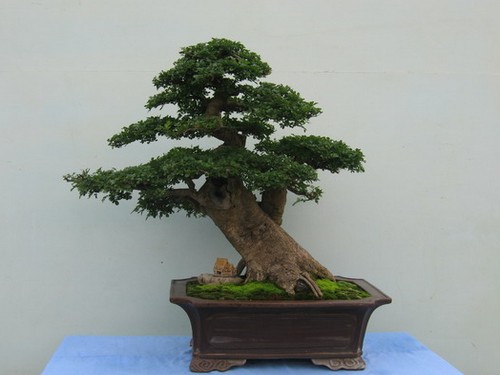
Four-Season Water Management Methods for Chinese Ash Bonsai
Chinese ash (Fraxinus chinensis) grows slowly, has a long lifespan, a beautiful tree form, and gnarled, intertwined roots. It is the finest among landscaping, bonsai, and root-carving varieties, and is hailed as a "living fossil" and the "king of bonsai." In daily water management work, the water regimen for Chinese ash bonsai can be summed up as "heavy watering." Heavy watering: there must be sufficient moisture, and slightly wet is better than dry. Water more in spring.
-

How to grow a potted four-season osmanthus? A detailed guide to cultivation methods
Four-season osmanthus is a precious flower in China. It not only has a wide range of admirers but also holds high economic value, and it is deeply loved by people. Its flowers are beautiful and its fragrance is pleasant. It is often planted as a landscape tree and has high ornamental value. Friends who like osmanthus can also keep an osmanthus tree as a potted plant in the living room.
-
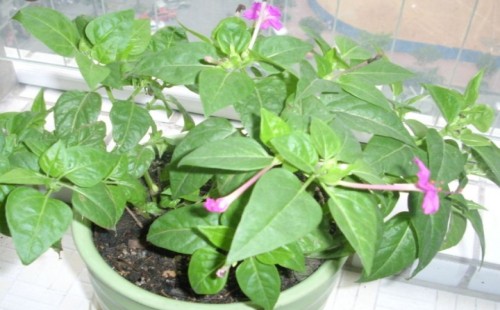
How to grow the four o'clock flower in a pot? Detailed guide to cultivation methods
The four o'clock flower is mostly propagated from seedlings by spring sowing. Because it has fairly strong vitality and a fairly strong ability to adapt to the environment, this flowering plant has a fairly strong capacity for self-seeding and is generally widely used in landscaping, courtyard beautification and other aspects. But the four o'clock flower can also be grown in pots, and every summer and autumn
-
A Detailed Guide to the Planting and Cultivation Methods of the Four-Season Lilac (Syringa pubescens subsp. microphylla)
The Four-Season Lilac, also known as the small-leaved lilac (Syringa pubescens subsp. microphylla), has slender, delicate branches and a graceful tree form, with vivid flower colors, and it blooms twice a year. It is an excellent flowering shrub for gardens, suitable for planting in courtyards, residential areas, hospitals, schools, kindergartens or other gardens and scenic areas, and can be planted as a single specimen, in groups, or in mass plantings along roadsides, on lawns, at corners, and along forest edges.
-
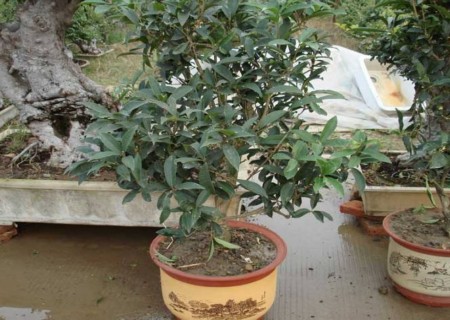
Detailed Guide to Growing Four-Season Osmanthus Trees
The "Four-Season Osmanthus" that has newly emerged in recent years has become a rising star in the osmanthus family. It breaks the norm of ordinary osmanthus varieties, which bloom only once a year, by blooming 4 times each year in February, May, August and November respectively, with each seasonal blooming period usually lasting more than 20 days. The flowers it produces are dense, with yellow-white petals
-
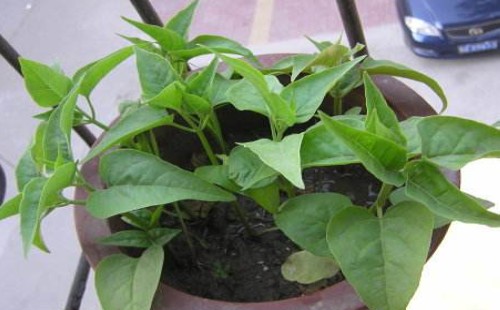
Detailed Guide to Growing Four O'Clock Flowers (Mirabilis jalapa) in Pots
Four o'clock flowers (Mirabilis jalapa) are mostly used for courtyard landscaping, and can also be grown as potted plants. They begin blooming in July and do not finish until November, opening in the evening, with rich colors and a fragrance. As potted plants for enjoyment, they are very simple to manage and do not require deliberate, careful tending; even with rough care
-
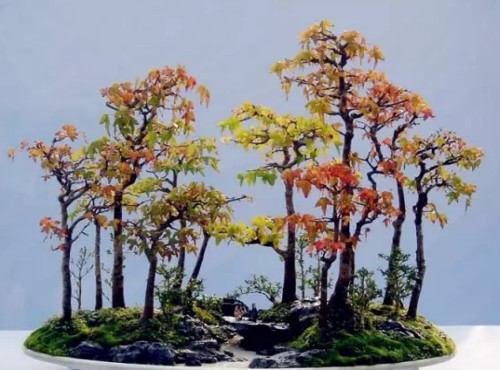
Four taboos to remember when making and caring for forest-style bonsai
Among bonsai there is a special form of presentation called the forest style. This form of bonsai cleverly combines mountains, stones and trees to fully reveal the beauty of a forest, like a beautiful landscape painting. But in the process of making and caring for forest bonsai, there are four taboos to observe. First taboo: one-size-fits-all. The materials used for forest-style bonsai are generally small-leaved shrubs
-
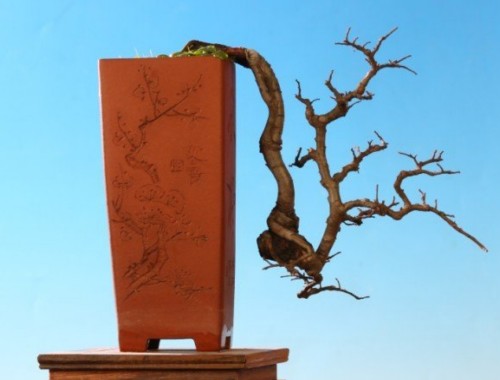
An Analysis of the Complexity of Four-Dimensional Space in Penjing Artistic Creation
People know that penjing is a three-dimensional spatial art with length, width, height and depth, and it is praised as a three-dimensional painting. In penjing artistic creation, mastering only the three-dimensional space of "solid" is not enough, because any object (a single tree or a single stone) is a three-dimensional space
条件筛选