Are four-step red-and-white koi beautiful? A full analysis of breeding techniques
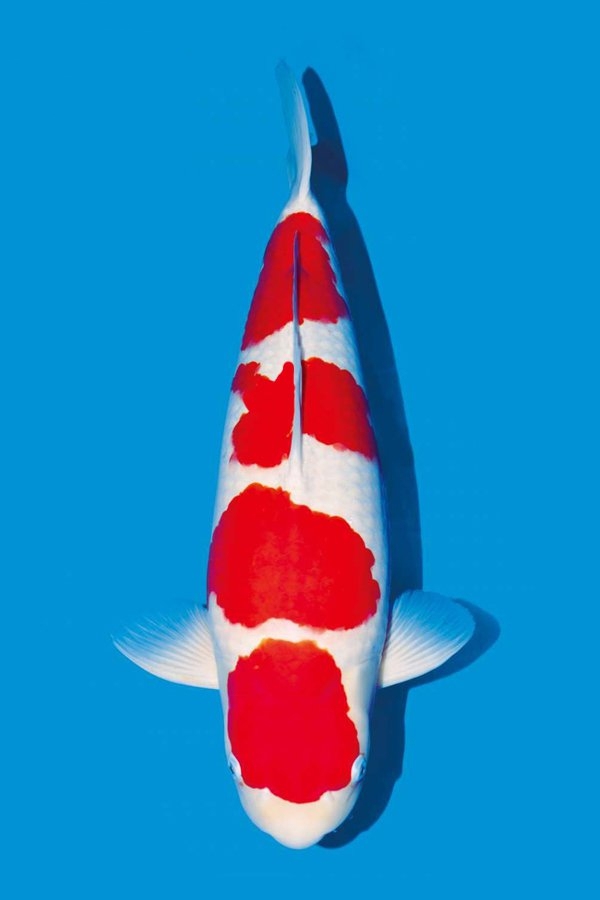
Introduction to four-step red-and-white koi. The four red patches of the four-step red-and-white koi are generally distributed across three areas: the head, the trunk, and the tail. Generally speaking, compared with two-step and three-step red-and-white koi, the four-step red-and-white places greater emphasis on the question of balance points; the dividing points of the red patches must not only...
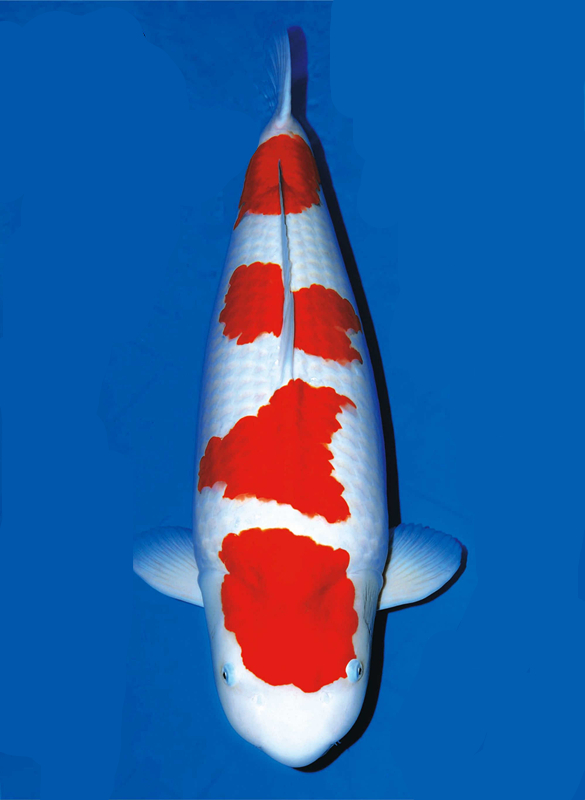
The four red patches of the four-step red-and-white koi are generally distributed across three areas: the head, the trunk, and the tail.
Generally speaking, compared with two-step and three-step red-and-white koi, the four-step red-and-white places greater emphasis on the question of balance points; the dividing points of the red patches must not only conform to the principle of geometric division points, but also possess biological beauty and suit the fish's own physical characteristics.
A fine four-step pattern can form two rough symmetries: first, a rough symmetry between the two red patches on the head and shoulders and the two red patches near the dorsal fin and tail fin; second, a rough left-right symmetry about the fish's spine as the axis.
When appreciating such a four-step koi, people are often both overwhelmed by its beauty and greatly amazed at the creative power of nature.
From the head to the tail fin, the four bands of red markings unfold slowly and steadily, neither hurried nor sluggish.
No matter which of the four steps one appreciates, it gives a sense of aptness; while the mind is still on one spot, the eye has already moved to another red band, and viewed as a whole, the four-step red-and-white also possesses a deep sense of unity and harmonious beauty.