-
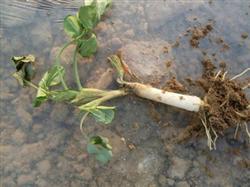
How to prevent and control peanut stem rot? A comprehensive analysis of practical methods
How to prevent and control peanut stem rot? Please explain. Peanut stem rot, commonly known as "rotten neck disease", generally occurs in the middle and late stages. After infection, the plant quickly withers and dies; in the late stage, infected plants' pods often rot or the kernels fail to fill, causing serious losses. The incidence rate in ordinary fields is 20%-30%, and in severe cases reaches 60%-70%, or even results in no harvest at all....
-
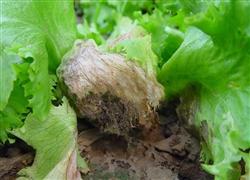
What are the common diseases of lettuce? A comprehensive guide
What are the common diseases of lettuce? Here is an introduction. When lettuce is produced in greenhouses in winter, it is prone to many diseases. Several common diseases of lettuce and their control measures are summarized as follows: Sclerotinia rot mainly damages the base of the stem. In the early stage, the diseased part is yellowish brown to brown and water-soaked, then spreads to the entire stem, causing the stem to rot or extending upward...
-
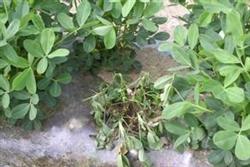
Comprehensive Control Methods for Peanut Wilt Disease in Early Spring Plastic Mulch Cultivation
Peanut wilt disease includes stem rot, root rot, southern blight, stalk rot and several other diseases, and it severely affects early spring plastic mulch peanut production. 1. Disease characteristics. Their common feature is that the peanut stem or leaf wilts and the affected part becomes discolored and necrotic. Generally, continuous cropping plots and plots with poor soil are more severely affected; rotation plots and plots with high fertility...
-
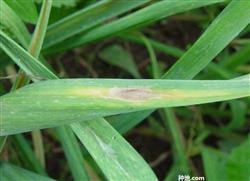
What is garlic mosaic virus disease? A comprehensive guide to this disease
What is garlic mosaic virus disease? How to prevent and control it, please advise. Garlic mosaic virus disease: 1. Symptoms In the early stage of the disease, intermittent yellow dotted lines appear along the leaf veins, which later connect into long stripes of alternating yellow and green. Plants become stunted, and the central leaves of some plants are wrapped by adjacent leaves, showing curled deformity and unable to fully extend for a long time, causing the leaves to twist...
-
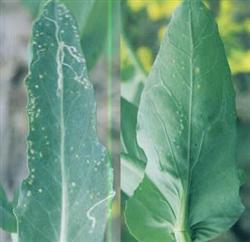
Comprehensive Control Techniques for White Rust of Rapeseed
The pathogen of rapeseed white rust is Albugo candida, a disease commonly occurring on rapeseed and cruciferous vegetables in the Yangtze River basin, often occurring together with rapeseed downy mildew on the same flower stalk. I. Symptoms: All aboveground organs of rapeseed are susceptible throughout the entire growth period. Pale green small spots first appear on the leaf surface, later turning yellow...
-
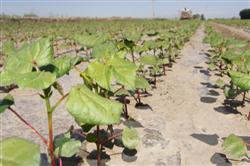
How to comprehensively prevent and control cotton seedling diseases? Master these key points
There are many types of cotton seedling diseases, and they cause severe damage. Among them, the most common and most damaging are damping-off and anthracnose. The incidence rate is generally 20%-30%, and in severe cases reaches 50%-90%. Especially with low temperatures and continuous rain in early spring, cotton seedlings grow weakly and emerge slowly, making them highly susceptible to infection by pathogens, causing large numbers of rotten seeds, diseased seedlings...
-
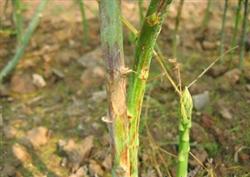
Comprehensive Control Methods and Techniques for Asparagus Pests and Diseases Explained in Detail
For pest and disease control, scientific control measures must be adopted, pollution-free control techniques vigorously promoted, and highly toxic and high-residue pesticides banned, so as to effectively control pest and disease damage while keeping pesticide residues in the product within limits. In control, adopt the measures of "prevention first, comprehensive control" and carry out early prevention in good time. (1) Agricultural...
-
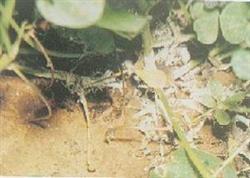
What are the comprehensive control measures for peanut southern blight?
Peanut southern blight is a soil-borne fungal disease that occurs from the pod swelling stage to the maturity stage of peanuts. After the peanut roots, pods and stem bases are infected, they initially show brown soft rot, with white silky mycelium at the root-stem area above ground (hence the name southern blight), along with rapeseed-like sclerotia; the stems and leaves turn yellow and gradually die, and the peanut pods...
-
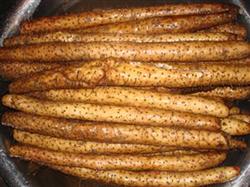
What are the nutritional properties of Chinese yam? A comprehensive guide in one article
Chinese yam, also known as huai shan, huai yam, huai Chinese yam, shuyu, Buddha's palm potato and so on, belongs to the Dioscoreaceae family and is a perennial vegetable. Chinese yam contains a large amount of protein, various vitamins, beneficial trace elements and carbohydrates. In addition, it also contains relatively many medicinal and health-promoting components, such as mucopolysaccharides, allantoin, dioscin, choline, salt...
-
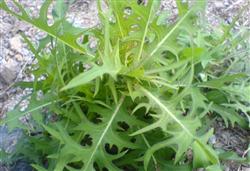
Detailed Explanation of Cultivation Techniques and Comprehensive Utilization Methods of Wild Lettuce
Wild lettuce, also known as mountain lettuce, bitter chicory, and duck feed, is a herbaceous plant of the Asteraceae family, growing by roadsides, in wilderness, and on hillsides. Its seedlings and tender stems and leaves are suitable for eating, and it is a wild vegetable with development value. 1 Botanical characteristics and biological traits: A biennial herbaceous plant, with white milky sap, 80-150 cm tall. Stem erect,...
条件筛选