-
Key Pest and Disease Control Methods and Techniques for Chestnut
1. Select good varieties and prepare enough scion wood. Select good varieties. For the improvement of chestnut orchards, the three new varieties Dahongpao, Qingmaozao and Hongmaozao should be selected. These new varieties have been trial-planted in our city and have the characteristics of early fruiting, high quality, high yield, large fruit and strong stress resistance, and are suitable for promotion and planting throughout the city. Scion collection and storage...
-
Key Points of Pruning and Training Techniques for Densely Planted Chestnuts
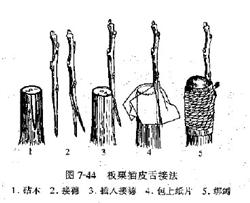
Selection of scions from superior varieties: Choose excellent local chestnut varieties with good performance. Select robust fruiting branches that are fully grown, with plump terminal and lateral buds and free of pests and diseases as scions. The length is generally 7-8 cm, with 3-4 buds retained. Scions should be collected and grafted immediately, or collected in advance, wax-sealed and stored at low temperature until use. Grafting period: one...
-
Key Technical Points for Skillfully Applying Boron Fertilizer to Chestnut Trees
According to surveys, in areas where chestnuts grow normally, 15% of the burrs are empty, and in some cases the rate is even as high as over 50%, seriously affecting chestnut growth. Boron deficiency is the main cause of empty chestnut burrs. Applying boron fertilizer can markedly inhibit the formation of empty chestnut burrs and increase yield. In spring, before the chestnuts sprout, apply it in a ring-shaped trench or in holes...
-
Chestnut Pest and Disease Prevention and Control Methods and Technical Key Points
In Anhui Province, chestnuts are mainly distributed in the mountainous areas of southeastern and western Anhui. Since the 1990s, they have also been developed on a large scale in the Jianghuai hilly region. The main chestnut-producing counties (cities) include Jinzhai, Huoshan, Shucheng, Yuexi, Guangde, Ningguo, Taihu, and others. There are about 150 species of pests and diseases harming chestnuts in our province, with common and severe occurrences affecting chestnuts...
-
Detailed Explanation of Water-Saving Techniques for Chestnut Planting on Hillsides
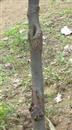
Chestnut blight, also known as chestnut cortical rot, chestnut tree rot, and chestnut plague, is one of the main diseases of chestnut trees. It occurs in all major chestnut production areas in China, with severe damage in some production areas, and the chestnuts grown in Nanxiong are also very severely affected. The bark of affected chestnut trees rots, the tree vigor weakens, and in severe cases it causes dead branches and dead trees. I. Harm...
-
How to save water when growing chestnuts on hillsides? Four methods to teach you
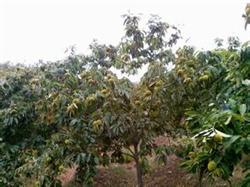
1. Deep plowing to improve the soil and heavy application of organic fertilizer. Because hillside chestnut orchards are often left unmanaged, with severe soil erosion and extremely low soil fertility, measures should be taken to build up soil fertility. Immediately after harvesting the fruit that year, deep plow to improve the soil. 2. Foliar topdressing after fruit harvest. Timely foliar topdressing after fruit harvest can both ensure that the leaves drop at the right time, ...
-
Detailed Explanation of Key Techniques for High-Yield Organic Chestnut Cultivation
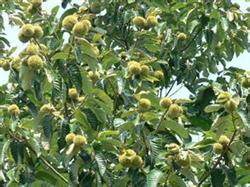
Carrying out winter pruning of chestnut trees in the full-bearing period is an effective measure to extend the full-bearing period and prevent the occurrence of alternate bearing. 1. Pruning timing: The winter pruning period for chestnuts is best from half a month after leaf fall to half a month before spring bud break the following year, that is, from mid-December to early February of the next year, but when encountering ice...
-
Key Technical Points for Pressing Green Manure under Chestnut Trees in the Rainy Season
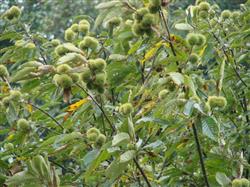
Pressing green manure under chestnut trees can improve the soil and prevent water and soil erosion. It has many advantages such as low investment, low cost, and a high comprehensive utilization rate. The techniques for pressing green manure under chestnut trees in the rainy season are introduced as follows: 1. Sources of green manure for chestnut. First, artificially cultivated green manure, commonly including leguminous plants such as false indigo (Amorpha fruticosa) and mung bean; second, wild green manure,...
-
Management Measures for Spring Planting and Cultivation of Chestnut
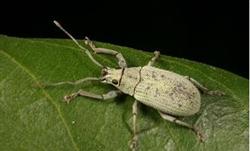
The chestnut weevil, also known as the chestnut snout beetle, lays eggs in August, and the eggs hatch into larvae in September. The larvae bore into and feed on chestnut fruits, causing the damaged fruits to be filled with insect droppings, affecting their edibility and making them unsuitable for seed. Fruit damage generally ranges from 20% to 40%, and can reach 90% in severe cases. The control method is to spray insecticide on chestnut trees. Use 50% fenitrothion at 800 times dilution...
-

Detailed Explanation of Post-Harvest Management Techniques for Chestnut
Post-Harvest Management Techniques for Chestnut
条件筛选