Correct methods for using herbicides in soybean fields
When choosing herbicide varieties for soybean fields, safety to the crop and low risk of herbicide injury come first; the second consideration is the control effect on weeds, that is, the control effect must be good. Under the condition of good control effect, choose varieties with lower drug costs as much as possible. The weeds in soybean fields fall into two major categories: grass weeds and broadleaf weeds. Grass weeds...
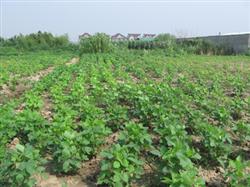
When choosing herbicide varieties for soybean fields, safety to the crop and low risk of herbicide injury come first; the second consideration is the control effect on weeds, that is, the control effect must be good. Under the condition of good control effect, choose varieties with lower drug costs as much as possible. The weeds in soybean fields fall into two major categories: grass weeds and broadleaf weeds. The main grass weeds are: crabgrass, barnyardgrass, goosegrass, foxtail, etc. The main broadleaf weeds are redroot pigweed, cocklebur, copperleaf, eclipta, purslane, etc. The herbicide varieties to use should be determined according to the types of weeds growing in the soybean field. If grass weeds are dominant, acetochlor, metolachlor, or pretilachlor can be used for pre-emergence soil closure; quizalofop-P, fluazifop-P-butyl, or haloxyfop-P-methyl can also be used for post-emergence stem and leaf spraying. If broadleaf weeds are dominant in the soybean field, cloransulam-methyl can be used for pre-emergence soil closure; fomesafen, fluoroglycofen-ethyl, etc. can also be used for post-emergence stem and leaf spraying. In soybean fields where grass weeds and broadleaf weeds grow together, a single agent with a broad weed-killing spectrum should be selected, or single agents with different weed-killing spectra should be mixed so as to control both grass weeds and broadleaf weeds.
Determine the dosage of the herbicide variety used. Different herbicide varieties have different dosages for controlling weeds in soybean fields. The dosage of alachlor is relatively high; in the spring soybean production areas of Northeast China, the effective amount used per hectare reaches 2520-2880 grams, while the effective amount of chlorimuron-ethyl per hectare is only 15-22.5 grams, a difference of 128-168 times. For the same herbicide variety, its dosage also varies with the size of the weeds, the application method, and the application environment (such as soil texture, organic matter content, soil moisture, temperature, and whether adjuvants are used). In general, when weeds are at a larger leaf stage, the application rate should be appropriately increased; when an agent can be used both for soil treatment and for stem and leaf treatment, the dosage used for soil treatment is higher than that for stem and leaf treatment. For herbicides used as soil treatment, the dosage should be appropriately increased when the soil texture is relatively heavy, the organic matter content is relatively high, and the soil moisture is relatively low; for stem and leaf treatment agents used as stem and leaf sprays, the dosage should be appropriately increased when the climate is dry and the soil moisture is relatively low. When adjuvants are used, the dosage can also be appropriately reduced. In short, determining the herbicide dosage is one of the main factors related to whether the control effect is good or poor. If the dosage is too low, the control effect will be relatively poor, but if the dosage is too high, it will cause waste, and may also cause phytotoxicity to crops and increase environmental pollution.