Dodder Control Methods and Technical Key Points in Soybean
Dodder, also called yellow silk vine or tangling silk vine, is a malignant weed. It harms many crops and can cause total crop failure in soybean, and it occurs commonly in all regions. (1) Morphology: The stem of soybean dodder is yellow, orange-yellow or yellow-green, smooth and hairless, thread-like, and coils leftward around the host stem. The leaves are reduced to membranous scales. The flowers...
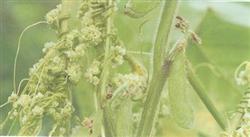
Dodder, also called yellow silk vine or tangling silk vine, is a malignant weed. It harms many crops and can cause total crop failure in soybean, and it occurs commonly in all regions.
(1) Morphology: The stem of soybean dodder is yellow, orange-yellow or yellow-green, smooth and hairless, thread-like, and coils leftward around the host stem. The leaves are reduced to membranous scales. The flowers are yellowish-white, mostly clustered together in a hydrangea-like shape. The seeds are spherical, yellow-brown or dark brown, with a rough surface. One dodder plant can parasitize more than 300 soybean plants in one season and produce more than 1 million seeds.
(2) Control methods: ① Agricultural control. Carefully select seeds to prevent soybean seeds from carrying dodder seeds; practice crop rotation, and it can be rotated with sweet potato, foxtail millet, corn, and sorghum for 2-3 years. ② Biological control. The biocontrol agent Lubao No. 1 can be used for control. The agent must be applied early; when dodder has tangled 2-3 soybean plants, spray a suspension containing 40 million viable spores per milliliter. Spray evenly so that all parts are covered with the fungal liquid. Breaking the dodder vines with a wooden stick before spraying can improve the control effect. ③ Chemical control. When dodder has tangled the stems and begun to spread to other plants, spray with 10% glyphosate emulsifiable concentrate at 400-500 times dilution or 48% dinitramine emulsifiable concentrate at 100 times dilution.