-

Detailed Explanation of the Key Points of the Three-Ridge Soybean Cultivation Technique
In the early 1980s, Heilongjiang Bayi Agricultural University combined agricultural machinery with agronomy and gradually formed a complete, effective, comprehensive mechanized high-yield soybean cultivation technology system, called the "three-ridge" (or "three ridges") cultivation technique. The so-called "three-ridge" refers to the use of three mechanized operation techniques on the basis of ridge tillage: first, deep loosening of the ridge body and furrow in stages and at intervals; second, layered deep application of base fertilizer; third, precision double-row sowing on the ridge. The above three operations are completed by machinery in one pass. After this technique was promoted, various regions made some improvements according to
-
Detailed Explanation of Soybean Cultivation Technology with Film Mulching Between Rows on Wide Ridges
Heilongjiang Province is China's main soybean production area, with its planting area accounting for 7% of the national total and its current total output accounting for 11% of the national total. In the course of soybean production development, the Heilongjiang Reclamation Area has vigorously promoted scientific and technological innovation, resulting in a relatively large increase in soybean yield per unit area and total output. From 2001 to 2005, the average yield per hectare reached 2531.7 kg; in 2005, the average soybean yield per mu reached 178 kg, reaching or approaching the soybean yields of advanced countries worldwide. Soybean cultivation technology with film mulching between rows on wide ridges
-
What are the control methods for the soybean root miner fly?
The soybean root miner fly belongs to the order Diptera, family Agromyzidae. Also known as the soybean root maggot, soybean root miner fly, etc., this insect is a monophagous pest that only damages soybean and wild soybean. It is distributed in Heilongjiang, Liaoning, Inner Mongolia, Shandong and Hebei, among other places. Damaged plants can suffer yield losses of more than 40% per plant compared with healthy plants. 1. Morphological characteristics (1) The adult is about 3 mm long, glossy black, with wings that are light purple with a metallic sheen. The compound eyes are bright red. (2) The egg is about 0.015 mm long and about 0.04 mm wide, kidney-shaped, white and translucent.
-
Key Points of Three-Dimensional Cultivation Technology for Gastrodia elata and Soybean
Gastrodia elata is a traditional Chinese medicinal herb with effects such as benefiting qi, calming convulsions, nourishing the liver and stopping dizziness, dispelling wind-dampness, and strengthening bones and muscles. In recent years, on the basis of artificial box cultivation, we have made full use of the growth characteristics of Gastrodia elata and successfully adopted underground planting of Gastrodia elata with above-ground planting of the short-stalked crop soybean. According to investigation and measurement by the Agricultural Station of Shuidian Town, in three-dimensional cultivation of soybean and Gastrodia elata, the yield of commercial dried Gastrodia elata is 200-300 kg per mu, creating an output value of 8000-10000 yuan (calculated at 36-40 yuan/kg); the yield of soybean is 150-175 kg per mu, creating an output value of 360-
-
High-yield and high-efficiency cultivation technique for interplanting onions with grain and soybeans
Interplanting onions with grain and soybeans is an effective way to achieve two harvests from one plot and raise the cropping index. It is designed, on the premise of ensuring grain production, to develop off-season vegetable production, increase returns, and achieve high yield and high efficiency. Its main cultivation points are: 1. Select improved varieties: for corn, Haidan No. 2 can be used; for soybeans, Liaodou 10 can be used; for onions, Xiongyuan No. 1. 2. Grow strong seedlings: onions are raised in autumn seedlings. Generally from August 15 to August 22. Prepare beds and apply 5000 kg of decomposed farmyard manure per mu, and diammonium phosphate
-
What are the precautions for feeding pigs soybean cake?
Soybean cake is a high-quality feed for pigs. It has a fragrant aroma and pigs love it very much, but it lacks vitamin D, carotene and calcium. Some carrots and mineral feeds such as bone meal and stone meal should be supplemented. The amount of soybean cake used must not be too much; generally about 15% of the daily ration is appropriate, and more than 20% often causes diarrhea in pigs. Therefore, when using soybean cake to feed pigs, it must be used scientifically and fed in appropriate amounts so that it can play its role as a high-quality concentrated feed; otherwise, it will have the opposite effect.
-
Intercropping soybeans with yew can increase the survival rate
Recently, 2.46 million rooted cuttings of Maire yew (Taxus media) cultivated at a yew nursery in Youxian County, Zhuzhou, Hunan, have been growing rapidly in Tongshan Village, Yajiangqiao Town in that county, and passed expert inspection at the end of August. The nursery's new seedling-raising method of "intercropping with soybeans" has raised the survival rate of yew seedlings to more than 95%. It is reported that the successful introduction and propagation of Maire yew not only helps protect the precious wild Chinese yew (Taxus wallichiana var. mairei) resources, but also opens up broad prospects for developing this "golden plant." At present, the nursery is engaged in forestry
-
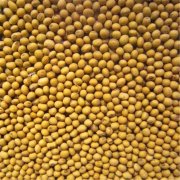
High-Yield Cultivation Techniques for the Super High-Yield Soybean Variety Tainan No. 6
New Soybean Variety "Tainan No. 6" for Both Cover Crop and Green Manure: Do you know the new soybean variety "Tainan No. 6"? Do you know its characteristics and the benefits of this variety? If not, but you still want to grow it, then let's take a look together. This variety was developed through hybrid breeding
-

-

What are the environmental requirements for growing soybeans?
Environmental requirements for soybeans
条件筛选