-
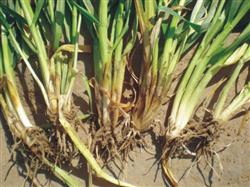
Spring Occurrence Patterns and Control Methods of Wheat Sharp Eyespot
Wheat sharp eyespot is a fungal disease mainly spread through the soil. As yield levels have increased, with the promotion of high-yielding varieties and wheat field management involving heavy watering and heavy fertilization, its damage has become increasingly serious. The pathogen of wheat sharp eyespot has a broad host range; besides infecting wheat, it can also infect corn, rice, foxtail millet, sorghum and many other...
-
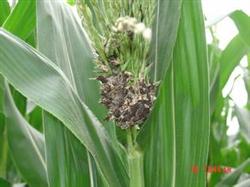
Occurrence Patterns and Control Methods of Black-Streaked Dwarf Disease in Spring Corn
Black-streaked dwarf disease is a viral disease transmitted by the virus-carrying small brown planthopper (Laodelphax striatellus), with the seedling stage being the main susceptible period. Since the 1990s, with changes in planting structure, black-streaked dwarf disease in single-season rice and spring corn in Chun'an County has worsened year by year, especially since 2000, when rice black-streaked dwarf disease has occurred throughout the county,...
-
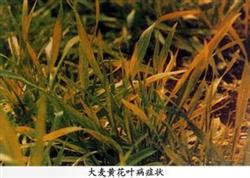
Occurrence Patterns and Control Methods of Barley Yellow Mosaic Disease
Barley yellow mosaic disease occurs mainly in the lower Yangtze River basin, in the provinces and municipalities of Hubei, Zhejiang, Jiangsu, Shanghai and Anhui, among which Jiangsu, Zhejiang and Shanghai are the most severely affected. Diseased plants die off prematurely, leading to a lower rate of productive tillers in barley, a marked reduction in seed-setting rate, lower thousand-grain weight, lower flour yield and reduced quality. When barley develops...
-
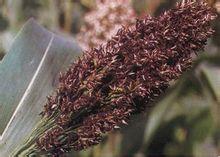
Occurrence Patterns and Control Methods of Sorghum Head Smut
As the sorghum planting area continues to expand and the planting years lengthen, the damage caused by sorghum head smut is becoming increasingly serious, directly affecting the development of sorghum production. I. Degree of damage: In the early 1990s, sorghum head smut occurred only sporadically in a few local areas of the county. By 2000, the affected area in individual townships was about 43 hectares, with a diseased plant rate of 15%, while other planting areas had only mild occurrence. According to a 2004 survey, the affected area in the county was 800 hectares, accounting for 34% of the total sorghum sown area, with an average diseased plant rate of 20.5% in affected fields; in 2005, the affected area in the county was 1333 hectares, accounting for 67% of the total sorghum sown area, with an average diseased plant rate of 31.2% in affected fields. In the sorghum planting area of the Second Brigade of Biesituobie Township, the diseased plant rate reached 70.5%, with a severity of 70%.
-
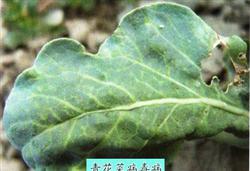
What to Do When Broccoli Gets a Viral Disease? Disease Patterns and Key Control Points
Viral disease is a major disease of broccoli, occurring commonly and severely. The disease patterns and control methods of this disease are described below: 1. Disease patterns In areas where cruciferous vegetables are not grown in winter, the virus overwinters on stored Chinese cabbage, cabbage, radish or overwintering spinach; when cruciferous vegetables are grown in winter, ...
-
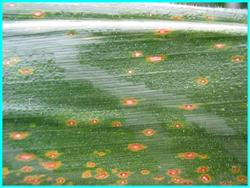
Occurrence Patterns and Control Methods of Curvularia Leaf Spot in Corn
Corn Curvularia leaf spot, also known as yellow spot disease and called yellow leaf disease by farmers, is another important disease of corn in our province in recent years, following large and small spot diseases and rust. After the onset of Curvularia leaf spot, the leaves are covered with lesions, and when they merge, the leaves dry up and die, seriously affecting corn growth and reducing yield. I. Symptoms: ...
-
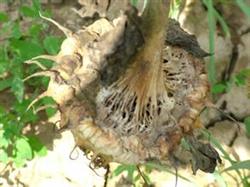
Occurrence patterns and control methods of sunflower sclerotinia rot
As the pace of planting structure adjustment accelerates, market demand for confectionery-type sunflower seeds is increasing day by day. Sunflower is an economical crop that is easy to manage and saves labor and effort. Because field management is too extensive and because of years of continuous cropping on the same land, many diseases have occurred and spread and have worsened year by year, directly causing sunflower yields to decline...
-
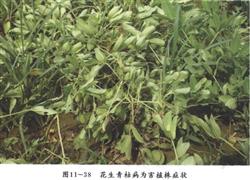
How to prevent and control peanut bacterial wilt? Understanding the patterns of occurrence is key
Peanut bacterial wilt, commonly known as "green wilt", "seedling death", "plague", and "vine death", is a major disease in peanut-growing areas. In ordinary plots, the disease incidence is 10%-25%, and in severely affected plots the incidence reaches over 50%. Peanut bacterial wilt is a typical vascular disease that can occur throughout the entire growth period of peanuts, but...
-
Occurrence Patterns and Control Methods of Soybean Red Spider Mites
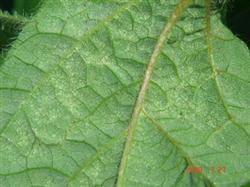
Red spider mites is the collective name for red leaf mites, a composite population of several leaf mite species belonging to the family Tetranychidae. In Huachuan County, they occur to varying degrees every year, though these are generally light occurrence years. However, according to this year's surveys, due to the effects of recent high temperatures and drought, the damage caused by red spider mites to soybeans in Huachuan County has risen from a secondary position to a primary...
-
Occurrence Patterns and Control Methods of Soybean Sclerotinia Stem Rot
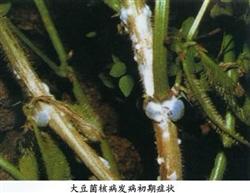
Soybean Sclerotinia stem rot is a common disease on soybean crops, mainly causing stalk rot, with pale white lesions, hollow stems containing black sclerotia, and easy breakage. In the past two years, soybean Sclerotinia stem rot has shown a trend of increasing severity year by year. Causes and characteristics: 1. Large number of sclerotia in the field. The pathogen of soybean Sclerotinia stem rot is a fungus...
条件筛选