-
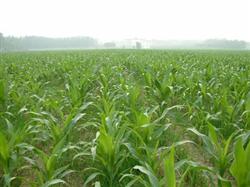
What are the precautions for herbicide use in corn cultivation
1. If the base fertilizer is insufficient, apply a top dressing to supplement the base fertilizer. The advantage of supplementing the base fertilizer with farmyard manure in a top dressing is that it increases the soil's organic matter content and improves the soil's granular structure. However, most farmers often overlook this in corn cultivation and do not pay attention to the application of base fertilizer. If the base fertilizer is insufficient and only a top dressing (mainly chemical fertilizer) is used to supplement it, the soil will only become more and more barren the more it is planted, and the more...
-
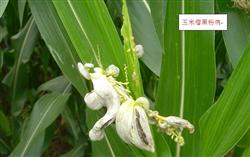
Control of corn smut disease cannot be ignored
The symptoms of this disease can occur on all aboveground parts of the corn throughout the entire growth period, and are especially obvious at the tasseling stage. Tumor-like growths of varying sizes develop on the affected parts. Initially, the tumors are covered with a white membrane, which later turns gray and, after drying and cracking, releases black powdery material, namely the spores of the pathogen. On the leaves, bean-sized tumor-like masses are easily produced, while on the tassel...
-
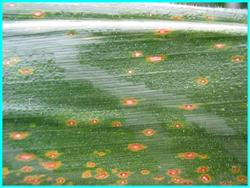
Occurrence Patterns and Control Methods of Curvularia Leaf Spot in Corn
Corn Curvularia leaf spot, also known as yellow spot disease and called yellow leaf disease by farmers, is another important disease of corn in our province in recent years, following large and small spot diseases and rust. After the onset of Curvularia leaf spot, the leaves are covered with lesions, and when they merge, the leaves dry up and die, seriously affecting corn growth and reducing yield. I. Symptoms: ...
-
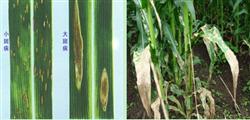
Control Techniques for Northern Corn Leaf Blight and Southern Corn Leaf Blight
Northern corn leaf blight and southern corn leaf blight mainly damage the leaves, and sometimes also infect the leaf sheaths and husks; southern corn leaf blight, in addition to damaging the above parts, can also damage the ear. In many regions these two diseases are collectively called "corn leaf blight." 1. Symptom identification: The typical symptom of northern corn leaf blight is that small lesions rapidly expand into large elongated spindle-shaped spots...
-
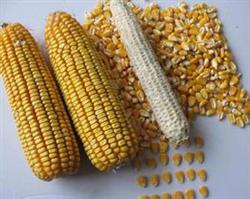
Things to note when choosing seeds for spring-planted corn, these aspects cannot be ignored
How to choose good corn seed is a key issue that affects whether yields can be increased in autumn. When choosing good corn seed, farmer friends should follow these principles: 1. Choose seed according to heat resource conditions. The local heat resources are related to the growth period of the corn variety. Corn varieties with a long growth period have good yield performance and...
-
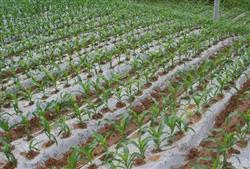
What are the key technical points for sowing and ensuring seedling survival in spring corn?
1. Enrich the seedling bed: Practice seedling raising on a fertile bed. Choose a rapeseed seedling bed or a dry-raised rice seedling pool as the seedling bed for spring corn. Set aside a sufficient seedling bed according to the ratio. For seedling raising with 5 cm pot diameter, the ratio of seedling bed to field area is 1:20; for large-pot seedling raising with a pot diameter above 7 cm, the ratio of seedling bed to field area is 1:10-15. In early...
-
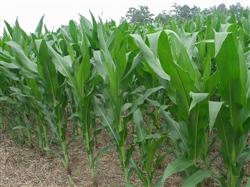
What are the key points for field management in the late stage of spring corn?
1. Choose good varieties. Choosing good varieties is the key to achieving a corn harvest; be sure to choose varieties introduced by formal agricultural technology departments, or varieties that have been approved by the provincial seed approval committee. In 2006, what we introduced was "Changxin No. 1," introduced from elsewhere by Danleng County Changxin Seed Co., Ltd. Per mu...
-
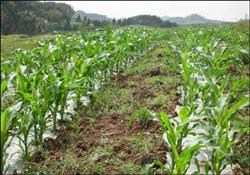
How to sow spring corn in drought-resistant conditions? Detailed explanation of planting key points
1. Base fertilizer: Spring corn should be fertilized according to the basic principles of base fertilizer as the main part and topdressing as the supplement; farmyard manure as the main part and chemical fertilizer as the supplement; nitrogen fertilizer as the main part and phosphorus fertilizer as the supplement; ear fertilizer as the main part and grain fertilizer as the supplement. Base fertilizer should generally account for about 70% of the total fertilization amount, and most phosphorus fertilizer should also be applied together with the base fertilizer, generally applied in the previous year combined with autumn plowing....
-
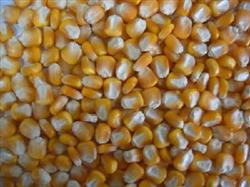
How should spring corn seeds be treated before drought-resistant sowing?
Before sowing, select and sun-dry the seeds. Choose uniform, consistent seeds and sun them for three days on a sunny day to improve germination vigor, disease resistance, and seedling uniformity. Conduct a germination test before sowing. The purity of the selected seeds should be no less than 96%, the cleanliness no less than 98%, and the germination rate no less than. Seed coating. Use a drought-resistant compound seed coating agent on...
-
Why should spring corn be fertilized with the "light early, heavy late" approach?
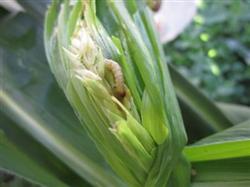
The corn borer, also known as the corn stalk borer. At present, spring corn is at the late whorl stage (funnel stage), which is the best period for controlling the corn borer. During the funnel stage, most newly hatched corn borer larvae crawl into the leaf whorl and feed on the mesophyll of the not-yet-unfolded leaves, and spraying at this stage makes it easy for the spray liquid to enter the leaf whorl, improving control effect...
条件筛选