What are the precautions for herbicide use in corn cultivation
1. If the base fertilizer is insufficient, apply a top dressing to supplement the base fertilizer. The advantage of supplementing the base fertilizer with farmyard manure in a top dressing is that it increases the soil's organic matter content and improves the soil's granular structure. However, most farmers often overlook this in corn cultivation and do not pay attention to the application of base fertilizer. If the base fertilizer is insufficient and only a top dressing (mainly chemical fertilizer) is used to supplement it, the soil will only become more and more barren the more it is planted, and the more...
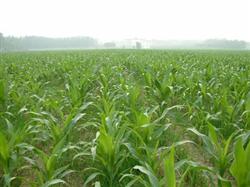 In spring corn fields in the north, because the temperature is low and there is little rain and drought when corn is sown, in order to ensure a good weed control effect from soil application before seedling emergence after sowing, it is necessary to irrigate enough bottom moisture, prepare the land finely, compact the soil after sowing, and then apply the herbicide. If the soil moisture is poor, after application the soil can be shallowly mixed (2-3 cm) or sprinkler irrigation can be used to improve the weed control effect. Also, because the temperature is low and there is little rain at the time of application, and the interval before sowing the subsequent wheat crop is relatively long, the herbicide can be applied at the upper limit of the recommended dosage or the dosage can be appropriately increased to ensure a relatively high weed control effect.
Corn is generally sown from late May to early and mid-June. By this time summer has arrived, with high temperatures and abundant rainfall, and weeds emerge and grow quickly. If they are not controlled in time, they can easily cause severe weed infestation and reduce yield. Chemical weed control should mainly be based on soil treatment after sowing and before seedling emergence. Because the sowing period of summer corn and the sowing period of the subsequent crop wheat are relatively close, when choosing herbicides attention should be paid to the effect on the subsequent crop wheat. For example, atrazine is one of the herbicides commonly used in corn fields, but its field residual period is very long. If the dosage is too large or the application is uneven, it can easily cause residual phytotoxicity to the subsequent crop wheat. The length of the residual effective period of atrazine is affected by the combined influence of many factors, and the application rate per unit area is the key factor. Where the dosage per hectare is large, more pesticide remains in the soil. When the atrazine content in the soil is greater than 0.1 mg/kg, it affects the germination and growth of wheat. The degradation rate of atrazine is related to the uniformity of spraying, soil texture, rainfall, soil pH and other factors. Research shows that in North China, applying 3000 ml of 38% atrazine suspension concentrate per hectare to summer corn is the critical value. Exceeding this dosage makes it easy to cause phytotoxicity to the subsequent crop wheat. All localities can flexibly determine the appropriate dosage according to local conditions. Yumaibao, 40% acetochlor-atrazine aqueous suspension concentrate, 50% Hebaobao emulsifiable concentrate and others are highly effective broad-spectrum herbicides that are safe for both corn and subsequent crops. Because the sowing period of summer corn has high temperatures and abundant rainfall, which favors the exertion of herbicide efficacy, the lower limit of the recommended dosage can be used or the dosage can be appropriately reduced, and a relatively high weed control effect can still be achieved.