Why should spring corn be fertilized with the "light early, heavy late" approach?
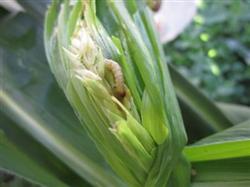
The corn borer, also known as the corn stalk borer. At present, spring corn is at the late whorl stage (funnel stage), which is the best period for controlling the corn borer. During the funnel stage, most newly hatched corn borer larvae crawl into the leaf whorl and feed on the mesophyll of the not-yet-unfolded leaves, and spraying at this stage makes it easy for the spray liquid to enter the leaf whorl, improving control effect...
 For base fertilizer, spring corn should be fertilized according to the basic principles of mainly base fertilizer with supplementary topdressing; mainly farmyard manure with supplementary chemical fertilizer; mainly nitrogen fertilizer with supplementary phosphorus fertilizer; and mainly ear fertilizer with supplementary grain fertilizer.
Base fertilizer should generally account for about 70% of the total fertilizer applied, and most of the phosphorus fertilizer should also be applied together with the base fertilizer, generally in the previous year in combination with autumn plowing. When applying base fertilizer, it should be evenly mixed with the soil. If nitrogen fertilizer is used as base fertilizer, it must be applied deeply to prevent nitrogen volatilization loss. In phosphorus-deficient soil, apply 450-600 kg of superphosphate per hectare; in potassium-deficient soil, apply 150 kg of potassium chloride per hectare; in zinc-deficient soil, apply 15 kg of zinc sulfate heptahydrate per hectare.
Seed fertilizer: before spring sowing, apply a small amount of farmyard manure together with an appropriate amount of nitrogen and phosphorus chemical fertilizer in bands or holes as corn seed fertilizer.
Topdressing: Spring corn topdressing mostly adopts the "light early, heavy late" fertilization method, that is, applying 1/3 of the topdressing before the corn jointing stage, with 75-150 kg of urea per hectare, and applying 2/3 of the topdressing at the large funnel stage, with 150-300 kg of urea topdressed per hectare, to meet the nutrient needs of the corn ear's spikelet and floret differentiation as well as the grain formation stage. Experimental results confirm that using the "light early, heavy late" fertilization method for spring corn increases yield by 13.3% compared with the "heavy early, light late" fertilization method.