-
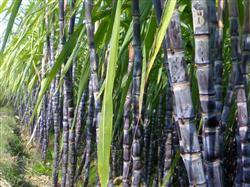
What should be noted when planting black-skinned sugarcane in continuous cropping?
What should be noted for continuous cropping of black-skinned sugarcane? Please give guidance. One of the main reasons for the low yield and poor quality of black-skinned fruit sugarcane under continuous cropping is that the soil lacks medium and trace elements such as magnesium, silicon, calcium, zinc, boron, iron, molybdenum and manganese, resulting in an insufficient supply of medium and trace elements, which causes poor growth of the fruit sugarcane, not only...
-
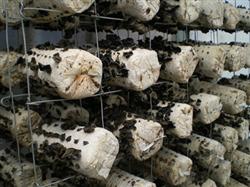
What are the precautions for cultivating black fungus (wood ear mushroom)?
What should be noted when cultivating black fungus (wood ear mushroom)? Please explain that black fungus is an aerobic, moisture-loving, cold-tolerant fungus. After making holes, keep the relative humidity of the space above 90%. After 15 days, a large number of ear buds will form. After the ears begin to form, increase ventilation, 3-4 times a day, 1 hour each time, under the condition of ensuring relative humidity above 90%...
-
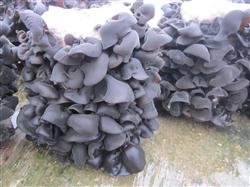
How do you grow black fungus (wood ear mushroom) so it grows well?
How do you grow black fungus well? Here is an introduction. For growing black fungus, you can refer to the following cultivation methods: 1. Seasonal arrangement. Black fungus is a wood-rotting fungus and belongs to the medium-to-high temperature type of mushrooms. Its mycelium growth temperature range is 6-35°C, with the optimum being 22-28°C; the general temperature range for the formation and growth of the fruiting bodies is 15-3...
-
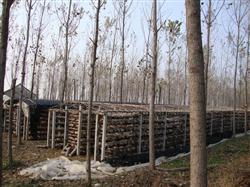
Key Techniques for Summer Cultivation of Black Wood Ear (Auricularia heimuer) in Forest Intercropping
How do you cultivate black wood ear in forest intercropping in summer? Please provide guidance. Under normal conditions, black wood ear grown in forest intercropping should produce 3 flushes. However, at present, after some first-flush wood ears are harvested, the bags become infected with contaminant microorganisms before the second flush even emerges, causing reduced yields or even total crop failure in the second and third flushes, which hurts profits. I. Causes of contaminant microorganism infection during flush transition: (1)...
-
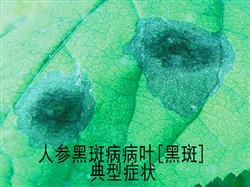
What fungicide works well to control ginseng black spot disease?
What fungicide should be used to control ginseng black spot disease? Please explain that ginseng black spot disease is caused by fungi of the genus Alternaria infecting the stems, leaves, flowers and fruits of ginseng. It spreads through the air. It occurs easily when there are many rainfall events, high air humidity and temperatures of 18°C-22°C, and spreads to surrounding plants. Stem spots mostly appear in mid-to-late May,...
-
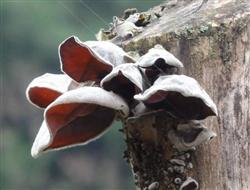
How to grow white-backed wood ear? A detailed guide to black wood ear cultivation methods
How to grow white-backed wood ear? An introduction to the environmental requirements of white-backed wood ear (1) Temperature. The suitable temperature range for mycelial growth is 8-37°C, with the optimum at 25-28°C; the suitable temperature range for fruiting body growth and development is 13-30°C, with the optimum at 18-22°C. Above 26°C the ear pieces grow quickly but are thin and turn red, resulting in poor product quality...
-
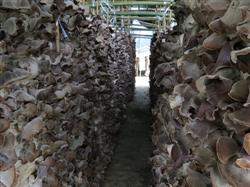
How should mist irrigation be carried out when growing black fungus (wood ear mushroom)?
How do you do mist irrigation when growing wood ear mushrooms? Please give an introduction to the method. Mist irrigation timing for wood ear mushrooms: every spring is the golden season for cultivating black fungus (wood ear mushroom), and mist irrigation at this time can yield 1-2 extra flushes of spring mushrooms, with this increased production accounting for more than 80% of the total increase. In early summer, if high temperatures (above 30°C) do not occur, using mist irrigation to lower the temperature and raise humidity can also allow harvesting 1...
-
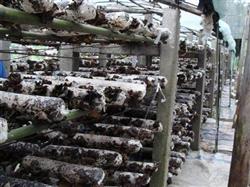
How to grow black fungus (wood ear mushroom) using vertical/three-dimensional cultivation? Detailed growing techniques
How to grow black fungus using vertical/three-dimensional cultivation? Please explain the method. For vertical/three-dimensional cultivation of black fungus, you can refer to the following methods: 1. Spawn preparation: The spawn production technique for wood ear mushroom is the same as for conventional edible fungi. 2. Spawn-running management: For the culture medium for cultivating wood ear mushroom, you can adapt to local conditions and use local materials, using cottonseed hulls or mixed wood sawdust as the culture medium. April-May...
-
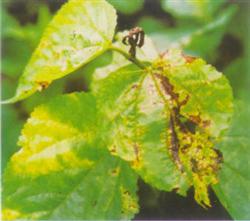
How to control mulberry bacterial blight (black wilt disease)?
How to control bacterial blight (black wilt disease) when growing mulberry trees? Please give guidance. Mulberry bacterial blight, commonly known as "rotten head disease", is one of the serious mulberry diseases. Symptoms: (1) Blackened buds: at the onset of the disease, the buds and leaves lose their luster and die rapidly; (2) New shoot stem rot. The base of new shoots develops black rot, with part of the phloem and xylem becoming necrotic; (3) Rotten head. After the apical buds and leaves are infected, the growing point dies first.
-
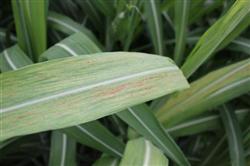
How to control black-skinned chewing cane mosaic virus disease?
What harm does black-skinned chewing cane mosaic disease cause? How to control black-skinned chewing cane mosaic virus? We also ask knowledgeable netizens to help explain. Zhongdiwang has compiled the harm and control methods of black-skinned chewing cane mosaic virus, listed in detail below for netizens' reference. The harm of black-skinned chewing cane mosaic virus: black-skinned...
条件筛选