How to grow white-backed wood ear? A detailed guide to black wood ear cultivation methods
How to grow white-backed wood ear? An introduction to the environmental requirements of white-backed wood ear (1) Temperature. The suitable temperature range for mycelial growth is 8-37°C, with the optimum at 25-28°C; the suitable temperature range for fruiting body growth and development is 13-30°C, with the optimum at 18-22°C. Above 26°C the ear pieces grow quickly but are thin and turn red, resulting in poor product quality...
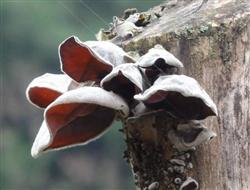
How to grow white-backed wood ear? An introduction
Environmental requirements of white-backed wood ear (1) Temperature. The suitable temperature range for mycelial growth is 8-37°C, with the optimum at 25-28°C; the suitable temperature range for fruiting body growth and development is 13-30°C, with the optimum at 18-22°C. Above 26°C the ear pieces grow quickly but are thin and turn red, resulting in poor product quality; below 15°C growth is slow, and below 10°C growth stops; (2) Moisture. The water content of the raw material substrate is about 58%, and must not exceed 60% or fall below 55%; during the mycelial growth stage the relative air humidity is about 75%; during the fruiting body development stage it is 85%-90%. (3) Air. White-backed wood ear is an aerobic fungus, so ventilation and air exchange should be strengthened during both the mycelial growth stage and the ear production stage. Especially after the ear buds have formed, if ventilation is poor and the carbon dioxide concentration is too high, the ear pieces are not easy to spread out and form "chicken-claw ears," losing their commercial value. (4) Light. Mycelial growth does not require light; the optimum light intensity during the fruiting body growth period is 40-500 lux. (5) pH. The mycelium can grow between pH 4-7, with pH 5-6.5 being suitable.
White-backed wood ear cultivation techniques
1. Spawn production. For the mother spawn, PDA enriched medium is preferable; for the stock spawn and cultivation spawn, materials such as sawdust, cottonseed hulls, wheat, and corncobs can be used as the medium, prepared by conventional methods, with a water content of 50%-60%.
2. Cultivation season. White-backed wood ear is a medium-temperature fruiting fungus. In order to have a longer ear production and harvest period, autumn cultivation is generally the main season. Each region can select the best cultivation season based on local meteorological data; the suitable inoculation date is one month before the date when the natural temperature stabilizes at 23-25°C.
3. Bag production. (1) Substrate formulas: sawdust 85%, rice bran 85%; cotton hulls 87%, wheat bran 10%; corncobs 82%, rice bran 12%; rice straw (3-5 cm long) 40%, rice hulls 10%, cottonseed hulls 20%, sawdust 12%, rice bran 15%. To each of the above four formulas, add 1% gypsum powder and 2% lime, with a water content of 58%-60%. The raw materials must be fresh, without mold or insect damage. (2) Mixing and bagging. Weigh the various raw and auxiliary materials according to the proportions, mix them thoroughly and evenly, dissolve the lime in water, then use the lime water to mix the material to the appropriate water content, then pile it up for fermentation for 3-4 days, with the pile temperature reaching 65-70°C, turning the pile twice in between. After fermentation is complete, use 33 cm x 17 cm x 0.05 cm low-pressure polyethylene bags for filling. When filling, the material should be packed firmly, so that no finger indentations remain when the bag is held by hand. Fill each bag with 0.4 kg of dry material, about 0.9 kg wet weight. After filling, put on the bag mouth ring, insert a cotton plug, and sterilize immediately. (3) Sterilization and inoculation. Bags filled on the same day should be sterilized in the pot under normal pressure that same day, with the sterilization time generally controlled at 100°C for 10-12 hours. Strictly controlling the sterilization time is the key to the success or failure of cultivation. After sterilization is complete, take the bags out and stack them in the inoculation room or a plastic (11290, -105.00, -0.92%) tent, and seal and disinfect with an aerosol disinfectant for 1 hour (4 grams per cubic meter of space). After the material temperature has cooled to below 33°C, inoculate using the "fully open inoculation method." This method is fast and highly efficient; each bag of cultivation spawn can inoculate 40 cultivation bags.
4. Mycelial growth management. The main task of management during the mycelial growth period is to regulate the temperature and humidity of the incubation room and to check and deal with contaminating fungi. White-backed wood ear cultivation mainly relies on the natural climate to arrange production. During the mycelial growth season, temperatures are high, there is much rain, and humidity is high, so management mainly focuses on cooling and dehumidifying. The main measures are: strengthening ventilation and frequently turning the bags. This can both lower the temperature and remove moisture. The indoor temperature should be controlled below 33°C, and the relative humidity controlled within 80%. During the mycelial growth period, the work of checking and dealing with contaminating fungi cannot be neglected. If red Neurospora is found, it should be removed promptly and buried deep or burned with fire; bags contaminated by green mold or yellow Aspergillus should be taken out for isolated incubation to prevent spread and transmission.
5. Ear production management. 30-35 days after inoculation, the mycelium can fill the bag. When the natural temperature is below 25°C, the bags can be opened at the appropriate time for ear production. The bag-opening method is to use a sharp small knife to cut the bag mouth diagonally downward from top to bottom at 1-2 cm from the material surface, so that the upper part of the bag has a 1-2 cm long "brim," while the lower part is flush with the material surface. In this way, water will not accumulate at the bag mouth when spraying. After cutting the bag, stack the bags in a staggered, seam-splitting style with the bag mouth and bag bottom alternating, to a height of 10-15 layers, while strengthening water management, raising environmental humidity, and providing appropriate ventilation and air exchange. When entering the mature stage and the ear pieces curl back, gradually reduce the amount of water sprayed, until completely stopping water 2-3 days before harvest.
6. Harvesting and drying. When the ear pieces curl to 1/4-1/3, they can be harvested. When harvesting, use a sharp small knife to cut off the large ear pieces at the base, leaving the small ear pieces to continue growing, and by no means damage the material surface. After one flush of ears is harvested, slit the bottom of the bag with a blade to bring ear production forward. White-backed wood ear can only be dried by sun-drying, or it can also be sold fresh. A total of 5-7 flushes of ears can be harvested, and the total biological conversion rate (yield) can reach more than 200%. A household cultivating 5,000 bags in one season can produce 4,000-4,500 kg of fresh ears.
Click to get more wood ear cultivation techniques
Click to get more edible mushroom cultivation techniques