How do you grow black fungus (wood ear mushroom) so it grows well?
How do you grow black fungus well? Here is an introduction. For growing black fungus, you can refer to the following cultivation methods: 1. Seasonal arrangement. Black fungus is a wood-rotting fungus and belongs to the medium-to-high temperature type of mushrooms. Its mycelium growth temperature range is 6-35°C, with the optimum being 22-28°C; the general temperature range for the formation and growth of the fruiting bodies is 15-3...
How do you grow black fungus well? Please give an introduction.
For growing black fungus, you can refer to the following cultivation methods:
1. Seasonal arrangement
Black fungus is a wood-rotting fungus and belongs to the medium-to-high temperature type of mushrooms. Its mycelium growth temperature range is 6-35°C, with the optimum being 22-28°C; the general temperature range for the formation and growth of the fruiting bodies is 15-35°C, with the optimum temperature being 20-28°C. The deep mountain areas of Pingshan have unique and advantageous cool climate resources. As long as the cultivation time is properly adjusted, fruiting can be arranged at any time except July on the solar calendar. Spring fungus is generally from mid-April to mid-May, and autumn fungus is generally arranged from mid-September to mid-October. From June to August, the temperature is difficult to control, so it is generally not easy to arrange, and it is prone to "flowing fungus," making both yield and quality difficult to guarantee.
The production of fungus bags can be calculated backward according to the planned fruiting time, generally moving it forward by 45-60 days. However, it should be specifically calculated according to conditions such as the base material, formula, cultivation temperature, amount of material loaded, and the characteristics of the fungus variety. Grasp one principle: "better early than late."
2. Formula of the cultivation material
Formula 1: Use 85% crushed wood chips, 10% wheat bran, and 5% superphosphate, gypsum powder, sucrose, etc.
Formula 2: Use 65% crushed wood chips, 20% cottonseed hulls, 10% wheat bran, and 5% sucrose, superphosphate, gypsum powder, etc.
3. Suitable cultivation varieties and plastic bag specifications: There are many black fungus varieties suitable for planting in Pingshan County, such as the Liaodan and Chaoyang series, etc. Compared with other varieties, the bags used for black fungus cultivation are smaller. Generally, sealed-bottom plastic bags about 12 cm wide and 30 cm long are good, and each bag is filled with about 1 jin to 1.2 jin of dry material.
4. Base material treatment: Select raw materials such as broadleaf wood chips that are free of mold, measure them according to the formula, add a small amount of water and mix well, and according to conditions such as the texture of the raw material and the temperature at the time, build a pile and moisten the material for 2-4 days. One effect is to allow it to fully absorb water and soften, avoiding sharp wood chip splinters puncturing the plastic bags; another effect is that under appropriate moisture and pile temperature conditions, certain miscellaneous fungus spores begin to germinate, which helps improve the sterilization effect.
After moistening the material is finished, spread out the material pile and, while cooling it down, add water to adjust it. First adjust the moisture content of the base material to about 63% (generally about 130 jin of water to 100 jin of dry material). Once adjusted, it can be bagged.
5. Bagging: After the material is mixed, bag it promptly. Spread hemp sacks or plastic film on the ground, or operate directly on a cement floor. Using bags with sealed bottoms, first fold back the two corners of the bag, then compact while filling the material, so that the top and bottom are consistent and the density is moderate. After the bag is filled, tie the other end with rope. If conditions permit, add a cotton plug, and immediately put it into the pot for sterilization.
Points to note when bagging: First, when bagging, handle gently and operate carefully, with moderate density, and especially do not scratch or puncture the bags. Once a bag is accidentally broken, it is very easy to cause miscellaneous fungus contamination. Second, while bagging, keep turning the material pile to prevent water in the pile from seeping downward and causing inconsistent moisture content between the top and bottom. Third, filled bags should be stacked flat to prevent water evaporation. Fourth, mix the material, bag it, and sterilize it on the same day to avoid souring of the cultivation material and breeding of miscellaneous fungi.
6. Sterilization: All cooked-material cultivation requires sterilization, and at present atmospheric steam sterilization is generally used. During atmospheric sterilization, when the temperature at the bottom of the steaming stove reaches 90-100°C, start timing and maintain it for 8-10 hours. When loading the pot, the material bags should preferably be stacked vertically and must not be placed randomly. After sterilization, move the material bags into an inoculation room or a clean, ventilated place to cool. When the bag temperature drops below 30°C, inoculation can begin.
7. Inoculation: Before inoculation, disinfect the inoculation room or inoculation box with formaldehyde or an aerosol disinfection box, or by spraying disinfectant drugs. The hands of the inoculation personnel and all tools used must be disinfected with alcohol. During inoculation, it is best for two people to work together and strictly follow aseptic operation. Black fungus is relatively prone to miscellaneous fungus contamination and is difficult to cultivate. During inoculation, an alcohol lamp must be used, and the entire operation must be completed in the sterile zone above the alcohol lamp flame. This is the same standard used in making spawn. After inoculation, immediately open doors and windows for ventilation to expel the foul air in the inoculation room.
8. Mycelium development management: With open-air cultivation, mycelium development management must be carried out in a dedicated place - a culture room. The culture room can use a house or a simple shed. Culture racks should be built inside the shed or room, and except for management space 3, it should all be culture racks. The culture racks have 3-4 layers. Generally, 1 sq m of culture room can hold 200-250 fungus bags. The culture room should be cleaned in advance, and the floor should be prepared according to plan. Spray in a carpet-like manner with 800-fold diluted Baibing Quwuzong, and seal the room or shed (ferment the shed). After 2 days, the fungus bags can be moved in for mycelium development management. On the 3rd day of culture, the inoculation blocks can germinate. After about 10 days, the mycelium growth speed accelerates, heat is generated inside the fungus bags, and carbon dioxide is released. Therefore, after 10 days of mycelium development, ventilation should be gradually increased, and the temperature can be appropriately lowered. After the 20th day of mycelium development, because the activity level of the mycelium reaches its peak, the increase in biomass also makes the product temperature inside the fungus bags reach its highest, so ventilation management should be strengthened. During the mycelium development period, combined with management, checking and removing contaminants should be made a key focus. Fungus bags with various colors such as red, yellow, black, gray-white, etc. should be removed and handled separately. After about 40 days, mycelium development can be completed. Under general conditions, after completing mycelium development, try to lower the temperature and humidity as much as possible and strengthen ventilation. After about 15 days, or more than 20 days when the temperature is low, primordia can be found at the inoculation block area of most fungus bags, and at this point they can be transferred to fruiting management.
6. Fruiting management
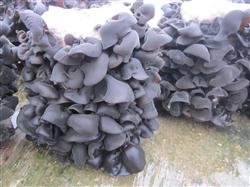
Ground-planted fruiting means placing upright fungus bags in a single layer on the ground surface at intervals of about 20 cm, and making cuts so that fruiting occurs all around. The cuts can be straight-line, V-shaped, needle-shaped, etc. The greatest advantage of this cultivation model is that it does not require building mushroom sheds or ventilation and light management, saving upfront investment and reducing labor. Generally, 0.8 ten-thousand bags can be placed per mu, and one bag can produce 1.5 liang of dried fungus. Because it is open-air cultivation, water management is the focus of management. Therefore, water spray pipes must be installed, and the number of sprays and amount of water sprayed must be controlled according to climate conditions. Under normal circumstances, black fungus takes about 20 days from the appearance of primordia to harvest. When the back of the fungus gradually becomes more white and white appears at the base of the front side, it can be confirmed as mature and should be harvested promptly. If harvested too early, although the quality of the fungus is high, it affects yield. If harvested too late, it not only reduces yield and affects quality, but also because of the large amount of spores ejected, it can cause pests and diseases, and even flowing fungus, causing unnecessary losses. When harvesting, pick from the base, neither leaving the fruiting body base behind nor bringing down the base material as much as possible.
After harvesting, fresh fungus should be dried promptly. Generally, it can be dried in sunlight by spreading the fungus pieces out individually and trying not to overlap them to prevent sticking. For holding and packaging the fungus, wooden boxes or hard cardboard boxes are best. Try not to use hemp sacks or large plastic bags, so as to avoid breakage and affecting its commercial rate.
Click to get more black fungus cultivation techniques
Click to get more edible mushroom cultivation techniques