What fungicide works well to control ginseng black spot disease?
What fungicide should be used to control ginseng black spot disease? Please explain that ginseng black spot disease is caused by fungi of the genus Alternaria infecting the stems, leaves, flowers and fruits of ginseng. It spreads through the air. It occurs easily when there are many rainfall events, high air humidity and temperatures of 18°C-22°C, and spreads to surrounding plants. Stem spots mostly appear in mid-to-late May,...
What fungicide should be used to control ginseng black spot disease? Please explain
Ginseng black spot disease is caused by fungi of the genus Alternaria infecting the stems, leaves, flowers and fruits of ginseng. It spreads through the air. It occurs easily when there are many rainfall events, high air humidity and temperatures of 18°C-22°C, and spreads to surrounding plants. Stem spots mostly appear in mid-to-late May, leaf spots mostly begin to appear from late May to early June, and July-August is the peak period of the disease. Because the cold spring was rather severe this year and accumulated heat was insufficient, preparations for controlling black spot disease should be made in advance.
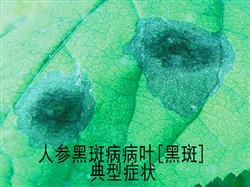
The main symptom of black spot disease is water-soaked, nearly round or irregular brown or dark brown spots on infected leaves; in the later stage they dry out and split, and in cloudy, rainy and humid weather the lesions expand rapidly, causing the leaves to wither and fall off. Stem spots are initially oval, then extend and stretch out into long strips; the diseased part is sunken and produces black mold-like material, and in severe cases the stems wither and lodge. After infection during the flowering and fruiting stage, the fruits gradually turn black and dry up, causing early fruit drop, commonly known as "hanging dried seed."
To control black spot disease, prevention must come before treatment, with attention to cultivation management. Remove diseased plants promptly when found, and spread quicklime powder in the diseased holes for disinfection. Provide shade in good time; overly strong light very easily causes leaf spots. Prevent rain leakage and rain blowing in, and keep the ginseng shed ventilated. Before the dog days begin, shade must be provided in good time and the ginseng shed repaired; after the dog days begin and before the Start of Autumn, seedlings must be propped up and (wei) seedlings adjusted at the right time.
Chemical control methods:
Seedbed disinfection: spray the bed surface with 99% hymexazol + 35% metalaxyl or 99% hymexazol + 72% agricultural streptomycin sulfate.
Emergence and leaf-unfolding stage: to prevent freeze injury and prevent black spot disease on the stems, when 30%-50% of seedlings have emerged, choose 68% refined metalaxyl (Jinlei) or 50% Anke + 25% propiconazole or polyoxin mixed with Tianda Shenbao and spray.
After the leaves have fully unfolded, choose 25% propiconazole mixed with Tianda Shenbao and spray once; this can make the plants stand upright with leaves held upward, which helps ventilation and reduces humidity, thereby lowering the reproduction and infection capacity of black spot pathogens.
At the budding and flowering stage, after pinching off the flowers, spray promptly to prevent infection by black spot pathogens at the cut pedicels; Banjue + mancozeb mixed with Tianda Shenbao can be used.
When the dog days and rainy season arrive, spraying Banjue + Pythium oligandrum can effectively control ginseng black spot disease.
Click to get more ginseng cultivation techniques
Click to get more medicinal herb cultivation techniques