-
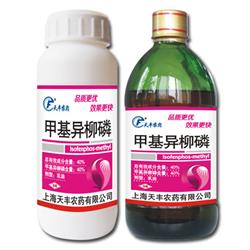
Which pests does isofenphos-methyl mainly control?
Which pests can isofenphos-methyl control? How should it be used? Please give guidance. Isofenphos-methyl is an organophosphorus insecticide. The technical product is a brownish-yellow oily liquid. It has strong contact and stomach poison action against pests, with a relatively long residual effect. It is highly toxic to humans and livestock. The formulations are 40% emulsifiable concentrate and 3% granules. Use...
-
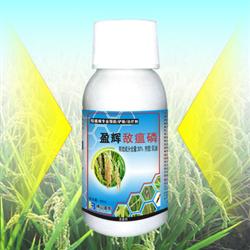
What are the correct methods for using edifenphos?
How is edifenphos used? Please explain. Edifenphos, also known as Kitazin, is a fungicide with protective and curative action. It is currently used mainly to control rice blast. Edifenphos also has good control effects against rice sheath blight, panicle blight, and northern and southern corn leaf blight. The formulation is a 40% emulsifiable concentrate. The application techniques are as follows:...
-
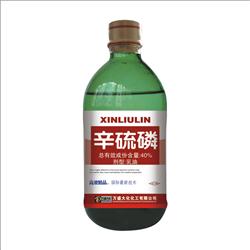
How is phoxim applied? A detailed explanation of the correct method
How is phoxim applied? What pests can it kill? Let us introduce it. Phoxim is a brownish-yellow liquid, and the formulations sold include 50% emulsifiable concentrate, 3% and 5% granules. Phoxim is stable under neutral and weakly acidic conditions, and easily decomposes under alkaline conditions. Under sunlight, especially ultraviolet light, it quickly photodegrades and loses effectiveness....
-
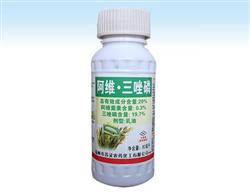
How can Abamectin-Triazophos be used for better results?
How should Abamectin-Triazophos be used well? Please give an introduction. Abamectin-Triazophos is a mixture of abamectin and triazophos, with products available as 10.2%, 15%, 18%, and 20% emulsifiable concentrates. It has contact and stomach poison action against pests, and also has good systemic properties. To control rice stem borer, use 80-100 ml of 18% emulsifiable concentrate or 20%...
-
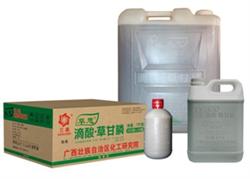
What precautions should be taken when using glyphosate for weed control?
What should be noted when using glyphosate for weed control? Please give an introduction. When using glyphosate herbicide, read the instructions carefully and thoroughly, because glyphosate herbicide is a systemic, broad-spectrum, non-selective herbicide that mainly inhibits enolpyruvyl shikimate phosphate synthase in plants, thereby inhibiting the conversion of shikimate to shikimic acid, prephenic acid...
-
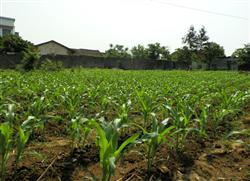
Which crops can paraquat be used on? Detailed introduction to its scope of application
Which crops can paraquat be used on? Please give a detailed introduction. Paraquat is a fast-acting non-selective herbicide with contact action and a certain systemic action. It is rapidly absorbed by the green tissues of plants, causing them to wither and die. It has no effect on non-green tissues. In soil it rapidly binds to soil particles and becomes deactivated, with no effect on plant roots and many...
-
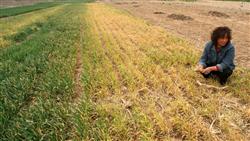
How to Apply Paraquat Herbicide Safely? A Detailed Guide to Correct Use
How to Apply Paraquat Herbicide Safely? Please Explain and Guide. Paraquat herbicide is a non-selective herbicide, generally used to eliminate annual weeds or perennial weeds. However, after paraquat comes into contact with soil, its activity decreases, so it cannot effectively eliminate the underground rhizomes of weeds. In recent...
-
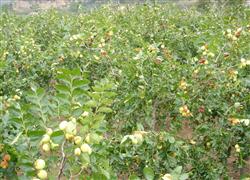
Which herbicides can be used in a jujube orchard? Variety selection and key points for use
Which herbicides can be used in a jujube orchard? What should be noted when spraying herbicides? Weed control in a jujube orchard is an important part of management work. Weeds are intermediate hosts of pests and diseases, and they also compete with jujube trees for fertilizer and water, affecting the growth of jujube trees. The herbicides commonly used in production at present mainly include the following: (1) Diuron: it is a 25% wettable powder, is a...
-
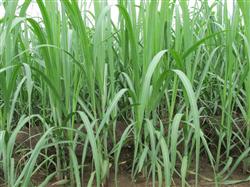
How can herbicides be mixed and applied in sugarcane fields for good results?
How should herbicides be mixed and applied in sugarcane fields? What should be noted? When mixing herbicides for sugarcane, you need to grasp the following principles: First, the weed control spectrum of the two herbicides should differ. Second, fast-acting agents should be mixed with slow-acting agents, and long-lasting agents should be mixed with short-lasting agents. Third, in...
-
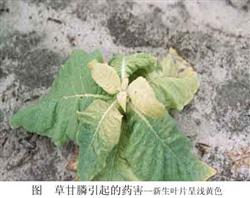
What are the remedial measures for herbicide phytotoxicity in tobacco leaves?
What should be done when herbicides cause phytotoxicity to tobacco leaves? What methods can be used to treat it? Some herbicides are widely used for weed control in rice fields or tobacco fields, especially in rice fields, where some farmers often apply high concentrations of herbicides. If tobacco is planted the following season, residual herbicides often cause phytotoxicity to tobacco leaves. In addition, the selectivity of herbicides...
条件筛选