Which herbicides can be used in a jujube orchard? Variety selection and key points for use
Which herbicides can be used in a jujube orchard? What should be noted when spraying herbicides? Weed control in a jujube orchard is an important part of management work. Weeds are intermediate hosts of pests and diseases, and they also compete with jujube trees for fertilizer and water, affecting the growth of jujube trees. The herbicides commonly used in production at present mainly include the following: (1) Diuron: it is a 25% wettable powder, is a...
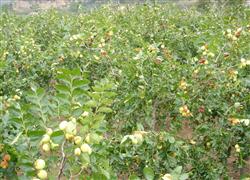
Which herbicides can be used in a jujube orchard? What should be noted when spraying herbicides?
Weed control in a jujube orchard is an important part of management work. Weeds are intermediate hosts of pests and diseases, and they also compete with jujube trees for fertilizer and water, affecting the growth of jujube trees. The herbicides commonly used in production at present mainly include the following:
(1) Diuron: it is a 25% wettable powder, is a systemic herbicide, has a wide weed-killing range, good effect, is not affected by temperature, and is effective against annual and perennial weeds and shrubs.
After application, the weed roots absorb the agent from the soil, transport it to the stems and leaves, destroy leaf photosynthesis and nutrient production, and the leaves lose green, turn yellow and die. The application time can be when weeds begin to sprout, spraying on the soil surface. Use 0.2-0.4 kg of the agent per mu, adding 35-40 kg of water. When spraying stems and leaves, adding a spreading agent can further improve the efficacy. The weed-killing rate can reach more than 90%, and the effective period of soil surface application can reach more than 60 days. This product is relatively safe for humans and livestock, but spraying it on jujube trees will cause serious phytotoxicity.
(2) Prometryn: it is a 50% wettable powder, is a systemic herbicide, has a wide weed-killing range, and its killing power against dicotyledonous weeds is greater than against monocotyledonous weeds; it also has a controlling effect on perennial weeds.
After application, the solution is absorbed through the stems, leaves or roots of weeds, inhibits weed photosynthesis, causes leaves to lack green, hinders the formation of nutrients and causes death. The application time is best before weeds sprout or on newly emerged young weeds. The method of use can be broadcasting or spraying; for spraying, the solution can be diluted 300-400 times with water, using 0.15-0.3 kg of the agent per mu. Prometryn acts relatively slowly; generally, after treatment, weeds begin to die within one week, and the effective period is 30-50 days.
(3) Nitrofen: it is a 40% emulsion powder, and there are also 10% and 25% wettable powders. It is a herbicide with contact action. Its weed-killing range is relatively wide. Among these, annual weeds propagated by seed are the main target; it only has an inhibitory effect on perennial weeds and cannot kill them.
Application time and method: before weeds emerge, spray on the soil surface; after spraying, do not water for 2-3 days and do not hoe for one week. The efficacy on the soil surface can reach 15-20 days. When spraying, prepare the 25% wettable powder into a 1.5% solution, using 80-100 kg of solution per mu. When weed buds contact the agent, dead spots and scorching death occur.
(4) Glyphosate: it is a highly effective and low-toxicity herbicide, has systemic conductive action, and has a wide weed-killing range. After the agent is sprayed on the leaf surface, it is absorbed and can be transmitted to the roots within 24 hours, causing the roots to rot and the aboveground parts to wither and die. Use 0.5-1 kg of 10% glyphosate per mu; the control rate against annual monocotyledonous and dicotyledonous plants is more than 90%, and it can inhibit weed growth for 5-6 weeks. If 1.5-2 kg of the agent is used per mu, it has a very good controlling effect on perennial weeds such as thatch grass and reeds, as well as small shrubs.
After glyphosate enters the soil, it immediately loses its effect, so it has no damaging effect on seeds; when spraying, avoid spraying it on jujube branches and leaves.
Although herbicides have the characteristics of fast weed control, labor saving and low investment, if the type, dosage and timing are inappropriate, they will not play their proper role. Therefore, before use, one should first understand the efficacy and methods of use of the herbicide, and decide the type and concentration of the herbicide according to the weed species in the jujube orchard and their sensitivity to the herbicide. Before using a herbicide, first conduct a small-scale test, and then apply it on a large scale. When spraying, strictly avoid causing harm to jujube trees, spray close to the ground, and pay attention to the safety of humans and livestock.
Click to get more herbicide application techniques
Click to get more pesticide application techniques
Click to get more jujube tree planting techniques