How is biogas humic acid phosphate fertilizer composted? Detailed method and steps
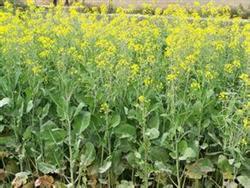
The uptake of phosphorus by rapeseed is greatest during the bolting and flowering stage, but as for the utilization of phosphorus and its yield-increasing effect, applying phosphorus at the seedling stage is best. Because phosphorus can be repeatedly utilized within the rapeseed plant, the earlier the absorption period, the greater the efficiency. Applying more phosphate fertilizer can promote an earlier growth period; generally, the seedling stage can be advanced by 2-4 days, the bolting and flowering stage by 2-6 days, and the maturity stage by 1-2...
 Biogas residue contains 10%-20% humic acid. Using ammonia water or ammonium bicarbonate solution to react with the acidic groups in the molecular structure of humic acid to form humic acid substances can increase the activity of humic acid substances and improve fertilizer efficiency.
The method for composting biogas humic acid fertilizer is to pile and compost the biogas residue taken from the biogas digester together with organic garbage or soil, adding one layer of garbage (or soil) and then one layer of biogas residue 20-30 cm thick, forming a large truncated-cone-shaped fertilizer pile, then covering the surface with some soil and patting it firm. After composting for 15-20 days, biogas humic fertilizer is formed. If during composting 20-25 kg of calcium, magnesium, phosphate fertilizer or phosphate rock powder is added per cubic meter of biogas residue, then biogas humic acid phosphate fertilizer is formed. This fertilizer is suitable for use as a base fertilizer, with an application rate of 1000 kg per mu.
According to experiments by the Beijing Academy of Agricultural Sciences, biogas humic acid phosphate fertilizer has a significant yield-increasing effect on wheat, corn, eggplant, green pepper, and others. Corn can increase yield by 13.8%, and green pepper by 15%.