-
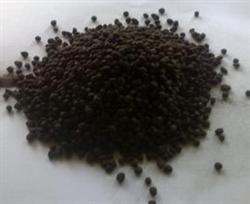
How to apply bio-organic fertilizer for the best results? Practical fertilization tips to share
To give full play to the role of bio-organic compound fertilizer, you must watch the weather, the soil and the seedlings, and improve your application techniques. 1. Apply at suitable soil moisture. In environments with long-term drought, do not force the application of bio-organic compound fertilizer; wait until after rain when the soil moisture is moderate, then apply. The standard for suitable soil moisture is: field soil can be squeezed into a ball by hand and...
-
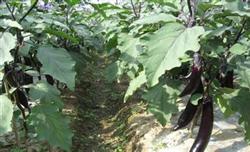
Technical Guidance on the Application of Commercial Organic Fertilizer for Solanaceous Fruit Vegetables
Solanaceous fruit vegetables include tomatoes, eggplants, peppers and other vegetables whose harvested fruit is the product; they are warm-loving, fertilizer-tolerant vegetables. According to the growth stage, methods such as broadcast application of base fertilizer, strip trench application of topdressing, hole application of transplanting fertilizer, and root dipping are generally used. The application rate of commercial organic fertilizer should be scientifically determined according to the needs of different vegetables and soil nut...
-
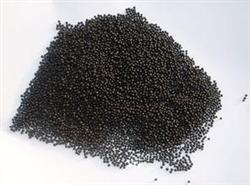
How to identify bio-organic fertilizer? Remember these three points
The specific effects of organic fertilizer on soil fertility: organic fertilizer can increase soil organic matter and improve soil physical and chemical properties. Applying more organic fertilizer and continuously increasing soil organic matter content is the main link in improving soil fertility. Organic matter can increase soil aeration, water permeability, water retention, and improve the root growth environment so that...
-
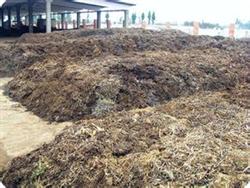
What are the methods for judging whether organic fertilizer is fully decomposed?
Not using chemical fertilizers and pesticides is one of the goals of modern organic agriculture. Through several years of practical experience, the author found a method of making natural organic fertilizer using raw natural materials. Raw material: 1500 kg of natural red soil. 150 kg of rice straw, stalks and garbage. Some human excrement and urine or pig, chicken and duck manure. Compost to obtain...
-
What important roles do organic fertilizers play in agricultural production?
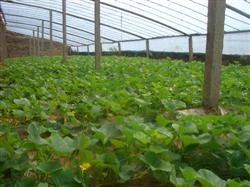
In greenhouse production, soil must be fertilized and improved. For most land, the fundamental measure for improvement is to apply large amounts of organic fertilizer. The main roles of organic fertilizer in building soil fertility and improving soil are as follows: 1. It provides relatively comprehensive nutrients. Organic fertilizer is a complete fertilizer. It contains crops...
-
Organic fertilizer can be used year after year; long-term application is no problem
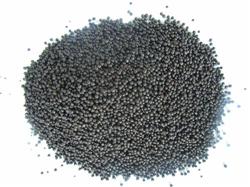
Organic fertilizer and chemical fertilizer used together complement each other, but if the combination is unreasonable, both will suffer damage and cause harm. 1. Benefits of mixing organic fertilizer and chemical fertilizer: 1. Making up for each other's shortcomings and building soil fertility. Chemical fertilizer has a single nutrient, high content, and quick effect, but a short duration; organic fertilizer has complete nutrients, a long-lasting effect, and can improve the soil...
-
A Detailed Explanation of the Role of Organic Fertilizer and Common Application Methods
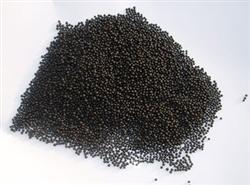
In the total nutrient amount currently applied as fertilizer to farmland in our country, about more than 1/4 of the nitrogen, more than 1/3 of the phosphorus, more than 80% of the potassium, and more than 90% of the trace elements are supplied through the application of organic fertilizer. Applying organic fertilizer is an important foundation for the sustainable development of modern agriculture. A large amount of research and practice holds that organic fertilizer has comprehensive nutrients and long-lasting fertilizer efficiency....
-
Types of Nitrogen Fertilizers and Scientific Application Methods
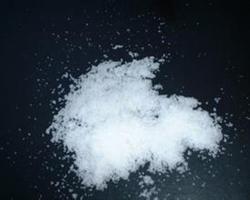
At present, the effective utilization rate of nitrogen fertilizers in our country is generally very low. How to reduce nitrogen loss and improve nitrogen fertilizer utilization rate is a problem of common concern to the vast number of farmers. Here are seven methods for improving the effective utilization rate of nitrogen fertilizers, introduced to the vast number of farmers: 1. Implement mixed application and deep application, and strengthen water management. A large number of field...
-
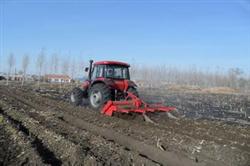
Smart ways to use nitrogen fertilizer: economical and efficient application
1. Good nitrogen retention. Changing nitrogen fertilizer from surface application to deep application can greatly reduce volatilization losses and denitrification. It reduces fertilizer consumption by weeds and algae, giving nitrogen fertilizer a good nitrogen-retention effect. Apply nitrogen fertilizer 7--9 cm deep. According to measurements, when ammonium bicarbonate spherical fertilizer is applied deep, 30 days after fertilization the nitrogen loss is 3...
-
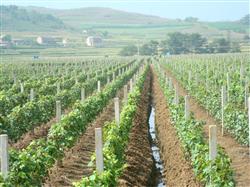
What Types of Nitrogen Fertilizers Are There? A Detailed Guide to Application Methods
The nitrogen fertilizers commonly used in fruit tree production mainly include urea, ammonium bicarbonate, ammonium nitrate, ammonium sulfate, ammonium chloride and slow-release urea. Urea is an amide-form nitrogen fertilizer with a nitrogen content generally of 46%, and can be used as a base fertilizer, a top dressing and a foliar top dressing. Ammonium bicarbonate is an ammonium-form nitrogen fertilizer with a nitrogen content generally of 16.5%-16.8%, and can be used as a base fertilizer, ...
条件筛选