Why must potassium fertilizer be applied for watermelons to be sweet?
According to surveys, according to surveys, the problem of imbalanced nitrogen, phosphorus, and potassium content ratios in current watermelon field soil is relatively prominent. Watermelon is a crop that needs potassium. Increasing potassium fertilizer application can raise the sugar content of the fruit. When applying potassium fertilizer to watermelons, generally 12-18 kg of potassium sulfate can be applied per mu, that is, 2-3 kg per mu as base fertilizer, 6-8 kg as topdressing at the seedling stage, ...
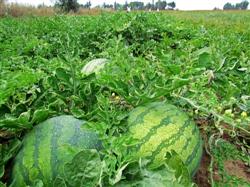
According to surveys According to surveys, the problem of imbalanced nitrogen, phosphorus, and potassium content ratios in current watermelon field soil is relatively prominent. Watermelon is a crop that needs potassium. Increasing potassium fertilizer application can raise the sugar content of the fruit. When applying potassium fertilizer to watermelons, generally 12-18 kg of potassium sulfate can be applied per mu, that is, 2-3 kg per mu as base fertilizer, 6-8 kg as topdressing at the seedling stage, and 4-7 kg as topdressing at the fruiting stage. Alternatively, 10 kg of potassium chloride can be applied per mu, that is, 2 kg per mu as base fertilizer, 4 kg as topdressing at the seedling stage, and 4 kg as topdressing at the fruiting stage. Potassium fertilizer is relatively abundant in chicken, sheep, and rabbit manure as well as in water grass and plant ash. After application, the sugar degree of watermelons can reach 9.5 degrees. In addition, when melon farmers apply chemical fertilizers to watermelons, the mixing weight ratio of nitrogen, phosphorus, and potassium should be 1:2.5:1, that is, the nitrogen, phosphorus, and potassium applied per mu are: 3 kg nitrogen, 7.5 kg phosphorus, and 3 kg potassium. Melon farmers can also apply fertilizer flexibly according to soil fertility conditions, but the amount of nitrogen fertilizer must not be too large. It shows that: the problem of imbalanced nitrogen, phosphorus, and potassium content ratios in current watermelon field soil is relatively prominent. Watermelon is a crop that needs potassium. Increasing potassium fertilizer application can raise the sugar content of the fruit. When applying potassium fertilizer to watermelons, generally 12-18 kg of potassium sulfate can be applied per mu, that is, 2-3 kg per mu as base fertilizer, 6-8 kg as topdressing at the seedling stage, and 4-7 kg as topdressing at the fruiting stage. Alternatively, 10 kg of potassium chloride can be applied per mu, that is, 2 kg per mu as base fertilizer, 4 kg as topdressing at the seedling stage, and 4 kg as topdressing at the fruiting stage. Potassium fertilizer is relatively abundant in chicken, sheep, and rabbit manure as well as in water grass and plant ash. After application, the sugar degree of watermelons can reach 9.5 degrees. In addition, when melon farmers apply chemical fertilizers to watermelons, the mixing weight ratio of nitrogen, phosphorus, and potassium should be 1:2.5:1, that is, the nitrogen, phosphorus, and potassium applied per mu are: 3 kg nitrogen, 7.5 kg phosphorus, and 3 kg potassium. Melon farmers can also apply fertilizer flexibly according to soil fertility conditions, but the amount of nitrogen fertilizer must not be too large.