Rational application methods and technical key points for potassium fertilizer
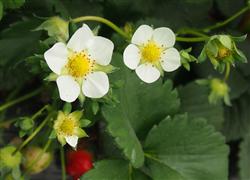
Strawberries bloom and bear fruit continuously, with many flowers and a large fruit load, and a long flowering and fruiting period, so they consume a lot of phosphorus and potassium fertilizer. Once phosphorus is deficient and potassium is low during the flowering and fruiting period, cold resistance will decrease, few flowers will form, flower buds will be weak, and flowering and fruiting will be affected. Not only will the fruit-setting rate be low and the fruit prone to deformities, but the coloring will also be poor, the sugar content will drop, and the taste will be bland, ...
 In addition to chemical fertilizers such as potassium chloride, potassium oxide, and potassium sulfate, farmyard manures such as straw, peanut vines, human feces and urine, livestock and poultry manure, turf mud, and plant ash all contain varying amounts of potassium. Potassium can enhance plant photosynthesis and the synthesis of carbohydrates, making crop stems sturdy and grains plump. It can also improve crop quality. For example, the starch content of sweet potato can increase by 0.6%-2.1%, the crude fat content of sesame can increase by 0.8%, and the sugar content of sugarcane can increase by 1.1%.
Potassium fertilizer can also enhance crop stress resistance. After potassium fertilizer is applied to rice, it can reduce flax leaf spot, akiochi disease, sheath blight, and rice blast. It can also improve the cold resistance, drought resistance, and lodging resistance of rice. Therefore, in potassium-deficient paddy fields, applying 0.5 kg of potassium chloride can increase rice yield by 2.5-5 kg.
When using potassium-containing farmyard manure, two points should be noted: first, because the fertilizer effect is slow, it should be applied early; second, the potassium in turf mud and plant ash is easily leached away by water, so drainage from paddy fields should not be carried out too early after application. When using potassium chloride and potassium sulfate, which have relatively high potassium content, attention should be paid to application methods: (1) Application rate. In potassium-deficient soil, applying 0.7 kg of potassium chloride or 10 kg of potassium sulfate per mu to rice has a significant yield-increasing effect. (2) Application timing. It can be used as a base fertilizer or as a topdressing. Applying it as a base fertilizer or as an early-stage topdressing gives a better yield-increasing effect than late application. In sandy fields with poor fertilizer retention, base fertilizer and topdressing should be combined and applied in stages. (3) Application method. When used as a topdressing for rice, deep placement as ball fertilizer gives the best effect, and it should generally be applied together with farmyard manure or nitrogen and phosphorus. After application, combine with weeding the field. When broadcasting it in paddy fields, apply it after the dew or rain on the rice leaves has dried to avoid burning the leaves.