Foliar fertilizer spraying methods for vegetables vary by variety
Leafy vegetables such as Chinese cabbage, spinach, shepherd's purse, etc. need more nitrogen, so the fertilizer sprayed should mainly be urea and ammonium sulfate, with a urea spraying concentration of 1%-2% and ammonium sulfate of 1.5%, sprayed 2-4 times per season, preferably during the early growth stage. Fruiting vegetables such as chili peppers, eggplants, tomatoes, green beans and various melons have a...
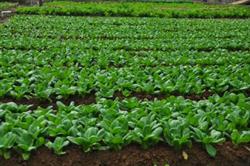
Leafy vegetables such as Chinese cabbage, spinach, shepherd's purse, etc. need more nitrogen, so the fertilizer sprayed should mainly be urea and ammonium sulfate, with a urea spraying concentration of 1%-2% and ammonium sulfate of 1.5%, sprayed 2-4 times per season, preferably during the early growth stage.
Fruiting vegetables such as chili peppers, eggplants, tomatoes, green beans and various melons have a relatively balanced demand for nitrogen, phosphorus and potassium, so a mixed nitrogen-phosphorus-potassium solution or compound fertilizer should be used. Spray a mixed solution of 1%-2% urea and 0.3%-0.4% potassium dihydrogen phosphate or a 2% compound fertilizer solution. Generally, spray 1-2 times each during the early and late growth stages. Spraying in the later stage can prevent premature aging, enhance stamina, and has a very good yield-increasing effect.
Root and tuber vegetables such as garlic, onions, radishes, potatoes, etc. need more phosphorus and potassium, so for foliar fertilizer, a 0.3% potassium dihydrogen phosphate solution or a 10% plant ash extract can be used. Generally, spraying 3-4 times per season gives better results.
Spraying foliar fertilizer is most effective on cloudy days or on sunny afternoons when the sunlight is not too strong. According to the growth condition of the vegetables, spray 30-50 kg of liquid per mu each time, with the limit being to moisten the leaf surface. According to the different vegetables' demand for trace elements, appropriately supplementing the corresponding micro-fertilizers can increase yield and improve quality, saving labor with multiple effects, but acid-base neutralization should be avoided.