-
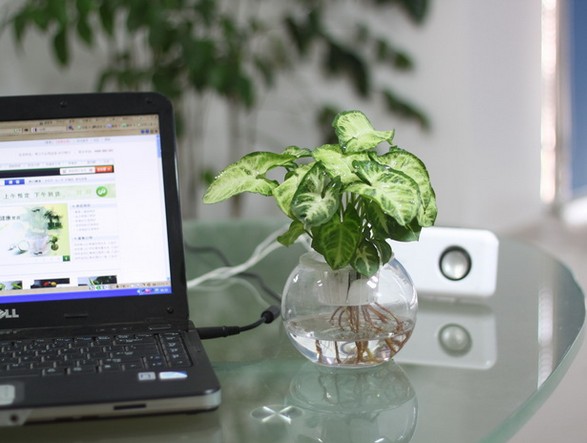
Which Feng Shui plants are suitable for the office? Placement principles you need to know
In Feng Shui, the orientation of a desk's placement is very particular. Which direction the desk faces has its own pros and cons, and may affect your wealth, health, and even romance luck. You can choose a suitable desk orientation based on your own circumstances. The same
-
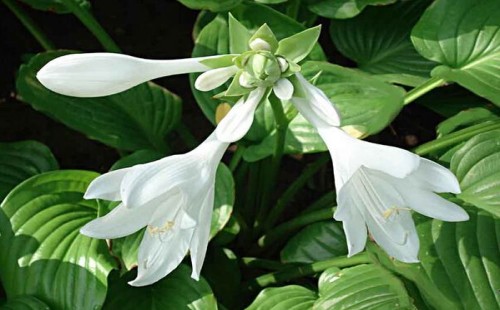
Which flowering plants are suitable for growing in partial-sun environments
In the ancient philosophical thought of our country, there has always been the theory of the two poles of yin and yang, and this doctrine or concept has long been deeply rooted in people's hearts. People who are too extreme tend to be prone to worries, so they generally choose a more moderate way of handling things. And flowering plants
-
Introduction to Common Types of Oranges, Their Seasons, and Nutritional Value
Oranges (orange, 40 kcal (cal) per 100 grams) are said to have been introduced to the mainland from central India, and then brought to Taiwan, China via the mainland. They have now become one of the main fruit tree industries in Taiwan, China, and have also become the most popular fruit for festivals and holidays. Difference between red-fleshed oranges and yellow-fleshed oranges. That's enough.
-
What is the difference between sweet persimmons and astringent persimmons in Taiwan, China, and which has better prospects and prices?
Do you know the yellow peach cultivation technique? But what we are going to talk about today is persimmons. Season-limited persimmons have become the hottest fruit this year because of the heated election battle! Gao Dezheng, deputy director of the Taichung District Agricultural Research and Extension Station of the Council of Agriculture, said that common persimmons in Taiwan, China are divided into astringent persimmons
-
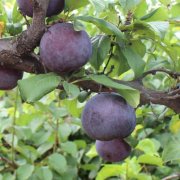
What is the difference between black plums and red plums, and which is sweeter and tastier?
Red plums and black plums are two fairly common fruits, sweet and sour and tasty, and they are rich in antioxidants, which can promote the body's production of collagen, thereby achieving the effect of promoting body balance. The nutritional value of the two, red plums and black plums, is
-
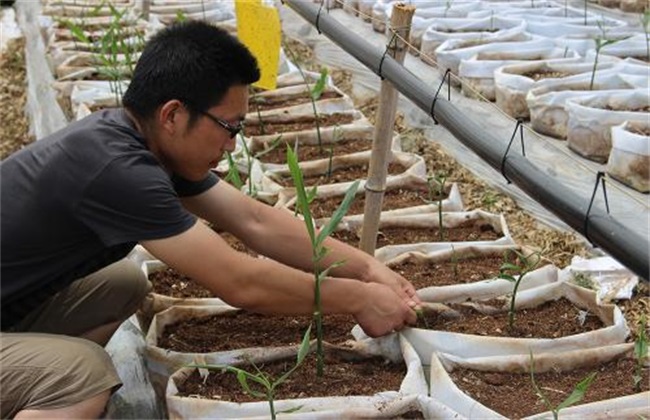
Which vegetables are suitable for soilless cultivation? A rundown of common varieties
Vegetables suitable for soilless cultivation
-
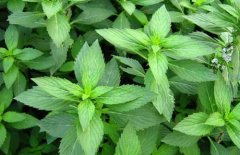
Mint Growing Conditions, Blooming Period, and the Differences Between Peppermint and Japanese Mint
This is a familiar wild field plant. When you are tired, pick a mint leaf, rub it, and take a sniff - it really does refresh the mind. The mint strips commonly used in childhood were crystals of mint oil. How to grow mint, its growing environment characteristics, how many different kinds have you seen
-
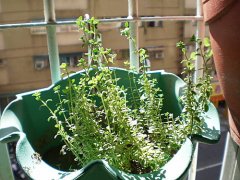
When to Plant Thyme and When to Prune It? A Full Analysis of Its Benefits and Effects
I used to have no idea what thyme was. As someone who loves cooking, I often shopped at baking supply stores, and by chance I came across a whole array of seasoning bottles and jars. I would have felt I was letting myself down if I did not buy them, so all the seasonings I had seen or heard of were packed up and brought home, to be taken out when I wanted to cook.
-
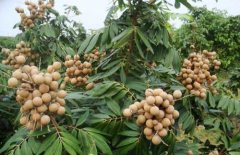
The Origin of the Longan, the Main Production Areas for Longan Cultivation in Taiwan, China, and the Classification of Varieties by Maturity Period
The longan belongs to the Sapindaceae family and is a subtropical evergreen fruit tree. It originated in mainland China, and its cultivation history in Taiwan, China is very early. It was already recorded in works such as the "Zhuluo County Gazetteer" in the 55th year of the Kangxi reign of the Qing Dynasty. It was brought over for cultivation when people from Fujian and Guangdong migrated to Taiwan, China. Although the longan cultivated in Taiwan, China was introduced from mainland China, because of its wide adaptability, strong reproductive capacity, and easy cultivation management, it has developed into the most localized economically cultivated fruit tree in Taiwan, China. What is popular now is the <a href="https://www.nongxun.net/zhongzhi/zz201903311855877506.html">method for growing longan in pots</a>.<br /> <br /> Taiwan, China is currently, besides mainland China and Thailand, one of the world's main longan production areas. According to the "Annual Report of Agricultural Statistics," in the 94th year of the Republic of China, the total cultivated area in Taiwan, China was 12,358 hectares, with an annual output of 102,790 metric tons. The main production areas are Tainan, Kaohsiung, Taichung, Nantou, and Chiayi, with Tainan having the most. The main cultivated variety is "Pink Shell," accounting for about 60% of the cultivated area.</span></span></div> <div> </div> <div> <span style="font-size: 14px;"><span style="font-family: georgia, serif;">The longan fruit tree has a very wide range of uses. Its wood is tough and its grain is beautiful, making it a superior material for furniture and carved products. Besides being eaten fresh, the fruit can be dried into longan and processed into canned longan, longan wine, longan paste, and so on. In recent years, the food industry has produced a great many processed products using dried longan flesh as a raw material, causing the consumption of dried longan flesh in Taiwan, China to increase year by year, which has been of great help in easing the pressure on Taiwan, China's fresh longan fruit market.</span></span></div> <div> </div> <div> <span style="font-size: 14px;"><span style="font-family: georgia, serif;">The longan cultivars grown in Taiwan, China are very mixed, mostly consisting of natural forest-like stands of many naturally variant plants planted together. To facilitate market transactions, they have long been divided into only 4 major categories according to fruit size and quality: Fuyan, Shuiyan, Tangsuanrouyan, and Niuzaiyan.</span></span></div> <div> </div> <div> <span style="font-size: 14px;"><span style="font-family: georgia, serif;">The Chiayi Agricultural Experiment Branch Station and Chung Hsing University have carried out variety improvement and identification and selection work. To date, surveys have discovered as many as more than 70 cultivated varieties. Although there are many varieties, cultivated varieties change quite rapidly. The 8 more important varieties can be divided into 3 categories according to maturity period: (1) early-maturing (fruit harvested in early to mid-July): Zhuqi Zaosheng, (2) mid-maturing (fruit harvested from late July to late August): Pink Shell, Large Pink Shell, Red Shell, Green Shell, Shuigong, (3) late-maturing (fruit harvested from September to mid-October): Fanlu Wansheng, October.</span></span></div> <div style="text-align: center;"> <span style="font-size: 14px;"><span style="font-family: georgia, serif;"><img alt="" src="/uploads/allimg/190615/2-1Z61510044Mc.jpg" style="width: 500px; height: 323px;" /></span></span></div>
-
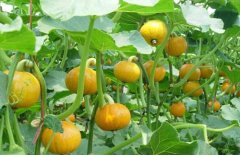
What are the pumpkin variety groups in China? Characteristics of the Ajiao and Acheng varieties
Pumpkin Cultivation and Management Techniques: Pumpkin is a sun-loving vegetable; if sunlight is insufficient, during long spells of overcast and rainy weather, it tends to grow excessively and set little fruit. Pumpkin has a relatively deep root system and tolerates drought quite well. If the soil contains too much water or drains poorly, it easily causes excessive vine growth and fruit drop, so well-drained land should be chosen
条件筛选