Which flowering plants are suitable for growing in partial-sun environments
In the ancient philosophical thought of our country, there has always been the theory of the two poles of yin and yang, and this doctrine or concept has long been deeply rooted in people's hearts. People who are too extreme tend to be prone to worries, so they generally choose a more moderate way of handling things. Flowering plants are also divided into those that prefer shade and those that prefer sun, and there is also a distinction between those that like partial shade or partial sun and those that tolerate partial shade or partial sun.
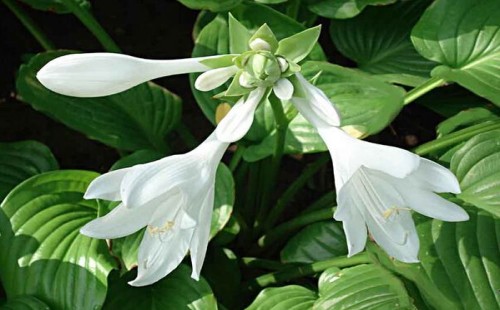
Flowering plants that like partial shade are often suitable for growing in places that are partly shaded and not sunny, and are even suitable for flowering and blooming in such an environment; they neither like strong direct sunlight nor, at the same time, dislike cold and damp environments. And such flowering plants often navigate between the two extremes in a space with partial shade and partial sun, thereby blooming flowers that harmonize with their surroundings. So, which flowering plants like partial-sun growing environments?
In practice, it has been found that flowering plants that like partial-sun growing environments are typically represented by species or varieties such as hosta, hydrangea, and coreopsis. Of course, nature is magical, and there will be many more flowering plants that like partial-sun growing environments, and at the same time there are also a large number of flowering plants that like partial-shade growing environments. It is just that some may be relatively common, while others may be relatively rare, which is mainly determined by the internal structure and growth habits of the flowering plants.
Hosta usually likes to grow in warm and humid environments. Although it likes light, it cannot tolerate strong direct light, especially the scorching sun in summer. Therefore, during routine care and management, we usually need to provide it with a partial-sun growing environment, so as to ensure it remains normal and also to ensure the plant can bloom on schedule.
When the growing environment is suitable, hosta can not only maintain extremely high ornamental value, but also be highly sought after by people for its extraordinary, refined charm. Moreover, hosta flowers are elegant and beautiful; compared with those delicate flowers that like to be fussed over, it often appears more reserved, with substance, depth, and rich meaning. And it is not alone in this: hydrangea and coreopsis also have wonderful forms almost like those of hosta, and they also like to grow in partial-sun environments, yet each pursues its own distinctive individuality.
Hosta, hydrangea, coreopsis, and other such partial-sun-loving flowering greenery often represent the noble quality that China, with five thousand years of historical civilization, has had from ancient times to the present——the doctrine of the mean, guiding our country's plain working people to forge ahead and march in the correct direction without leaning to either side. Therefore, such flowering plants multiply and thrive in large numbers in our country, which is precisely a kind of inheritance and promotion of our country's traditional culture. Thus, even in ordinary households, potted cultivation is becoming more and more widespread.