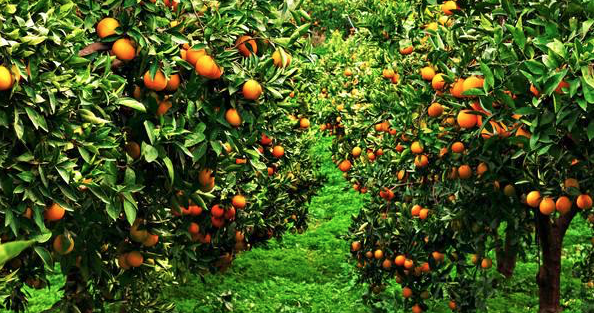
Introduction to Common Types of Oranges, Their Seasons, and Nutritional Value
Oranges (orange, 40 kcal (cal) per 100 grams) are said to have been introduced to the mainland from central India, and then brought to Taiwan, China via the mainland. They have now become one of the main fruit tree industries in Taiwan, China, and have also become the most popular fruit for festivals and holidays. Difference between red-fleshed oranges and yellow-fleshed oranges. That's enough.
Oranges (orange, 40 kcal (cal) per 100 grams) are said to have been introduced to the mainland from central India, and then brought to Taiwan, China via the mainland. They have now become one of the main fruit tree industries in Taiwan, China, and have also become the most popular fruit for festivals and holidays. Difference between red-fleshed oranges and yellow-fleshed oranges is worth learning about.
Varieties
Orange varieties generally include Ponkan, Hai Li, Murcott, Tankan, and Liuding. Red tangerine - when the flesh is ripe, the outer peel turns red, and the front end of the fruit, that is, the part connected to the branch, is pointed in shape. Axe tangerine - a large, flat, round shape, tastes rather sour, and is usually a fruit placed on offering tables.
Ruyi tangerine - it is a variety originating from Japan, tastes sweeter, and is also called [President Tangerine].
Murcott tangerine - its growth pattern is quite special, growing with its bottom facing upward, that is, the side we peel facing upward, with a flat shape and a very thin peel. It tastes sweet and juicy, somewhat similar to Liuding.
Bergamot - its appearance is very special, with many finger-like shapes, so it is called bergamot, and it cannot be peeled and eaten directly. It is usually used as a Chinese herbal medicine.
Season
In Taiwan, China, the orange family begins to come to market one after another every year after the Mid-Autumn Festival. The earliest is Ponkan, with a production period of about October to December, and the production areas are concentrated in the area south of Hsinchu and north of Chiayi. From the end of November to March of the following year, it is Tankan's turn to appear, and the production areas are concentrated in Miaoli, Hsinchu, and Yilan. Taipei currently has only a small amount of cultivation and mostly operates in the form of tourist farms. The last to come to market is Murcott tangerine, which can still be eaten until April. Peak season: from south to north, from after the Mid-Autumn Festival to April of the following year, and it is best around the Lunar New Year.
Nutritional Value
Orange flesh is rich in vitamin C. The fat content of the flesh is very low, while the sugar and crude fiber content is considerable. It also contains minerals such as calcium, phosphorus, and iron, and its carotene is higher than that of most fruits. Citrus also contains a variety of vitamins. In addition, it also contains elements such as magnesium, sulfur, sodium, chlorine, and silicon. It also contains nutrients such as citric acid, malic acid, and citric acid.
Oranges are rich in vitamin C, so eating just three oranges can satisfy the body's daily vitamin C requirement. In addition, the inner peel of the orange fruit has a lot of fiber, which can prevent constipation. The nutritional content of oranges is very high. They contain various organic acids such as malic acid and citric acid, which are helpful for the body's metabolism and for enhancing heart and lung function.
Oranges are also regarded as the most readily available source of vitamin C during cold season and are extremely effective in preventing colds. But it is worth noting that oranges are a [cold-natured] fruit, so people with coughs or allergic asthma should avoid eating them. In addition, smokers consume more vitamin C and should eat more oranges and work hard to supplement vitamin C.