-
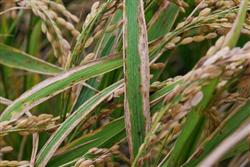
What are the control methods for the three major rice diseases?
How do you control the three major rice diseases? Please explain the control methods. The three major rice diseases can be controlled by referring to the following methods: 1. Rice blast (1) Leaf blast: dark green, nearly round or oval lesions, which later become slightly pointed at both ends; generally, when acute-type lesions appear or an infection center develops, especially in rice fields with high nitrogen fertilizer rates and tender, lush green growth, when the total number of leaf blast lesions occurring on 20 hills of rice during the entire growth period before heading reaches more than 400, spraying must be carried out, with an interval of 3 to 5 days, and continuous spraying 2 times.
-

Three-Row Narrow-Furrow Dense Planting Supporting Cultivation Technology for Soybean on Ridges
The three-row narrow-furrow dense planting supporting technology for soybean on ridges is a new soybean cultivation model independently developed by agricultural science and technology personnel in the reclamation area, and it passed the scientific research achievement appraisal of the Inner Mongolia Science and Technology Department in December 2005. On the whole, this technology has reached the advanced level of soybean cultivation technology in similar areas in China, and in terms of mechanized rational dense planting...
-
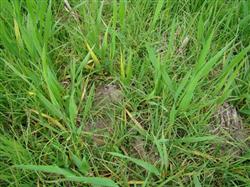
Detailed Explanation of the Key Technical Points of the "One Spray, Three Preventions" in the Late Stage of Wheat
I. Disease Occurrence Pattern Wheat rosette dwarf disease is a viral disease spread by the vector Laodelphax striatellus (small brown planthopper). The small brown planthopper has two peak periods of virus transmission and infection on wheat: the first peak period is after wheat emergence, and the second peak period is after wheat turns green again. As the temperature gradually rises, the overwintering generation of the small brown planthopper begins to move and feed on wheat seedlings, spreading...
-
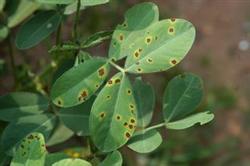
Implement three protection measures in the late growth stage of peanuts to promote increased yield
What is the difference between peanut black spot and peanut brown spot? Peanut black spot and peanut brown spot are the most common leaf diseases of peanuts. Their common feature is the formation of spots on the leaf surface, so they are collectively called leaf spot disease. The main differences are: brown spot occurs earlier, appearing at the early flowering stage, and in the later stage the lesions on the leaves are relatively large, round or irregular...
-
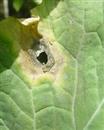
What three things should be noted in spring management of dryland rapeseed?
Sclerotinia rot of rapeseed is a major disease harming rapeseed, and its control must be taken seriously to reduce the damage and minimize losses. Symptoms: when the disease occurs, the lesions on rapeseed leaves are round or irregular, grayish brown or yellow-brown in the center, dark bluish in the middle, with a yellow halo on the outer edge. When dry, the lesions rupture and perforate; under humid conditions...
-
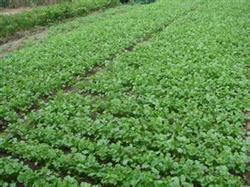
Delaying the harvest of cilantro requires careful attention: mastering these three points is key
Cilantro, also known as coriander, originated along the Mediterranean coast and is cultivated throughout both northern and southern China. Its leaves have a distinctive aroma and are the main edible part, while the seeds are an even better seasoning. Cilantro is a cool-season vegetable, and its traditional growing seasons have always been winter and spring. When grown out of season in summer and autumn, although yields are lower, market prices are high, making it a high...
-
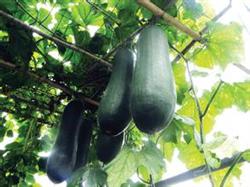
How to Grow Winter Melon for High Yields? Focus on Three Key Steps
Agricultural experts point out that to achieve high yields of winter melon, you should plant at a reasonable density, control diseases and the number of dead seedlings so that the final number of fruit-bearing plants is sufficiently large but not too dense; you should also fertilize reasonably and control various diseases, especially fungal diseases, so that the plants grow vigorously and the winter melon's expansion rate increases; and you should extend the lifespan of the winter melon plants as much as possible, thereby...
-
Three things to avoid when growing eggplant
Avoid too many cropping cycles. Many vegetable growers believe that the more cropping cycles, the more eggplant they harvest and the higher the profit is bound to be. But in the end, too many cropping cycles actually lowers the profit. This is because eggplant has a certain growth pattern, and only by following that pattern can you achieve high profits. Solution: use a single overwintering crop, planting once a...
-
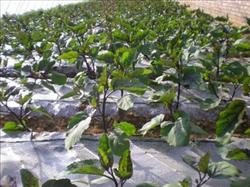
Three things to avoid when growing eggplants - keep these key points in mind
Avoid too many cropping cycles. Many vegetable growers believe that the more cropping cycles, the more eggplants harvested and the higher the returns. But in fact, too many cropping cycles actually lower the returns. This is because eggplants have a certain growth pattern, and only by following this pattern can you achieve high returns. Solution: Adopt overwintering single main crop cultivation, planting one...
-
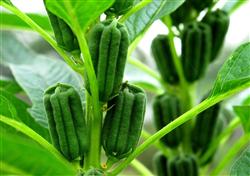
High-yield fertilization techniques for sesame: focus on three key topdressings
Double-stem cultivation involves removing the growing tip of the main stem during the sesame seedling stage and using the axillary buds at the base of the stem to promote the growth of 2 stems similar to the original main stem, turning one plant with one stem into one plant with two stems. This can greatly increase the number of pods and thereby raise yield. Generally, it increases sesame income by about 10 kg per mu. Therefore, double-stem cultivation is a new...
条件筛选