Three things to avoid when growing eggplants - keep these key points in mind
Avoid too many cropping cycles. Many vegetable growers believe that the more cropping cycles, the more eggplants harvested and the higher the returns. But in fact, too many cropping cycles actually lower the returns. This is because eggplants have a certain growth pattern, and only by following this pattern can you achieve high returns. Solution: Adopt overwintering single main crop cultivation, planting one...
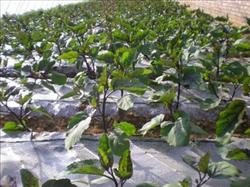
Avoid too many cropping cycles
Many vegetable growers believe that the more cropping cycles, the more eggplants harvested and the higher the returns. But in fact, too many cropping cycles actually lower the returns. This is because eggplants have a certain growth pattern, and only by following this pattern can you achieve high returns.
Solution: Adopt overwintering single main crop cultivation, planting just one crop per year; for spring and autumn crop cultivation, two crops per year is suitable. Each year in summer, leave a period for deep plowing and rain leaching to reduce salt, sun-drying the soil clods to sterilize, sealing the greenhouse to kill pests, and maturing the soil. This way, eggplants grow well and returns are high.
Avoid excessive fertilizer application
Applying too much fertilizer causes the soil solution concentration to become too high, roots will undergo reverse osmosis and die off, and yields naturally decline. Especially in greenhouses where temperature is high and humidity is high, organic fertilizer decomposes quickly, phosphorus availability is 2 to 3 times higher than in open fields, and ammonia volatilization is large. Excessive fertilization very easily causes fertilizer damage.
Solution: For greenhouses that have grown Solanaceae crops for more than 3 years, control organic fertilizer application to within 5000 kg per mu, and bury chemical fertilizer after application. For plots with high salt concentration, focus on applying cow manure, humic acid fertilizer and EM bacterial fertilizer to increase the soil carbon-to-nitrogen ratio, loosen the soil and improve aeration, and reduce salt and fertilizer damage. At the same time, supplement trace elements such as boron, zinc and magnesium to balance soil nutrients.
Avoid excessively high temperatures
The upper temperature limit for eggplants is 32°C. If the temperature is too high, respiration increases, physiological activities become disordered, fruit setting is inhibited, plants grow leggy, vegetative growth and reproductive growth become imbalanced, and yields will actually decline.
Solution: Strictly manage according to the temperature required at each growth stage of eggplant and the suitable temperature requirements for each organ's growth period. When high temperatures occur, cool down promptly to prevent high temperatures from growing branches without growing fruit.