-
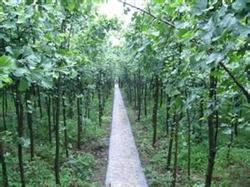
Key Technical Points for Three-Dimensional Cultivation of Ginkgo and Wood Ear Mushroom
When planting ginkgo, one must master the eight-character planting essentials, namely "strong, large, sufficient, dry, firm, shallow, thorough, high." For easy memory, the mnemonic goes: "Strong seedlings, large holes, sufficient base fertilizer; dry soil filled into the hole and firmed layer by layer; plant shallowly and water thoroughly; mound soil high to prevent lodging. With good air circulation and high ground temperature, the eight-character essentials are easy to master, and by following this...
-
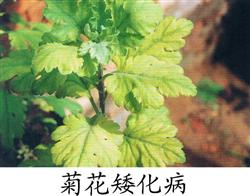
What are the three common diseases of chrysanthemums?
Chrysanthemum, also known as ganjuhua, is a perennial herbaceous medicinal plant of the Asteraceae family. Its traditional Chinese medicine names are white chrysanthemum and yellow chrysanthemum. The flowers are used as medicine and have the effects of dispersing wind and dissipating heat, and clearing the liver and brightening the eyes. It is mainly produced in Anhui, Zhejiang, Henan, Hebei and Sichuan, and is cultivated in other parts of the country. The main diseases of cultivated chrysanthemums include chrysanthemum powdery mildew, ...
-

How to prevent spider plant leaf tips from withering? Three methods to teach you
Spider plant (Chlorophytum comosum), evergreen all year round, suspended indoors, can be called an "aerial flower." The stolons it sends out from the leaf axils produce many small plantlets with roots, hanging down along the pot, very elegant. Spider plant is also called an indoor air "purifier"; it can absorb carbon monoxide, nitrogen oxides and other volatile gases, purifying the room's air and benefiting human health. However, spider plant leaf tips often wither easily, affecting its appearance. Therefore, prevention and treatment must be carried out according to the situation. 1. Always pay attention to watering and misting, keeping the pot
-
Three new Phalaenopsis varieties launched in Foshan
Recently, the author learned from Foshan Shihua Flower Technology Co., Ltd. in Foshan City, Guangdong Province, that in order to adapt to market changes, following last year's launch of the popular Phalaenopsis variety "Neishan Guniang" (Mountain Girl), the company has this year launched three new Phalaenopsis varieties: "Guangmang Sishes" (Radiant), "Da Fugui" (Great Wealth and Honor) and "Da Qingting" (Great Dragonfly). "Guangmang Sishes" has an unusual flower color, with thick petals interspersed with radiating stripes, white threads on a red background, extremely gorgeous; the plant generally bears 12 flowers, has a long flowering period and does not wither easily, and is expected to become a mainstay of Lunar New Year flowers. "Da Fugui
-
Three major pitfalls to avoid when buying Phalaenopsis seedlings
It is once again the selling season for Phalaenopsis seedlings, and according to consumption habits in China, the peak sales period for finished Phalaenopsis plants is concentrated just before the Spring Festival. Therefore, the Phalaenopsis seedlings that producers buy at this time are basically 2.5-inch intermediate seedlings; that is, calculated according to the normal growth cycle of Phalaenopsis, seedlings of this size are exactly able to bloom and go on the market before next year's Spring Festival. However, quite a few producers have experienced this awkward situation: they clearly bought 2.5-inch seedlings, yet the plants failed to bloom on schedule. They suspect something went wrong with the seedlings, but the seedling supplier says it was the producer who
-
Three Taboos Beginners in Bonsai Making Must Avoid
1. Never seek out raw material blindly. Many people always want to own a great many bonsai so that they can enjoy them at any time and relieve their "hunger" and "thirst." But when they first begin learning the craft, their appreciation skills are not yet sufficient, so when collecting tree stumps in the wild they grab every stump they see and carry out "carpet-style" digging, which both wastes resources and damages the ecology. When buying at markets they likewise pay no attention to good or bad, superior or inferior, and buy in bulk. The result is mostly crude, substandard pieces that waste time, effort and money. Therefore, although a beginner's eagerness for stumps is understandable, one must have guidance from someone experienced, so as to avoid getting half the result with twice the effort. 2. Growing the stump
-
How to carve and strip trunk bonsai? Three practical techniques
The trunks of trunk bonsai mostly use the image of being ancient, old, diseased, and disabled to show their "vigorous and sturdy character" that has endured the vicissitudes of time, while some bonsai trees show the characteristics of being young, tender, smooth, and sleek. The carving and stripping technique for trunk bonsai is precisely based on the conditions of the trunk itself, through artificial artistic reconstruction, to make the trunk image conform to the requirements of bonsai artistic modeling and achieve the purpose of enriching the varied texture layers of the trunk. Now let us introduce three techniques of the carving and stripping method. Spiral trunk stripping. Make partial diagonal rotational carving and stripping modeling on the main trunk from bottom to top
-
How do you make oleander form a "three-fork, nine-top" crown?
Oleander has whorled leaves in threes and is a typical three-fork brancher, meaning that after each pruning, 3 new shoots grow from the stem nodes. People can take advantage of this branching trait to prune and shape it so that it becomes a "three-fork, nine-top" plant. When the main trunk grows to a certain height, pinch off the top, and 3 main branches will grow from the main trunk. When the main branches grow to about 20 cm or more, keep 20 cm on each and pinch off the tops again to make them sprout new shoots. On each main branch, keep another 3 branches, keep 20 cm to 30 cm on each branch, and cut off all the upper branches.
-
There is a knack to processing dried lilies, and the three observations and three determinations are key
In our province, lilies are mainly sold as dried lilies to coastal areas, and in recent years they have consistently sold well. In particular, large, plump, and pure white high-quality dried lilies are in great demand and fetch high prices. Whether dried lilies are high quality or not, processing is a key step. Some farmers report that their fresh lilies are of good quality, but after processing into dried lilies they become second-grade products, or even inferior products, showing non-white color, thin dried slices, and incomplete slices, and the market price is greatly reduced. This is mainly caused by improper processing. In the lily production bases of Daping, Leijia'ao, Shawan, and other places in Niangxi Town, Xinshao County, lilies are planted year-round.
-
For lilies to achieve high yields, doing the three changes well is key
1. Change from using inferior seed bulbs to high-quality seed bulbs. Choose excellent varieties such as Longya lily as seed. Lilies need to be purchased from other regions as seed, which is an important measure for lily rejuvenation. Choosing seed bulbs with little or no virus is the key to high-yield lily cultivation. At the same time, pay attention to choosing thick, plump, and large seed bulbs. Use bulbs propagated from scales or directly use the daughter bulbs from the mother bulb as seed. 2. Change from sowing too early to sowing at the right time. Sowing too early makes it easy to encounter drought, often causing seed rot, and the high temperatures in early August are not conducive to breaking the dormancy period of lily seed bulbs. After sowing, roots often do not grow, and it is prone to
条件筛选