Delaying the harvest of cilantro requires careful attention: mastering these three points is key
Cilantro, also known as coriander, originated along the Mediterranean coast and is cultivated throughout both northern and southern China. Its leaves have a distinctive aroma and are the main edible part, while the seeds are an even better seasoning. Cilantro is a cool-season vegetable, and its traditional growing seasons have always been winter and spring. When grown out of season in summer and autumn, although yields are lower, market prices are high, making it a high...
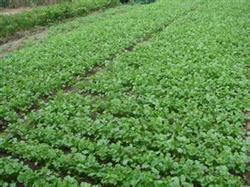 When the cilantro market is poor, growers often delay the harvest in hopes of selling at a higher price. Although this approach is not bad, attention should be paid to strengthening management; otherwise, quality declines and selling becomes difficult, making the losses outweigh the gains.
Growth control: The suitable commercial height for selling cilantro is 20-30 cm. Therefore, for cilantro whose harvest is delayed, its growth vigor must be kept under control so that its height does not exceed 30 cm. In addition to controlling water and fertilizer, the more effective growth-control measures are foliar spraying of a 1500-fold solution of chlormequat or a 3000-fold solution of Atonik.
Shade: Cilantro fears high temperatures most; excessive temperatures are unfavorable for cilantro growth and make it very prone to disease and plant death. Therefore, for cilantro whose harvest is delayed, shade nets should be set up to lower the temperature, avoiding poor growth and plant death when cilantro is exposed to high midday temperatures.
Prevent leaf rot: Because cilantro near harvest time has relatively large and dense stems and leaves, with the plants rather crowded together, bacterial diseases are very likely to occur under high-temperature and high-humidity conditions, causing leaf rot. Therefore, during the period when the cilantro harvest is delayed, prevention must be strengthened to strictly guard against leaf rot.