-
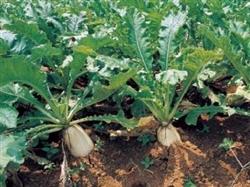
White Jade Spring Radish Cultivation Video, Pictures and Growing Techniques
White Jade Spring is a radish variety bred by Korea's Bio Co., Ltd. and introduced by Beijing Shinong Seedling Co., Ltd. This variety differs from White Jade Spring and New White Jade Spring in both plant type and quality, and is an excellent choice among firm-fleshed radishes. Because of its wide adaptability, fast growth, high yield and good marketability, it has been promoted rapidly in recent years. 1...
-
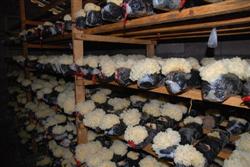
How to Cultivate Tremella Properly? Detailed Explanation of Planting Methods and Techniques
What method is best for cultivating Tremella? Please give an introduction. There are several methods for cultivating Tremella: First, the culture medium formula used for Tremella slant-rack cultivation is: 50 kg cottonseed hulls, 10 kg wheat bran, 0.5 kg gypsum powder, 0.5 kg white sugar, 0.25 kg magnesium sulfate (98% content), 0.25 kg monopotassium phosphate (98% content, agricultural fertilizer grade...
-
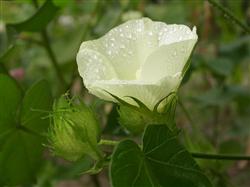
How to apply cotton bud fertilizer properly? Detailed explanation of fertilization methods and techniques
How to apply cotton bud fertilizer properly? Please give an introduction. After cotton squaring, it enters a period of simultaneous vegetative growth and reproductive growth, while still being dominated by vegetative growth. During this period, a framework must be built for high cotton yields. The supply of nutrients must not only meet the needs of the cotton plant's vegetative growth, but also prevent excessive or too heavy fertilization, which can cause cotton...
-
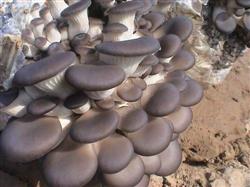
Complete Guide to Oyster Mushroom Varieties and Cultivation Techniques
What oyster mushroom varieties are there? What cultivation techniques are involved? Please provide an introduction. Oyster mushroom is also known as freeze mushroom, abalone mushroom, white shiitake, phoenix-tail mushroom, and delicious northern wind mushroom. It belongs to the class Basidiomycetes, order Agaricales, family Pleurotaceae, genus Pleurotus (mushroom). Oyster mushroom is tender and plump in texture, delicious in taste, and rich in nutrients. It is a health food with high protein and low fat....
-
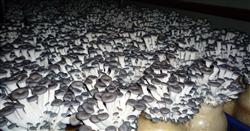
What are the cultivation techniques for oyster mushrooms? A detailed guide to growing methods
What are the cultivation techniques for oyster mushrooms? Please introduce them. The oyster mushroom is the most widely cultivated, highest-yielding edible fungus in China, and the one most consumed and exported. Its scientific name is Pleurotus ostreatus (Jacq. ex Fr.), belonging to the subdivision Basidiomycotina, class Hymenomycetes, order Agaricales, family Pleurotaceae, genus Pleurotus. Its other names include...
-
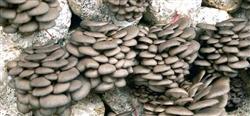
How to Grow Oyster Mushrooms? A Detailed Guide to Cultivation Techniques
How do you grow oyster mushrooms? Here are the techniques. Oyster mushrooms are well suited to substrate-based cultivation and can be grown in bags, columns, bed frames, and sunken beds. Bag cultivation and column cultivation are superior, offering high yields, good quality, and high returns. Advantages of bag cultivation for oyster mushrooms: 1) It helps control the harm of contaminant microorganisms and pests, with a high success rate; ...
-
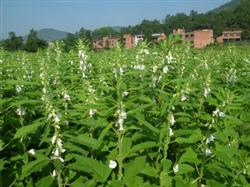
What are the key techniques for growth promotion and control cultivation of summer sesame?
How is growth promotion and control cultivation carried out for summer sesame? Please give an introduction. Based on the principles of sesame trait correlation, plant stage development, stage nutrient uptake and factor interaction, and through research on supporting cultivation techniques, a technical system for growth promotion and control cultivation of summer sesame has been obtained. Technical indicators for promotion and control: (1) Seedling-stage plants are strong but not excessive. Seedling-stage plants...
-
What are the key points of cherry blossom autumn management techniques?
How should cherry blossoms be managed in autumn? Please introduce the methods. Autumn tree management for cherry blossoms. 1. Disease prevention and leaf protection. Cherry blossom leaves are susceptible to infection by diseases such as powdery mildew, brown spot, and sooty mold. If not controlled in time, it can cause premature leaf drop, affecting nutrient accumulation, which is unfavorable for flowering next year. You can use 70% thiophanate-methyl 1000x solution, 65% zineb wettable powder 500x solution, sprayed once every 15 days. Try to avoid using dichlorvos to prevent leaf drop. Water appropriately, and increase foliar fertilizer spraying (0.3% to 0.5% urea, 0.3% potassium dihydrogen phosphate) to ensure the leaves remain intact, thick, and dark green.
-

A Detailed Guide to Cherry Blossom Cultivation Techniques and Management Methods
How are cherry blossoms cultivated and managed? Please give an introduction. For cherry blossom planting and management, you can refer to the following: 1. Soil requirements and improvement measures. Cherry blossoms can grow well in sandy loam and clay loam rich in humus (pH 5.5 to 6.5). In places in the south where the soil is heavy clay, generally mix in homemade leaf mold (soil made by composting collected leaves, acidic soil, chicken manure, and charcoal powder). Note that before mixing, all existing clay clods must be broken up, otherwise it will not improve the soil. In places where the groundwater level is less than 1 m, use the raised planting method, that is, level the entire planting hole first, then pile soil on top and plant the seedling. For alkaline soil in the north, sulfur powder or ferrous sulfate, etc. needs to be applied to adjust the pH value to about 6. Apply 2 grams of sulfur powder per sq m, with a validity period of 1 to 2 years, and measure it every year so that the pH value does not exceed 7. Varieties such as mountain cherry and Somei Yoshino have straight trunks and larger tree bodies. They are strongly heliophilous tree species and require shelter from wind and a sunny location, with ventilation and light transmission. When planting in groups, every tree must be able to receive sunlight.
-
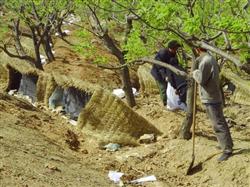
Chestnut Tree Cultivation Techniques: How to Manage After Harvest?
How to manage chestnut trees after harvest? What are some good chestnut tree management methods? Please introduce them. Chestnut trees are generally harvested in September-October, and management needs to be strengthened according to the physiological characteristics of the chestnut tree to ensure the total yield and quality of the coming year. For detailed methods, refer to the following: 1. Fertilization of chestnut trees...
条件筛选