White Jade Spring Radish Cultivation Video, Pictures and Growing Techniques
White Jade Spring is a radish variety bred by Korea's Bio Co., Ltd. and introduced by Beijing Shinong Seedling Co., Ltd. This variety differs from White Jade Spring and New White Jade Spring in both plant type and quality, and is an excellent choice among firm-fleshed radishes. Because of its wide adaptability, fast growth, high yield and good marketability, it has been promoted rapidly in recent years. 1...
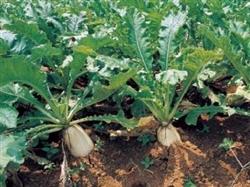
White Jade Spring is a radish variety bred by Korea's Bio Co., Ltd. and introduced by Beijing Shinong Seedling Co., Ltd. This variety differs from White Jade Spring and New White Jade Spring in both plant type and quality, and is an excellent choice among firm-fleshed radishes. Because of its wide adaptability, fast growth, high yield and good marketability, it has been promoted rapidly in recent years.
1. Characteristics and traits:
The leaf rosette is open and the growth vigor is moderate. The plant height is 42 cm and the plant spread is 70 cm. The leaves are lobed, dark green and glossy, with 21 leaves and a leaf length of 47 cm. The fleshy root has no neck and is straight cylindrical, 36 cm long and 7.8 cm in diameter. The lateral roots are fine and the root pores are shallow. The surface is smooth and fine, with white skin and white flesh. The flesh is firm and fairly sweet, with a delicious taste. A single root weighs 1.2-1.5 kg, with a maximum of 4.6 kg. The growth period is medium. When cultivated in spring, summer and autumn, the fleshy root begins to expand 35 days after sowing and is harvested 52-80 days later. When sown in winter and harvested in spring, it takes 90-140 days, with a yield of 5,000 kg per mu. The seeds are brownish yellow and large, with a 1,000-seed weight of 15.77 kg.
The suitable growing temperature for this variety is 12-32°C. In summer it can briefly tolerate high temperatures of 36°C, but under high-temperature conditions it is more prone to soft rot and viral diseases. Places with an average January temperature above 6°C can be used for winter cultivation, and places with an average July temperature below 24°C can be used for summer cultivation.
2. Key cultivation points:
(1) Cultivation season. Spring sowing in February-March, harvested from mid-April to May. In high mountains at 700-1,000 m altitude, sow from April to August and harvest from June to November.
(2) Cultivation site. To promote downward growth of the main root, the best cultivation site is loose, fertile garden land with deep soil. For paddy fields, use rotary tillage to break up the soil clods. For plots where the furrow ditches easily accumulate water, use wide ditches, high beds and plastic film mulch, with a bed height of more than 30 cm. Land that has grown radishes for more than two consecutive seasons is prone to nutrient deficiency and is best avoided. To control weeds with glyphosate before plowing, it should be done one month in advance; if done too late, it easily causes herbicide damage. Post-plowing control can be done after sowing and covering with soil by spraying a mixture of glyphosate and butachlor.
(3) Sowing. Winter and summer sowing should be dense, while spring and autumn sowing should be slightly sparse. Generally, on a 13 cm wide bed including the ditch, sow 3 rows, with a row spacing of 25-30 cm and a plant spacing of 20-27 cm. Sow 1-2 seeds per hole and keep 1 seedling, with 6,000-8,000 holes per mu and a seed rate of 100-150 g. After sowing, prevent waterlogging, drought and heavy rain to promote germination and emergence. After emergence, pay attention to controlling seedling-stage pests and diseases.
(4) Growth-period management. If the base fertilizer rate is insufficient, apply topdressing 1-2 times at the seedling stage and the early-to-mid root expansion stage. The whole process requires 50 kg of calcium magnesium phosphate fertilizer, 100 kg of 25% nitrogen-potassium compound fertilizer, 10 kg of potassium sulfate, and an appropriate amount of boron fertilizer and molybdenum fertilizer. Fertilizer deficiency must not occur during growth. In the mid-to-late root expansion stage, water should be supplied evenly. Especially during high-temperature periods, alternating drought and waterlogging can easily cause root cracking; soil that is too wet can also easily lead to root rot or premature plant decline. In terms of plant protection, focus on controlling flea beetles in spring and autumn, soft rot in summer, and viral diseases in autumn. Control of frequent pests such as diamondback moth, leafminer, cabbage worm and aphids should also be carried out early.
(5) Harvesting. When the outer leaves begin to turn yellow, it is the proper harvest time. At this time the root shape is symmetrical and white, with good marketability. To meet market requirements, the weight of a single root is generally controlled at 0.7-1.3 kg, with 5-7 cm of fresh leaf stalks retained. After being washed clean, they are neatly bagged and transported to market in time.
Click to get more radish cultivation techniques
Click to get more vegetable cultivation techniques