Complete Guide to Oyster Mushroom Varieties and Cultivation Techniques
What oyster mushroom varieties are there? What cultivation techniques are involved? Please provide an introduction. Oyster mushroom is also known as freeze mushroom, abalone mushroom, white shiitake, phoenix-tail mushroom, and delicious northern wind mushroom. It belongs to the class Basidiomycetes, order Agaricales, family Pleurotaceae, genus Pleurotus (mushroom). Oyster mushroom is tender and plump in texture, delicious in taste, and rich in nutrients. It is a health food with high protein and low fat....
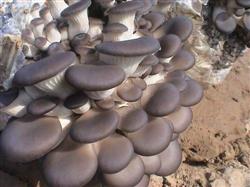
What oyster mushroom varieties are there? What cultivation techniques are involved? Please provide an introduction.
Oyster mushroom is also known as freeze mushroom, abalone mushroom, white shiitake, phoenix-tail mushroom, and delicious northern wind mushroom. It belongs to the class Basidiomycetes, order Agaricales, family Pleurotaceae, genus Pleurotus (mushroom).
Oyster mushroom is tender and plump in texture, delicious in taste, and rich in nutrients. It is a health food with high protein and low fat. Oyster mushroom grows vigorously and has strong adaptability. It is currently one of the edible fungi with the largest artificially cultivated area in the world. The main producing countries are China, Japan, and Italy. Within China, it is cultivated in all provinces except Qinghai, Tibet, and Ningxia.
II. Growth and Development of Oyster Mushroom and Common Cultivated Varieties
The growth and development of oyster mushroom are mainly divided into two stages: mycelium growth and fruiting body growth. The life cycle of oyster mushroom is: spore → primary mycelium → secondary mycelium → fruiting body → spore. Its growth and development stages mainly go through six periods: primordium stage, mulberry stage, coral stage, shaping stage, young mushroom stage, and mature stage. The growth of oyster mushroom mycelium is achieved through the continuous forward extension of the growth point at the mycelium tip. Mycelium grows very fast; some hyphae can extend into the air and become aerial mycelium. When aerial mycelium develops to a certain stage, it further twists and transforms into fruiting bodies.
"Oyster mushroom" is usually a commercial name and is a general term for multiple cultivated species in the genus Pleurotus. There are many cultivated types of oyster mushroom; in China alone, there are more than 500. The common ones are as follows:
(1) Pleurotus ostreatus What is commonly called "oyster mushroom" mostly refers to this species, and it is currently the most widely cultivated type. It mainly includes low-temperature and medium-temperature varieties. Common varieties include Pingza 17, Cell AX3, Tianda, Jiangdu 792, Hei 89, Changzhou No. 2, Shuangnai, and others.
(2) Phoenix-tail mushroom Native to India, it is a relatively widely cultivated medium-to-high temperature type. Common varieties include Oyster Mushroom 831, F327, and others.
(3) Elm yellow mushroom Also known as golden-top Pleurotus, it belongs to the high-temperature type varieties. Common varieties include Northeast Elm Yellow Mushroom, Nongda Elm Yellow 96, and others.
(4) Florida oyster mushroom Introduced into China from the United States and Germany, it belongs to the medium-to-low temperature type. Common varieties include Zhongshu No. 10 and Oyster Mushroom AS5.184, and others.
(5) Yellow-white oyster mushroom Also known as delicious Pleurotus and small oyster mushroom, it belongs to the medium-to-low temperature type. Common varieties include Jigu 9008, Jigu 9811, and others.
(6) Peach-red oyster mushroom A high-temperature type. Common varieties include Fujian Peach-red Oyster Mushroom, Jiangxi Peach-red Mushroom, and others.
III. Oyster Mushroom Cultivation Techniques
The production process of oyster mushroom is mainly divided into two stages: spawn production and cultivation.
1. Obtaining and Selection Standards of Spawn
The main standards for selecting oyster mushroom spawn are: mycelium is thick, dense, and white, appearing cotton-wool-like, with wall-climbing phenomenon; mycelium fills the bottle, mycelium distribution is uniform and consistent, and a small number of coral-like small mushroom buds have just formed.
2. Selection, Formula, and Treatment of Culture Substrate
Selection of culture substrate The culture substrate should be sourced locally. Cottonseed hulls, corncobs, cotton stalk powder, bean stalk powder, sawdust (from broadleaf trees), rice straw, wheat straw, and others can all be used, among which cottonseed hulls are the best. Before use, cottonseed hulls should be sun-dried for 1-2d. Any moldy or deteriorated material must not be used.
Formula of culture substrate Oyster mushroom culture substrates come from a wide range of sources, and the mixing methods of main materials and auxiliary materials are also varied. To prevent contamination by miscellaneous fungi, 0.1% carbendazim or thiophanate can be added. The following are several commonly used formulas in production:
(1) Miscellaneous sawdust 78%, rice bran or wheat bran 20%, sucrose 1%, calcium carbonate or gypsum powder 1%, appropriate amount of water, pH 6.5.
(2) Miscellaneous sawdust 93%, wheat bran or rice bran 5%, sucrose 1%, urea 0.2%-0.4%, calcium carbonate 0.4%, potassium dihydrogen phosphate 0.2%-0.4%, appropriate amount of water, pH 6.5.
(3) Cottonseed hulls 98%, quicklime (CaO) 2%, carbendazim 0.1%-0.15%, appropriate amount of water, pH 6.5.
(4) Cottonseed hulls 96%, superphosphate 2%, gypsum powder 2%, limewater 0.5%, appropriate amount of water, pH 6.5.
In the above formulas, sawdust and cottonseed hulls can be replaced with rice straw, waste cotton, corncobs, sugarcane bagasse, and others.
3. Cultivation Methods and Fruiting Management
There are many cultivation methods for oyster mushroom, mainly including log cultivation, branch-bundle cultivation, indoor bed-frame cultivation, bundled cultivation, sunken-bed cultivation, tunnel and cave cultivation, and plastic bag cultivation, among others. The following introduces the raw-material plastic bag cultivation method for oyster mushroom:
(1) Bag Filling and Inoculation
Key technical points: First, be sure to select fresh cottonseed hulls without mildew, and turn and sun-dry them on sunny days for 3-4d before inoculation to reduce the miscellaneous fungus content of the cottonseed hulls; second, generally use long cylindrical plastic bags and fill the material and inoculate in layers. Before filling, tie one end of the plastic tube with string, first place a layer of spawn about 0.5-1cm thick, then add the mixed cottonseed hulls, press slightly firm, then add another layer of spawn and another layer of cottonseed hulls. In this way, place a total of 2-3 layers of spawn in the bag; third, after filling is completed, use a No. 8 medical needle to evenly puncture 20 micropores at the places where spawn is placed, to ensure smooth ventilation.
(2) Stacking for Mycelial Incubation
Key technical points: First, preparation before entering the room for cultivation. Disinfect the incubation room (shed) in advance to kill miscellaneous fungus spores in the air and purify the environment; second, stack the spawn bags layer by layer in a "#" shape, with 4 spawn bags per layer, generally stacking 7-8 layers; third, during the incubation period, keep the air in the cultivation room fresh and ventilate every day at noon; fourth, frequently check the growth of the spawn bags and immediately remove contaminated bags to prevent spread to other bags. At a room temperature of 22-23°C, generally after about 20d, the mycelium will fill the bags.
(3) Fruiting Management
Key technical points: First, the cultivation site is best in a plastic greenhouse, solar hotbed, or basement for fruiting; second, when mushroom buds appear in the bag, promptly untie the bag opening and roll the plastic bag opening outward to expose the mushroom buds; third, during the fruiting period, spray water into the space, onto the ground, and onto the bags at any time so that the surrounding environmental humidity reaches 90-95%. Fourth, during the fruiting period, frequently replenish water and ventilate to maintain suitable growth conditions for oyster mushroom.
4. Management During the Intermittent Period
10-15d after the first flush of mushrooms is harvested, the second flush will appear, and a total of four to five flushes can be harvested, among which the main yield is concentrated in the first three flushes. Between two flushes is the time for mycelium to rest and accumulate nutrients. At this time, the following should be done:
(1) Clean old mushroom roots and dead mushrooms from the surface of the mushroom block to prevent rotting.
(2) Lightly press the mushroom block and break the old mycelial skin to facilitate the regeneration of new mushrooms.
(3) Open doors and windows for ventilation for 4-5h to exchange in fresh air.
(4) Thoroughly wipe and wash both sides of the film with clean water, then cover it against the mushroom block, clean up debris in the room, and maintain hygiene.
(5) One week later, follow the management method for the first flush, water for fruiting, and use temperature difference stimulation to induce budding. Thereafter, all management should follow the first-flush management method, and subsequent flushes should be managed accordingly.
5. Integrated Control of Diseases, Pests, and Miscellaneous Fungi
The temperature range for oyster mushroom mycelium growth is also suitable for all molds, except that the optimum temperature and humidity for molds are slightly higher. Therefore, during the mycelium cultivation stage, if there is slight negligence and the temperature rises above 28-30°C, and if humidity is also high, miscellaneous fungi will run rampant. Moreover, insect eggs will also hatch one after another, and mites will follow. Once diseases and pests spread, they are difficult to eliminate. In addition, oyster mushroom is extremely sensitive to dichlorvos; low concentrations of dichlorvos can cause small mushroom buds to wither and die. Because pesticides cannot be used easily, prevention must be the main approach to avoid the occurrence of diseases and pests. Once they occur, integrated measures combining ecological control, biological control, and chemical control are used to control their spread.
(1) Control major environmental factors: Since temperature and humidity are the main causes of diseases and pests, corresponding preventive measures should be taken during cultivation.
① Temperature: According to the climatic conditions, master the safe inoculation season for each variety in each region. If cultivating under artificial temperature control, the room temperature should not exceed 22°C, and the substrate temperature should not exceed 25°C.
② Humidity: The water content of the culture substrate should be controlled between 60-65%. During the mycelium growth stage, the relative air humidity should be controlled at about 70%.
(2) Prevention of miscellaneous fungi: ① The culture substrate must be fresh, without mildew or deterioration, and should be sun-dried for 1-2d before mixing. ② Before each cultivation, the cultivation room and tools must be cleaned and fumigated. ③ During raw-material cultivation, add as little or no organic nitrogen sources and sugars to the culture substrate as possible. ④ Use a large amount of spawn to accelerate mycelium growth, preferentially occupy nutrients, and inhibit the reproduction of other miscellaneous fungi. ⑤ Pay attention to rodent prevention, block mouse holes, and prevent cross-infection.
(3) Pest control: Common pests in oyster mushroom cultivation include: nematodes, mites, gnats, rodents, ants, slugs, snails, millipedes, fruit flies, mushroom mosquitoes, and others. For chemical control, 2.5% deltamethrin emulsion can be sprayed at 2500 times dilution; use light and sugar-vinegar liquid to trap and kill flies; roast bones until fragrant to attract and kill mites and ants; use salt to kill snails, slugs, and others.
Click to get more oyster mushroom cultivation techniques
Click to get more edible mushroom cultivation techniques