-
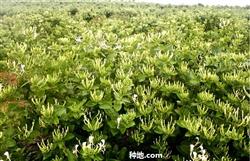
Detailed Explanation of Key Points for High-Yield Cultivation Techniques of Honeysuckle
How to cultivate honeysuckle (Lonicera japonica Thunb.) for high yield? Methods wanted. Honeysuckle (Lonicera japonica Thunb.), also known as silver flower, double flower, second flower, Japanese honeysuckle, Su flower, etc., is the flower bud of plants in the genus Lonicera of the family Caprifoliaceae. It is a commonly used Chinese medicinal material with the functions of clearing heat and detoxifying, dispersing wind and reducing swelling. In recent years, in addition to medicinal use, it is also used to produce toothpaste, beverages...
-
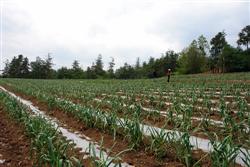
Garlic Cultivation Techniques: How to Apply Water and Fertilizer When Planting Garlic?
How to apply water and fertilizer when planting garlic? Please guide. Water and fertilizer management for planting garlic can refer to the following methods: When the garlic seedlings have 2-3 leaves, apply a seedling fertilizer, usually 1500 kg of diluted manure water or 30 kg of ammonium bicarbonate diluted in water and splashed on, combined with one light watering. After that, between "Minor Snow" and "Major Snow", water once with antifreeze water. The following year...
-
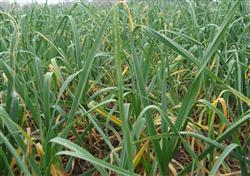
Garlic Cultivation Techniques: How to Prevent and Control Garlic Leaf Blight?
How to prevent and control garlic leaf blight? Please provide an introduction to the methods. An introduction to garlic leaf blight and its control methods for reference: 1. Symptoms: It mainly affects leaves or flower stalks. Leaf infection mostly starts at the leaf tip or other parts of the leaf, initially appearing as small round white spots that expand into irregular or elliptical grayish-white or grayish-brown lesions, on which...
-
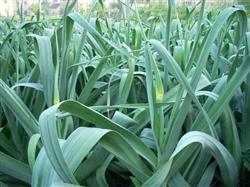
Garlic Cultivation Techniques: How to Fertilize for Best Results?
How should garlic be fertilized for the best results? Here are the fertilization methods. For growing garlic, you can follow the methods below: Soaking seeds in fertilizer solution - before planting, soak the seeds for 8-10 hours in a mixture of 1500x Shennongsu chelated fertilizer and 1000x natural brassin. Apply sufficient basal fertilizer - per mu, apply 15-15-15 NPK compound fertilizer at 40-50 kg and biological bacterial fertilizer at 8-10 kg in furrows, cover with a layer of soil, then plant the garlic seeds, and afterward cover the soil with dry rice straw or other weeds, with a straw thickness of 5-6 cm being ideal.
-
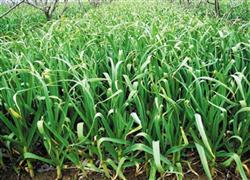
Detailed Explanation of Late-Stage Management Techniques for Garlic Cultivation
How should garlic be managed in the late stage of cultivation? Please provide an introduction. During the symbiotic period of garlic scape elongation and bulb swelling, adequate water and nutrients are needed, along with moderately low soil temperature. Therefore, fine management should be carried out according to different plots and different disease severity levels. For normal disease-free plots, heavy irrigation should be applied, watering thoroughly and deeply, with a per-mu...
-
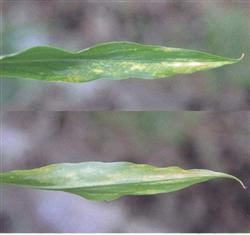
Ginger Cultivation Techniques: What Diseases of Large Ginger Need to Be Prevented and Controlled?
What diseases of large ginger need to be prevented and controlled? Please give an introduction. The following introduces several common diseases of large ginger and their prevention and control methods: Ginger blast: mainly spread by irrigation water and underground pests, and can occur from the sprouting and emergence of seed ginger to before the harvesting of ginger. This disease mostly occurs in high-temperature, frequently rainy, and waterlogged fields. Prevention and control: ginger...
-
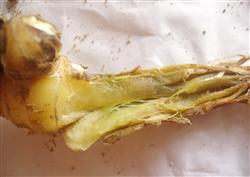
How to prevent and treat ginger rot? A detailed explanation of cultivation techniques
How to prevent and treat large ginger rot? Please provide methods. Large ginger rot is mainly caused by ginger blast. Results from many years of trials show that prevention and treatment of this disease should focus on agricultural measures, supplemented by chemicals. Specifically, 75 kg of lime should be spread per mu in the planting site; when the plants grow to about 35 cm tall, spray once, and thereafter every 2-3...
-
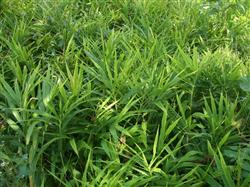
What causes red leaves in large ginger? Detailed explanation of ginger cultivation techniques
Why do large ginger leaves turn red? Please explain the causes. In ginger fields, it has been found that quite a few large ginger leaves have turned red, and some even have red leaves along the entire stem. The lower old leaves are severely affected, gradually lessening toward the top. This situation is distributed in patches in the ginger field. Although the leaves have changed color, they remain very intact, with no disease...
-
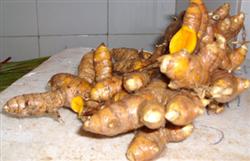
Key points of ginger cultivation techniques: What should be noted when planting yellow ginger?
What should be noted when planting yellow ginger? Please provide guidance. When planting yellow ginger, note the following points: First, select good seed. Choose already domesticated high-yield varieties, with relatively thick seed rhizomes and many buds, one-year-old or two-year-old seed. Such seed has strong germination vigor and emerges early and uniformly. Second, choose good land and plant early. Choose...
-
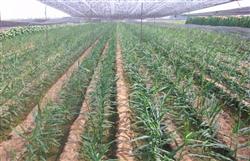
How to fertilize ginger during the swelling stage? Key points of planting techniques explained
How should ginger be fertilized during the swelling stage? Please give guidance. Starting from late July to early August, the ginger rhizomes enter the swelling stage, which is the most critical period for yield formation. If nutrient supply is insufficient at this time, it will affect rhizome swelling, making the rhizomes thin and small, not plump, and yield will drop significantly. Therefore, during the ginger rhizome swelling stage, fertilization management should be strengthened...
条件筛选