Kiwifruit Growing Techniques: Why Do Kiwifruit Turn Green?
Why do kiwifruit turn green? Here are the causes and control methods. The skin of a normally ripened kiwifruit should be brown or yellowish-brown, but due to factors such as climate and management, some fruit develop emerald green or bluish-green skin, with a milder flavor, reduced quality and poor storage life. Through comparative analysis, the author...
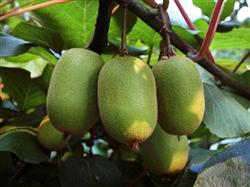
Why do kiwifruit turn green? Here are the causes and control methods
The skin of a normally ripened kiwifruit should be brown or yellowish-brown, but due to factors such as climate and management, some fruit develop emerald green or bluish-green skin, with a milder flavor, reduced quality and poor storage life. Through comparative analysis, the author believes the causes of green fruit are: first, planting density is too high, vegetative growth is vigorous, the canopy is shaded, and ventilation and light penetration are poor; second, excessive use of swelling agents. Third, fertilizer application is one-sided, especially excessive use of nitrogen fertilizer, which throws the nutrient ratios needed for fruit growth out of balance; fourth, heavy irrigation in the later stage, excessively high field humidity and too low soil temperature are unfavorable for fruit ripening and coloring in the later stage. To solve the problem of green fruit, work should start from the following aspects:
1. Reasonable planting density
Take into account the growing space needs of the trees at each growth stage; summer pruning should be light, ensuring a certain amount of branches and leaves so that the leaf-to-fruit ratio reaches 4-6:1. Prune heavily in autumn, cutting back secondary or tertiary lateral shoots and leaving enough fruiting branches for the following year. Remove weak, thin branches inside the canopy to reduce the workload of winter pruning, leave a certain ventilation corridor between trees, improve ventilation and light penetration, favor fruit coloring and reduce green fruit.
2. Strengthen soil, fertilizer and water management
Thin flowers and fruit reasonably to achieve the goals of larger fruit, higher yield and better quality, and prohibit the use of fruit swelling agents.
3. Determine fertilization amounts according to tree vigor and growth stage
Before bud break, nitrogen fertilizer should predominate; during the fruit swelling stage, phosphorus and potassium should predominate; in autumn, strictly control the amount of nitrogen fertilizer applied and strengthen foliar spraying. Improve and regulate the nutritional mechanism to promote sugar accumulation and color change.
4. Strictly control the amount of watering
After the beginning of autumn, kiwifruit enters its second growth peak, autumn shoots grow rapidly, and the tree is very prone to excessive growth, consuming large amounts of nutrients. Therefore, after late July, watering should be appropriately controlled; moderate drought can curb excessive tree growth, reduce nutrient consumption, increase nutrients, accelerate sugar conversion and flower bud differentiation for the following year, so that kiwifruit reaches the standards of correct color, good storability and premium fruit after growing and ripening, which benefits market sales.
Click to get more kiwifruit growing techniques
Click to get more fruit growing techniques