Detailed Explanation of Key Techniques for Licorice Seedling Raising and Transplanting
Licorice is an important medicinal herb. With the strengthening of national ecological and environmental protection, the use of wild resources has become very limited, and licorice seedling raising and transplanting techniques have become very important. Licorice is a perennial herbaceous plant of the Fabaceae family and is listed by the state as a key controlled medicinal herb. Glycyrrhizic acid, as a sweetener, is 200-300 times sweeter than sucrose, ...
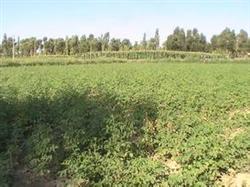
Licorice is an important medicinal herb. With the strengthening of national ecological and environmental protection, the use of wild resources has become very limited, and licorice seedling raising and transplanting techniques have become very important.
Licorice is a perennial herbaceous plant of the Fabaceae family and is listed by the state as a key controlled medicinal herb. Glycyrrhizic acid, as a sweetener, is 200-300 times sweeter than sucrose, making it the best natural sweetener discovered to date. The state has explicitly designated licorice as a national Class II protected plant, and arbitrary digging is not permitted, which has intensified the contradiction between supply and demand of licorice. Therefore, research on artificial cultivation and high-yield, high-quality cultivation techniques for licorice is of great significance.
1 Morphological Characteristics
The licorice plant height is 50-120 cm. The root is thick and large, cylindrical, and reddish-brown. The rhizome grows horizontally, similar in shape and color to the root. The stem is erect, with pinnately compound leaves arranged alternately, 7-17 leaflets, ovate or elliptical, butterfly-shaped flowers, light purplish-red, curved pods, sickle-shaped, with external bristles, round seeds, brownish-green, with a 1000-grain weight of 7 grams. The flowering period is from July to August, and the fruiting period is from August to October.
2 Growth Habits
Licorice is mainly distributed in the "Three North" regions of China. It has low soil requirements. It prefers weakly alkaline sandy land, grasslands, sand dunes, riverbanks, and desert and semi-desert environments. When introduced to the black soil of grain-producing areas, it grows vigorously and demonstrates high yield and high quality.
3 Land Selection and Sowing
For artificial cultivation of licorice, seedling raising and transplanting is best, that is, first raise seedlings in a nursery for 1 year, then transplant the seedlings to the field in the autumn of the same year or the spring of the following year. Raising seedlings for 667 sq m can transplant 5-7 mu (667 sq m). Compared with direct sowing in the field, seedling raising and transplanting has the advantages of a higher rate of first- and second-grade finished products and less labor for harvesting, and is a new high-yield and high-efficiency cultivation technique.
Licorice is a deep-rooted plant. Land with fertile soil, loose texture, good drainage, and rich organic matter should be selected for planting. Land preparation should involve deep plowing of 40 cm, and at the same time, 3 cubic meters of high-quality farm manure and 20 kg of diammonium phosphate per 667 sq m should be applied as base fertilizer. Then form ridges 65 cm wide and press them, ready for sowing. Sowing and seedling raising can be done in spring, summer, or autumn. Spring sowing is from Qingming to Guyu, summer sowing is from Lixia to Xiaoman, and autumn sowing is carried out before the ground freezes, with seedlings emerging the following spring. The sowing method is to open a 20 cm wide furrow on the ridge surface with a plow, level it after plowing, tread the grid manually, and use a seed gourd to evenly sow seeds soaked in fungicide on the ridge surface, cover with about 2 cm of soil, and then press. Sow 5-8 kg per 667 sq m; with good soil moisture, full seedlings can emerge in about 10 days. To prevent weed damage, trifluralin herbicide can be sprayed on the ridge surface before sowing; the amount per 667 sq m should preferably be 1/5 of the reduced dosage according to the instructions, and sowing should be done 6 days after spraying.
4 Nursery Management
After licorice seedlings emerge, frequently inspect the field for dead seedlings. If there are any, use 100 g of thiophanate-methyl powder plus 250 g of urea and 50 kg of water per 667 sq m, fully dissolve, and spray on the seedling leaves, which can effectively prevent seedling death. If missing plants or broken rows appear, reseed as early as possible to ensure full seedlings in the field. When licorice has grown 4-6 true leaves, apply urea once along the furrows in conjunction with cultivation, 10 kg per 667 sq m. At 10 leaves, as the temperature rises, field weeds begin to grow vigorously, so hoe and cultivate frequently, generally 3 times. When weeds are severe, spray 150-200 g of sethoxydim per 667 sq m, which can effectively eliminate grassy weeds; the remaining broadleaf weeds can be removed manually. Nursery fields are not thinned; maintain 100,000-120,000 seedlings per 667 sq m. When licorice has 15 true leaves, caterpillars may occur; use 100-200 g of methamidophos per 667 sq m mixed with water for foliar spraying. If aphids occur, use 100 g of omethoate mixed with water for spraying. If both pests occur at the same time, the two agents can be mixed and sprayed together.
After licorice closes its rows, pay attention to pulling out large weeds in the field early, and drain accumulated water in the field promptly during the rainy season to prevent soaking the licorice and causing root rot. Surveys have shown that wild licorice has diseases such as powdery mildew and rust, but these diseases have not yet occurred in many years of artificial cultivation.
5 Field Transplanting
Transplanting in the autumn of the same year gives higher yield than transplanting the following spring. When transplanting, after digging out the roots, leave a 5 cm stubble above the root crown and the horizontal stem, and transplant immediately after digging. Do not cut the seedlings and plant them upright, and it is even more impermissible to cut off the overwintering buds and fibrous roots of the root crown. Open furrows 10 cm deep with a plow, and the licorice roots can be planted horizontally, obliquely, or flat. The plant spacing is 10 cm, cover with soil 10 cm deep, and press to preserve moisture. Plant 18,000-22,000 plants per 667 sq m. If conditions permit, it is best to water once with settling water before the freeze. A series of field management measures before and after transplanting, such as field preparation, fertilization, and pesticide application, are the same as for seedling raising. Autumn planting is carried out after the autumn harvest, and spring planting is around Qingming.
6 Harvesting and Processing
Licorice can be harvested in the autumn of the second year after transplanting, generally yielding 800-1000 kg of dry goods per 667 sq m. In October, lift and harvest with a plow, remove the soil, tie into small bundles according to different grades of soil roots, lateral roots, and branch forks, and dry in the sun for sale. It can also be harvested before sprouting the following spring.
7 Market and Benefits
Because wild licorice resources are decreasing year by year and artificial cultivation has just begun, prices have frequently risen. Licorice is one of the top ten best-selling natural medicinal plants in the current US market. It can be said that licorice is a "green bank" that saves money (low input), saves land (can use sandy wasteland and saline-alkali land), saves labor (extensive management), and has high benefits (supply falls short of demand). Planting licorice is truly high-efficiency agriculture. If planted on a large scale, it can also be processed into licorice paste, glycyrrhizic acid, and other by-products, and the profits will be even greater.