Detailed Explanation of Field Management Techniques for Licorice
Licorice is a plant in the Fabaceae family. The main types include Glycyrrhiza aspera, Glycyrrhiza glabra, and Glycyrrhiza inflata. Its dried roots and rhizomes are used as medicine, and the crude drug is called licorice. It has the effects of tonifying the spleen and boosting qi, relieving cough and reducing phlegm, clearing heat and detoxifying, easing tension and relieving pain, and harmonizing the properties of medicines. The cultivation techniques for licorice are introduced as follows. 1. Soil selection. Licorice...
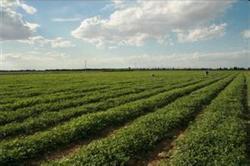 Thinning and final thinning of seedlings: thin the seedlings when they grow 1 to 2 true leaves, keeping the seedling spacing at about 5 cm. When the seedlings grow 3 to 4 true leaves, carry out final thinning, with a plant spacing of 10 cm to 15 cm.
Irrigation: Although licorice is a deep-rooted drought-resistant plant, its drought resistance is not strong during the seedling stage because its roots are relatively shallow. Therefore, after the seedlings grow to 4 true leaves, water them for the first time. Use gentle shallow irrigation or sprinkler irrigation, and do not use flood irrigation. Pay attention to keeping the seedlings moist. The number of waterings should be neither too many nor too few, so as to ensure the water supply during the seedling stage. After the adult plant stage, water very little. In July to August, when there is a lot of rain, drain promptly so that there is no standing water in the field, to prevent root rot. The key to cultivating licorice is preserving the seedlings. Generally, once the plants have grown, they are no longer watered.
Cultivation and weeding: After the seedlings emerge uniformly, cultivate and weed promptly to ensure there are no weeds in the field. This is the key to high quality and high yield. If conditions permit, closed weeding can be carried out after sowing and before seedling emergence, using 2 bags of Douhuanglong (20% chlorimuron-ethyl) wettable powder per 667 sq m, combined with 2 to 4 bottles of acetochlor per 667 sq m, sprayed over the field. After seedling emergence, herbicides that kill monocotyledonous plants can be sprayed to eliminate weeds.
Topdressing: The first topdressing is carried out after final thinning, applying 10 kg of urea per 667 sq m, placed in furrows. The second topdressing is applied when the seedlings are 20 cm tall, using urea at 15 kg per 667 sq m.