What are the key points of summer tobacco management techniques?
How should tobacco be managed in summer? Summer tobacco can be managed as follows: 1. Promote uniform seedling emergence. Check and fill in seedlings promptly. Pull out weak and small tobacco seedlings and those bitten to death or injured by underground pests, and replant new seedlings. When replanting, apply a small amount of nitrogen fertilizer or compound fertilizer in the hole, water thoroughly, and apply poisoned bait in the hole. For weak-growing tobacco seedlings...
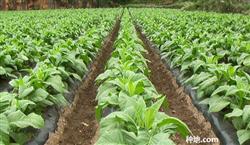
How should tobacco be managed in summer?
Summer tobacco can be managed as follows:
1. Promote uniform seedling emergence. Check and fill in seedlings promptly. Pull out weak and small tobacco seedlings and those bitten to death or injured by underground pests, and replant new seedlings. When replanting, apply a small amount of nitrogen fertilizer or compound fertilizer in the hole, water thoroughly, and apply poisoned bait in the hole. Weak-growing tobacco seedlings can be given extra fertilizer.
2. Cultivation and hilling. (1) Cultivation. The first cultivation is carried out about 1 week after the tobacco seedlings are transplanted, with shallow hoeing to break up surface crusting; avoid damaging the roots. The second cultivation is carried out about 30 days after transplanting, combined with topdressing and hilling; it requires deep, thorough and even hoeing, with a cultivation depth of 10-14 cm between rows and 5-7 cm between plants. The third cultivation is carried out 10-15 days after the second cultivation, and shallow hoeing is appropriate, with a cultivation depth of 5 cm. In terms of cultivation depth, strictly follow the principle of "shallow the first time, deep the second time, and do not damage roots the third time." (2) Hilling. Generally, hill up 2 times. The first time is about 20 days after the tobacco seedlings are transplanted, and low hilling can be carried out together with topdressing. The second time is 30 days after transplanting, that is, at the rosette stage, for high hilling; the hilling height is usually about 20 cm. In areas with a high groundwater table, abundant rain and strong wind, the hilling height can be appropriately increased; in areas with weak water retention such as sandy land and mountainous land, the hilling height can be appropriately reduced.
3. Watering and topdressing. (1) Watering. According to local conditions and seedling growth, water 1-2 times to help the seedlings recover. The recovery water should not be too much, so as to avoid excessive drop in soil temperature and compaction of the plow layer. After the seedlings recover and survive, the tobacco seedlings need less water; when soil moisture is suitable, generally do not water, so as to promote root development. If aboveground growth is inhibited, a light watering can be given once. (2) Topdressing. Topdressing for tobacco seedlings is carried out 25-30 days after transplanting, and the topdressing amount accounts for 1/3 of the total fertilizer application. The topdressing amount can be determined according to the growth of tobacco seedlings in the field, soil and climate conditions. When topdressing, weak seedlings and small seedlings can be appropriately given extra fertilizer, applied 10 cm to both sides of the tobacco seedlings, preferably at a depth of 10 cm; either band application or hole application is acceptable. After topdressing, immediately cover with soil or hill up and water.
4. Disease control. (1) Mosaic virus disease. When the disease is mild, yellow-green mottled patches form on the leaves; when severe, the diseased leaves are uneven in color depth and thickness, forming spots, shrinking and not spreading, with epidermal hairs falling off and leaves becoming narrow and distorted. Spraying 0.1%-1% sodium alginate, or 0.1% zinc sulfate, copper sulfate solution, etc., gives good control effects. (2) Black shank. Use 1000-fold metalaxyl solution to drench the roots of each tobacco seedling; alternatively, use 0.3% phosethyl-Al solution or 20% Ridomil emulsion at 400-800 times dilution for foliar spraying control. In severely affected areas, applying the chemical 2 times combined with ridging and hilling will give better control effects.
5. Prevent premature flowering of tobacco. The main cause of premature flowering in tobacco is that tobacco is affected by low temperature and short daylight during the vegetative growth period. The main method to prevent premature flowering in tobacco is to avoid the tobacco being continuously exposed to low temperatures below 18°C after transplanting. Plastic film mulching cultivation can effectively prevent premature flowering of tobacco. For tobacco that has already developed premature flowering, immediately cut off the main stem, leaving only 2-3 basal leaves, so as to promote the germination and growth of axillary buds. After the axillary buds germinate, select and retain 1 strong bud, remove all the rest, and strengthen field fertilizer and water management. For tobacco with mild premature flowering, topping and retaining a branch as early as possible can greatly reduce the losses caused by premature flowering.
Click to get more tobacco cultivation techniques
Click to get more flower cultivation techniques