A Comprehensive Analysis of the Key Points of Gastrodia elata Cultivation Techniques
Summer and autumn are the seasons when Gastrodia elata enters vigorous growth and maturity, and they are also the critical period for Gastrodia elata production management. If it is left unattended or managed improperly, the yield and quality of Gastrodia elata will be seriously affected. 1. Drainage ditches for removing moisture. When Gastrodia elata enters the vigorous growth period, it is time to begin checking whether the drainage ditches at the cultivation site have standing water...
 I. Cultivation time. Gastrodia elata cultivation generally runs from late October of the current year to April of the following year. Sowing from late October to early December before the soil freezes is winter planting; sowing after the soil thaws in March-April of spring is spring planting. In high-altitude mountainous areas, the sowing time can be extended to May.
II. Site selection. For the cultivation site, any land plot can be chosen, such as in front of or behind a house, wild sloping land, or orchard woodland, with sandy loam soil that has strong air and water permeability being the best. The soil pH is 5-6.
III. Building beds. On flat ground, beds can be made on site with a width of 80 cm, a depth of 10 cm, and unlimited length; on wild sloping land, terraced horizontal beds should be built according to the slope and terrain, with a spacing of about 1 m between beds, and trees and weeds at the bed edges should be retained as much as possible to provide shade and prevent the bed banks or bed ridges from collapsing. In orchard woodland, beds should be built according to the terrain, and drainage ditches should be dug around them.
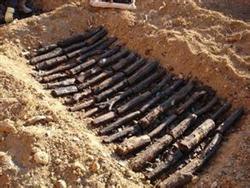
IV. Sowing and cultivation. Arrange segments of fungal wood logs with a diameter of 5-8 cm and a length of 30 cm in a square frame pattern like the Chinese character "tian" at the bottom of the bed, placing 15 fungal wood logs per square meter at fixed positions. Then scatter fungal branches with a diameter of about 2 cm and a length of 10 cm into the empty spaces within the square frames of fungal wood, scattering about 2 kg of fungal branches into each square frame space level with the fungal wood. Then sow Gastrodia elata seeds at fixed points at both ends and on both sides of each fungal wood log, sowing 66 seeds per square meter, about 500 g. Finally, fill the gaps between the fungal wood and fungal branches with moist sandy loam or humus soil with a pH of 5-6 until the fungal wood is covered to a depth of 2 cm, cover the entire bed surface with a 10-20 cm thick layer of dry branches, leaves, and weeds, and clear the drainage ditches properly.
V. Key management points
(1) Temperature management: The suitable temperature for Gastrodia elata production is 13-25 degrees (10 cm below the soil surface). Within this temperature range, the higher the better. Temperature control is an important task in the imitated wild cultivation management of Gastrodia elata. In winter, prevent freezing. In areas below 1,000 m above sea level, covering with 10-20 cm thick branches, leaves, and weeds after planting is sufficient; in areas above 1,000 m, the mulch can be thickened to 30 cm. In summer and autumn, prevent high temperatures and drought. In addition to using shade materials to prevent high temperatures, water supplementation can also be used to lower soil temperature. Water supplementation should be carried out after sunset, when the soil temperature has dropped.
(2) Water management: From winter to the following spring (before Qingming), the soil temperature should be controlled at 10%-20%. From April to June, increase soil moisture to about 60%. From June to August, Gastrodia elata enters the peak growing season, and nutrient accumulation reaches its peak. At this time, it is appropriate to preserve water and lower temperature, preserve soil moisture and drain waterlogging, and carry out comprehensive management. By September, nutrient accumulation in Gastrodia elata enters the late stage and reaches the physiological maturity stage. At this time, the soil moisture in the bed should be controlled below 40%. In late October, when the soil temperature has dropped to 10 degrees C, Gastrodia elata enters dormancy and can be uncovered for harvesting. About 7 kg of fresh Gastrodia elata can be harvested per square meter.
VI. Pest and disease control. The main pests harming the growth of Gastrodia elata include mole crickets, white grubs, and termites. Control methods: First, when cultivating Gastrodia elata, spread 5% chlordane powder and "Termite Killer King" pesticide around the bed; second, use the patented product, the termite control trap, to trap and kill termites.