How to grow tobacco seedlings without soil? Key techniques explained
How to grow tobacco seedlings without soil? With the gradual application of soilless cultivation techniques in production, the tobacco soilless seedling technique - direct-sowing nutrient solution floating seedling cultivation (soilless seedling cultivation for short) - has been widely promoted in flue-cured tobacco production. Practice has shown that the new tobacco soilless seedling technique has the advantages of improving tobacco seedling quality, shortening the seedling period, extending the economic yield formation period of tobacco seedlings...
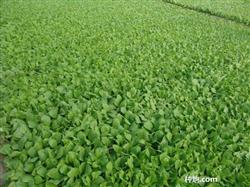
How to grow tobacco seedlings without soil?
With the gradual application of soilless cultivation techniques in production, the tobacco soilless seedling technique - direct-sowing nutrient solution floating seedling cultivation (soilless seedling cultivation for short) - has been widely promoted in flue-cured tobacco production. Practice has shown that the new tobacco soilless seedling technique has the advantages of improving tobacco seedling quality, shortening the seedling period, extending the economic yield formation period of tobacco seedlings, reducing the occurrence of pests and diseases, lowering production costs and saving production labor. Its key technical points are introduced as follows:
I. Seedling materials and facilities
1. Seedling materials
The special seedling fertilizer is Yuxi flue-cured tobacco special seedling fertilizer. The seedling trays come in two specifications: 216 cells (12×18 cells, 61 cm × 41 cm) and 187 cells (11×17 cells, 61 cm × 41 cm), and are special soilless seedling trays made of molded foam plastic. The substrate is a special soilless seedling substrate. The seedling site should be chosen in a place with flat terrain, a low groundwater table, shelter from wind and facing the sun, favorable for warming up, close to a clean water source, and with convenient transportation. It is forbidden to build sheds on potato fields, vegetable fields, or land that was planted with tobacco in the current year.
2. Seedling facilities
Steel-frame greenhouse: 7.5 m wide, 3 m high, 30 m long; the greenhouse film is polyethylene anti-drip film (thickness 0.1±0.02 mm). Inside the greenhouse, 2 wide nutrient solution troughs and 2 narrow nutrient solution troughs can be built. The wide nutrient solution trough is 29.1 m long, 1.85 m wide and 0.15 m high; the narrow nutrient solution trough is 29.1 m long, 0.85 m wide and 0.15 m high. Each nutrient solution trough is evenly divided into 2 small troughs by a partition, and can provide seedlings for 7.3 hectares of field.
Bamboo and wood structure medium greenhouse: 13.5 m long, 4.2 m wide, 2.5 m high; the greenhouse film is polyethylene anti-drip film (thickness 0.1±0.02 mm). Inside the greenhouse, 2 nutrient solution troughs 1.25 m wide, 0.15 m high and 12.5 m long can be built. Each nutrient solution trough is evenly divided into 2 small troughs by a partition, and can provide seedlings for 1.3 hectares of field.
Nutrient solution trough: the length depends on the length of the plastic greenhouse, and the width depends on the number of seedling trays to be placed.
II. Seedling steps
1. Preparation of the nutrient solution. Fill the nutrient solution trough with clean water to a depth of 10 cm, then add the dissolved tobacco special seedling fertilizer into the trough and mix well, continue adding water to a depth of 14 cm, then adjust the pH value to 5.8-6.5.
2. Disinfection of seedling trays. Before sowing, the seedling trays must be sprayed with 1%-2% formalin or 0.05%-0.1% potassium permanganate solution, then covered with film for disinfection for 1-2 days, and then rinsed clean with clean water (this step can be omitted for new seedling trays) for later use.
3. Filling the substrate. First use clean water to adjust the moisture of the substrate (it is appropriate when it forms a ball in the hand and breaks apart when dropped to the ground), then fill the cells of the disinfected seedling trays with the substrate (scrape off excess substrate with a wooden block). The substrate should be filled fully, evenly, and with moderate firmness.
4. Sowing. Sow 2 coated seeds in each seedling cell. After sowing, repeatedly spray clean water with a sprayer; it is required to spray thoroughly and wet the seeds completely to ensure that the coated seeds fully absorb water and the coating cracks. Then cover the seeds with fine substrate to a thickness of 2-4 mm, and the seedling trays can be moved into the nutrient solution troughs for soilless seedling cultivation.
5. Seedling stage management
①Temperature and humidity management: temperature and humidity management is achieved by uncovering and covering the greenhouse film. From sowing to emergence, the surface temperature of the seedling trays should be controlled between 20-25°C to ensure uniform emergence. From emergence to the cross stage, priority should be given to heat preservation; during high temperatures, ventilate to cool down and remove moisture; in the afternoon, attention should be paid to keeping the temperature above 13°C to prevent a sudden temperature drop from freezing the tobacco seedlings. From the cross stage to the adult seedling stage, avoid the temperature inside the greenhouse rising too high (it must not exceed 35°C at the highest) to prevent seedling scorching. During the adult seedling stage, hardening should be carried out and ventilation increased so that the tobacco seedlings gradually adapt to the external temperature and humidity conditions. Throughout the entire seedling cultivation process, the number of days with relative humidity greater than 90% must not last more than 3 consecutive days.
②Nutrient solution management: to ensure that the concentration of the nutrient solution in the trough and the liquid level height remain relatively stable, the nutrient solution should be checked once every 3-5 days. When the liquid level is lower than 14 cm deep, add clean water to a depth of 14 cm. About 30 days after emergence, nutrient solution should be added to supplement nutrients, and the pH value should be adjusted (method same as above).
③Thinning and final singling: at the small cross stage of the tobacco seedlings, thinning and final singling should be carried out, that is, use tweezers to remove excess tobacco seedlings, leaving 1 seedling per cell, and fill empty cells with 1 seedling. At the same time, reserve enough spare seedlings (2%-3%) for filling gaps.
④Leaf clipping: leaf clipping can make tobacco seedlings grow uniformly and evenly, prevent leggy seedlings, increase stem thickness, and improve seedling quality. The specific method is: when the tobacco seedlings grow to 5 leaves and 1 heart (plant height about 7 cm), cut flat at 3-4 cm from the growing point, and thereafter trim once every 5-7 days until the seedlings reach the adult stage. Leaf clipping should be carried out after the dew on the seedling leaves has dried. At the same time, the trimming operators and tools should be disinfected, and the trimmed leaf fragments should be cleaned up promptly to prevent infection by pathogens.
⑤Hardening: when the tobacco seedlings reach the adult seedling standard, water should be cut off in time for hardening. The degree of hardening is appropriate when the tobacco seedlings wilt at noon and can recover to normal in the morning and evening; the hardening time is generally about 3 days. During hardening, pay attention to ventilating around the shed day and night.
⑥Pest and disease control: tobacco soilless seedling cultivation may still be infected by pathogens during the seedling stage, so the policy of prevention first and integrated control must be adhered to. The main work is in 3 aspects: first, cleaning and disinfection of the environment and facilities; second, doing a good job of ventilation and moisture removal; third, monitoring the occurrence of pests and diseases, and promptly removing diseased tray seedlings or controlling them with pesticides. In chemical control, the following pesticides can be used against various diseases: use mancozeb 800-fold solution or zineb 600-fold solution to control anthracnose and damping-off; use 58% metalaxyl·mancozeb 500-fold solution, propamocarb 900-fold solution or Dongwang Heida 1200-fold solution to control black shank, damping-off and root rot; use 72% agricultural streptomycin sulfate 3000-fold solution to control wild fire disease; use 8% Junke Duke 1000-fold solution or Dongwang Duxiao 900-fold solution to control mosaic disease. When tobacco aphids are found in the seedbed, spray with imidacloprid 1500-fold solution for control.
Click to get more tobacco cultivation techniques
Click to get more flower cultivation techniques