Identification and Control Techniques for Diseases and Pests of Atractylodes macrocephala
Southern blight: Also known as "white sugar rot", it damages the rhizome of Atractylodes macrocephala, with no obvious symptoms on the aboveground parts in the early stage of the disease. Later, as temperature and humidity rise, the mycelium penetrates through the soil surface, and white mycelium densely covers the rhizome and the surrounding soil surface. The top shoots of the affected plants wilt, droop, and eventually the entire plant dies. Disease characteristics: soil and planting material are...
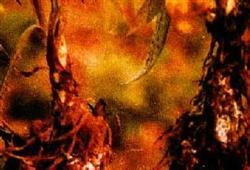 (1) Southern blight
Also known as "white sugar rot". In the high-temperature and rainy seasons from April to June or August to September, especially in fields with heavy clay soil and poor drainage, white silky threads (mycelium of Deuteromycetes) are initially found on the surface soil around the plants, gradually expanding from the vicinity of the plants and covering the soil surface and soil gaps; and at 0.6-1 cm above the soil surface around the plant stems and at a depth of 16-20 cm below the soil layer, along the main root or fine roots, millet-sized and rice-grain-sized particles (sclerotia) attach and grow from small to large, appearing milky white, then gradually turning pale yellow and finally brown. When the disease is severe, the roots of Atractylodes macrocephala rot, the soil around the plants turns black, and there is a putrid odor. It spreads very quickly.
Control methods:
① Rotate with gramineous crops.
② Select disease-free planting material, and soak the seeds in a 1000-fold solution of 50% Tuzet before planting.
③ Before planting, treat the soil with 15 kg of quintozene per hectare.
④ Promptly dig out diseased plants, and disinfect the diseased holes with lime.
③ Irrigate the affected area with a 1000-fold solution of 50% carbendazim or 50% thiophanate-methyl.
(2) Damping-off
Also called stem rot blight. It is a seedling-stage disease. In early spring, due to overcast and rainy weather or soil compaction, the disease is severe. The base of the affected seedlings turns brown, shrinks and becomes sunken, causing the seedlings to collapse and die.
Control methods:
① Soil disinfection: before planting, treat the soil with quintozene per hectare.
② During the disease period, irrigate the affected area with a 200-fold solution of quintozene.
(3) Iron leaf disease
It occurs on leaves. The leaves turn iron-black, and later the center of the lesions turns grayish-white with small black dots on them.
Control methods:
① Clean up field sanitation and burn the remaining diseased plants and leaves.
② In the early stage of the disease, spray Bordeaux mixture at 1:1:100 or a 1000-fold solution of 50% Tuzet, once every 7-10 days, for 3-4 consecutive times.
(4) Rust disease
Also called yellow spot disease. Lesions form on the leaves, spindle-shaped or nearly circular, brown, with yellow-green halos. Yellow granular substances form on the lesions on the underside of the leaves, and yellow powder is released after they rupture.
Control methods:
① Clean up field sanitation and burn the remaining diseased plants and leaves.
② In the early stage of the disease, spray a 300-fold solution of 97% diniconazole, or 0.2-0.3 degrees Baume lime-sulfur mixture, once every 7-10 days, for 2-3 consecutive times.
(5) Root rot
Also called dry rot. The pathogen is a type of Deuteromycete fungus, which damages the rhizome, causing dry rot of the rhizome and brown lesions in the vascular bundle system.
Control methods:
① Rotate with gramineous crops.
② Select disease-free and robust planting material for planting, soak in a 1000-fold solution of 50% Tuzet for 3-5 minutes, and plant after drying.
③ During the disease period, irrigate the affected area with a 1000-fold solution of 50% carbendazim or 50% thiophanate-methyl.
(6) Dodder
Also called golden thread vine, it is a parasitic seed plant. Its occurrence is caused by mixing in Atractylodes macrocephala seeds. The disease is severe in July and August.