-
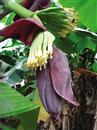
Key management techniques before and after banana bunch emergence
How to manage bananas before and after bunch emergence? Please provide an introduction to the management methods. Management before and after banana bunch emergence can follow these methods: 1. Fertilize in time. When bananas enter the flower bud differentiation stage, this is the key period that determines the number of fruit hands and the number of fingers, and a heavy fertilizer application should be added in time. That is, when the banana leaves produce opposite leaves,...
-
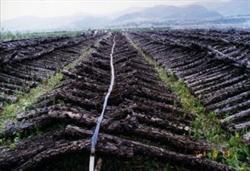
Inoculation Techniques for Wood Ear Mushrooms
1. The mist irrigation system consists of main, branch, and capillary three-level high-pressure polyethylene plastic pipes, micro atomizing nozzles, and pipe fittings. The main pipe diameter is 40-50 mm, the branch pipe diameter is 25-32 mm, and the capillary pipe diameter is 10-12 mm. During installation, the main pipe is connected to the water source and is perpendicular to the branch pipes; the branch pipes are perpendicular to each row of mushroom logs; the capillary pipes (generally 15...
-
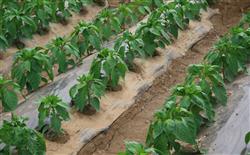
What are the cultivation methods for sweet peppers? A detailed explanation of the key growing techniques
What cultivation methods are there for sweet peppers? Please explain that sweet pepper cultivation is divided into the early spring crop and the winter crop, with the methods as follows: Early spring crop: 1. Raising strong seedlings: Large arch shed: raise seedlings in a hotbed in late December, transplant in early March; solar greenhouse: sow from late November to early December, transplant in mid-to-late February. Most vegetable growers now...
-
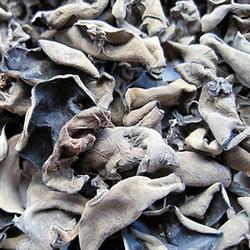
Detailed Explanation of the Biological Characteristics and High-Yield Cultivation Techniques of Black Wood Ear Mushroom
Timely harvesting: Regardless of whether it is spring, summer, or autumn wood ear, it should be harvested after the rain has passed and the sky has cleared, once the ear pieces have dried slightly. If the weather is dry, evenly sprinkle some water on the evening before harvest, and harvest the next morning after the dew has dried; wood ear harvested this way is less likely to break. If there is continuous rainy weather, it must still be harvested to avoid streaming ear. Gene...
-
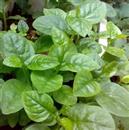
Detailed Explanation of Disease Prevention and Control Techniques for Ceylon Spinach
The main diseases of Ceylon spinach (Malabar spinach) include brown spot disease (also known as fish-eye disease), red spot disease, snake-eye disease, and sun scald, among others. They can cause damage from the seedling stage through to the end of harvest, mainly affecting the leaves. Infected leaves initially show small, sunken, purplish-red, water-soaked round spots, which gradually expand. In severe cases, the spots can number more than a hundred, merge with one another into large lesions, and cause premature leaf aging.
-
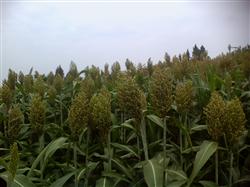
How to fertilize sorghum scientifically? Detailed explanation of key fertilization techniques
How to fertilize sorghum scientifically? Please give guidance. Sorghum has wide adaptability to soil and strong nutrient uptake capacity. When planted on sandy loam soil rich in organic matter and with relatively high fertility, it is easier to obtain high yields. On poor dry land with phosphorus deficiency and low potassium, fertilizer must be added to obtain a good harvest. Sorghum seedlings are small, and the fertilizer requirement is not...
-
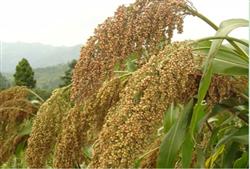
How to grow pearl sorghum for high yield? Key points of planting techniques
How can pearl sorghum be grown for high yield? Please provide guidance. Pearl sorghum can be planted by referring to the following methods: 1. Land preparation: for previously cultivated land, one plowing and one harrowing; for wasteland (virgin land), two plowings and two harrowings, harrowing the soil clods during the day to meet the requirements for planting corn. Paddy fields or plots with excessive moisture are not suitable for planting. 2. Apply sufficient base fertilizer: in...
-
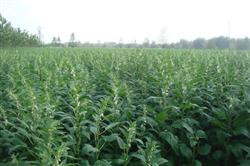
How to Grow White Sesame for High Yield? A Detailed Guide to Cultivation Techniques
How can white sesame be grown for high yield? Please provide guidance. To grow white sesame for high yield, you can refer to the following cultivation methods: 1. Select good varieties. For white sesame production, choose varieties such as Yuzhi No. 4, Yuzhi No. 8, and Yuzhi No. 10, which are high-yielding, high-quality, strongly stress-resistant, and have pure white seeds. To overcome the low yield and...
-
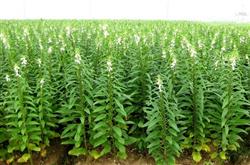
How to grow black sesame for high yield? Detailed explanation of cultivation techniques
How can black sesame be grown for high yield? Please give an introduction. There are many varieties of black sesame, and "Zhongzhi No. 9", bred by the Oil Crops Research Institute of the Chinese Academy of Agricultural Sciences, is the primary variety. This variety is of the branching type, and its yield per 667 sq m (mu) can reach 58.33 kg. The growth period for summer sowing is 95 days. The seed coat is jet black, and the 1000-grain weight is 2.63 g. Oil content...
-
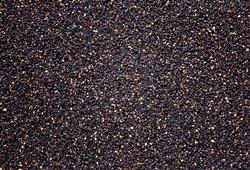
How to grow black sesame for high yield? Key points of planting techniques
How can black sesame be grown for high yield? Please advise on the method. To grow black sesame for high yield, you can refer to the following planting methods: 1. Seed dressing with chemicals, crop rotation, and early sowing while preserving soil moisture. Before sowing, you can use 8 grams of 50% carbendazim wettable powder or 40% carbendazim suspension concentrate, add 0.5 kg of water to make a paste, and mix well with 0.5 kg of seeds before sowing. Sesame...
条件筛选