Detailed Explanation of Disease Prevention and Control Techniques for Ceylon Spinach
The main diseases of Ceylon spinach (Malabar spinach) include brown spot disease (also known as fish-eye disease), red spot disease, snake-eye disease, and sun scald, among others. They can cause damage from the seedling stage through to the end of harvest, mainly affecting the leaves. Infected leaves initially show small, sunken, purplish-red, water-soaked round spots, which gradually expand. In severe cases, the spots can number more than a hundred, merge with one another into large lesions, and cause premature leaf aging.
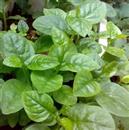
The main diseases of Ceylon spinach (Malabar spinach) include brown spot disease (also known as fish-eye disease), red spot disease, snake-eye disease, and sun scald, among others. They can cause damage from the seedling stage through to the end of harvest, mainly affecting the leaves. Infected leaves initially show small, sunken, purplish-red, water-soaked round spots, which gradually expand. In severe cases, the spots can number more than a hundred, merge with one another into large lesions, and cause premature leaf aging.
Main prevention and control methods: adopt crop rotation; treat seeds with 100-fold formalin solution for 0.5 to 1 hour to eliminate seed-borne pathogens; under abnormal weather such as high temperature and high humidity, spray a 1:3:200 Bordeaux mixture for protection; at the early stage of disease onset, spray 65% zineb wettable powder at 600-fold dilution or 50% amobam wettable powder at 800-fold dilution, once every 7 to 10 days, for 2 to 4 consecutive applications.