Detailed Explanation of the Biological Characteristics and High-Yield Cultivation Techniques of Black Wood Ear Mushroom
Timely harvesting: Regardless of whether it is spring, summer, or autumn wood ear, it should be harvested after the rain has passed and the sky has cleared, once the ear pieces have dried slightly. If the weather is dry, evenly sprinkle some water on the evening before harvest, and harvest the next morning after the dew has dried; wood ear harvested this way is less likely to break. If there is continuous rainy weather, it must still be harvested to avoid streaming ear. Gene...
 I. Overview
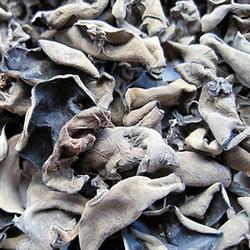
Black wood ear, also called wood ear, smooth wood ear, or cloud ear. Taxonomically it belongs to the class Basidiomycetes, order Tremellales, family Auriculariaceae, genus Auricularia. There are about a dozen or more species in this genus, such as black wood ear, hairy wood ear, wrinkled wood ear, felt-cap wood ear, horny wood ear, shield-shaped wood ear, and others. Among these wood ears, only the smooth wood ear has a plump and tender texture and a delicious flavor, and is known as a mountain delicacy.
Black wood ear has a long history in China and was recognized and used by the working people early on. It was already recorded more than 2,100 years ago in the Rites of Zhou. Later, in the Essential Techniques for the Welfare of the People by Jia Sixie of the Northern Wei, the method of processing wood ear into wood ear pickles was recorded. In the Tang Materia Medica Annotations written by Su Gong and others of the Tang Dynasty, the tree species and methods used at that time to produce wood ear were also recorded. Li Shizhen, a physician of the Ming Dynasty, recorded in the Compendium of Materia Medica: "Wood ear grows on rotten wood. ...[Flavor] sweet and neutral... [Indications] boosts qi and prevents hunger, lightens the body and strengthens the will... Duan Hu treats hemorrhoids... abnormal uterine bleeding, blood dysentery with bloody stool." This shows that in ancient China, in addition to listing wood ear as a fine food, there was also considerable research on the medicinal use of black wood ear.
According to modern scientific laboratory analysis, every 100 grams of fresh black wood ear contains 11 grams of water, 10.6 grams of protein, 0.2 grams of fat, 65 grams of carbohydrates, 7 grams of fiber, and 5.8 grams of ash (the ash includes 375 mg of calcium, 201 mg of phosphorus, and 180 mg of iron); in addition, it also contains various vitamins, including 0.031 mg of provitamin A (carotene), 0.7 mg of B vitamins (of which B1 is 0.15 mg and B2 is 0.55 mg), 217 mg of vitamin C, provitamin D (ergosterol), and glycogen, etc. Therefore, black wood ear is relatively rich in nutrition and delicious in taste.
The medicinal effects of black wood ear: it is suitable for nourishing and strengthening, clearing the lungs and boosting qi; enriching the blood and invigorating blood circulation, postpartum weakness, and numbness and cramps in the hands and feet, and other conditions. At the same time, because black wood ear is a gelatinous fungus, its fruiting body contains abundant gelatinous substances and has a good cleansing and lubricating effect on the human digestive system. It can clear accumulated spoiled food and hard-to-digest fibrous food from the stomach and intestines. At the same time, after the active substances in black wood ear are absorbed by the human body, they can clear the lungs and moisten the lungs, so it is also one of the health foods for textile workers and mine workers. According to research findings from the University of Minnesota Medical School in the United States, regularly eating black wood ear can reduce ordinary blood clotting in the human body and has a role in preventing and treating cardiovascular diseases.
Whether in output or quality, China's black wood ear ranks first in the world. It is a flagship export commodity of China, sold far around the world, and enjoys a very high reputation in Southeast Asian countries. In recent years, it has entered European and American markets and has relatively high foreign exchange value.
II. Biological Characteristics of Black Wood Ear
Black wood ear is a gelatinous fungus belonging to the phylum Fungi. It is composed of two parts: the mycelium and the fruiting body. The mycelium is colorless and transparent, composed of many tubular hyphae with cross walls and branches. It grows inside rotten wood or other substrates and is the vegetative organ of black wood ear. The fruiting body grows laterally on the surface of wood or culture material. It is its reproductive organ and also the part people eat. When the fruiting body first forms, it looks like a small ring. As it continuously grows and develops, it spreads into a wavy individual, with the lower side concave and smooth and having vein-like tissue, and the back side convex, with the edge slightly rolled upward. Its overall shape resembles a human ear, hence the name.
The mycelium twists together to form the fruiting body when it develops to a certain stage. When fresh, the fruiting body is gelatinous, semi-transparent, dark brown, and elastic. After drying, it shrinks into a horny texture, with the ventral surface smooth and lacquer-black, hard and loose, and the dorsal surface dull-colored with short downy hairs. After absorbing water, it can still return to its original state. During the mature stage, the fruiting body produces basidiospores (seeds). The basidiospores are colorless and transparent, sausage-shaped or kidney-shaped, smooth, and are produced on the ventral surface of the ear piece. After maturing and drying, they spread everywhere through air currents to reproduce their offspring.
Black wood ear is a saprophytic fungus. It has no chlorophyll and cannot make its own food. It relies on organic matter from other organisms as its nutrients. At the same time, it lives saprophytically and must grow and develop only on dead organisms. Its mycelium has a strong ability to decompose cellulose and hemicellulose in organisms, and can ultimately break organisms down into fragments.
Under suitable conditions, the basidiospores of black wood ear germinate into mycelium, or form conidia, and the conidia germinate to produce mycelium again. As the mycelium grows continuously, it gradually produces branches, and cross walls form in the branches, developing into tubular downy hyphae with only one nucleus in each cross wall, namely monokaryotic hyphae. This kind of hypha, produced by the germination of a single spore, is distinguished by positive and negative sexes, and this kind of hypha is called primary mycelium or first-stage mycelium. Then, after the apical cells of two monokaryotic hyphae of different sexes come into contact and fuse with each other, a binucleate cell is formed, and the binucleate cell develops into binucleate mycelium through clamp connections. At this time, the mycelium grows and develops continuously and produces a large number of branches that spread deep into the organism, absorbing large amounts of nutrients and water and preparing for further development into a fruiting body. Once conditions are ripe, it produces fruiting body primordia on the surface of the organism.